

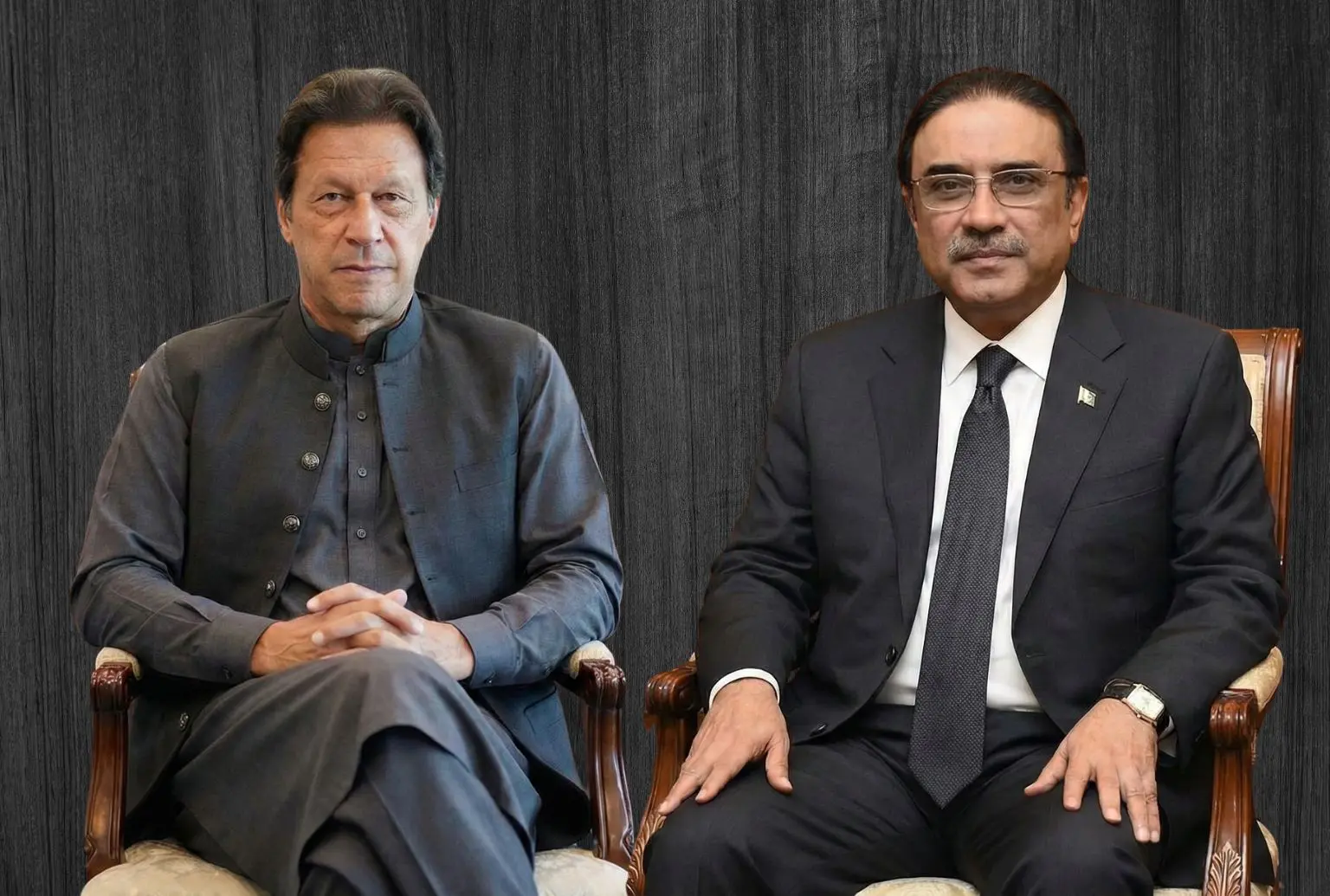
- Bakhtawar Bhutto defends parents’ court-ordered prison visitation rights.
- PTI supporters compare Zardari’s prison facilities to Imran Khan’s conditions.
- Maleeka Bokhari criticizes weaponizing the Iddat case for political scores.
Viral post sparks debate
A heated digital discourse recently erupted on social media platform X after a user shared specific dates regarding the imprisonment of Asif Ali Zardari and the birth of Aseefa Bhutto Zardari. The post highlighted that Asif Ali Zardari was incarcerated from October 1990 until February 1993, while his youngest daughter was born just three days before his official release. This observation prompted a wide range of reactions from various political circles and social media commentators who questioned the nature of his confinement.
Bakhtawar defends family legacy
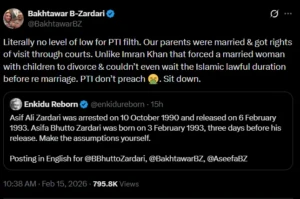 Responding to the viral claims, Bakhtawar Bhutto Zardari issued a strong statement defending her parents’ history and the legality of their meetings. She clarified that her parents were legally married and maintained their relationship through court-sanctioned visitation rights during her father’s time in jail. Bakhtawar also redirected the criticism toward PTI leadership, specifically mentioning the legal controversies surrounding Imran Khan’s marriage and the Iddat case to counter the accusations made by political opponents.
Comparison of prison conditions
The debate took a new turn as supporters of the Pakistan Tehreek-e-Insaf pointed out a perceived disparity between the facilities provided to Zardari and those currently available to Imran Khan. Users argued that while past leaders reportedly enjoyed conjugal rights and administrative ease in prison, Imran Khan is allegedly facing difficulties in accessing basic medical care. This comparison became a central theme of the online argument as users questioned the consistency of human rights and prisoner treatment within the national judicial system.
Legal experts weigh in
Barrister Maleeka Bokhari provided a detailed perspective by acknowledging the integrity of Mohtarma Benazir Bhutto while criticizing the weaponization of personal choices for political gain. She stated that dragging the right to remarry or the Iddat period into partisan disputes is detrimental to the discourse on women’s rights in Pakistan. Bokhari urged political figures to refrain from mud-slinging and instead focus on maintaining the dignity of the political process and respected national figures during such public disagreements.