

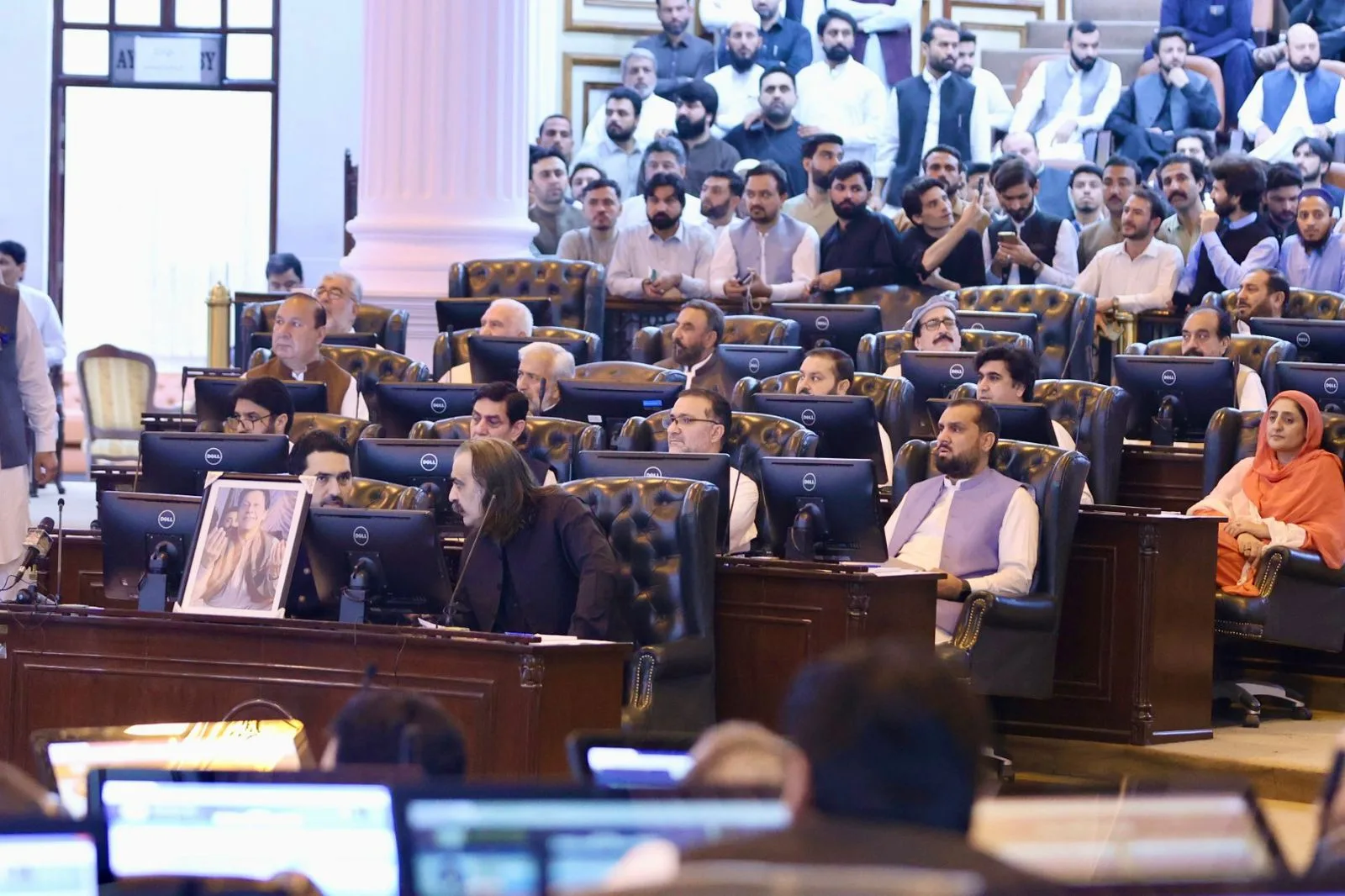
A significant political development has unfolded in Khyber Pakhtunkhwa, with the election of Sohail Afridi as the new Chief Minister, concluding a period of intense speculation and political maneuvering. Despite opposition and predictions to the contrary, Afridi secured the top provincial office.
According to media reports, the Khyber Pakhtunkhwa Assembly elected Pakistan Tehreek-e-Insaf (PTI) member Sohail Afridi as the new Chief Minister. The Speaker of the Assembly confirmed that Afridi received 90 votes in the 145-member house. The election, however, was marred by controversy as opposition parties boycotted the proceedings, labeling them ‘unconstitutional’ and staging a walkout from the assembly. The opposition leader in the KP Assembly, Dr. Ibadullah, has announced his intention to challenge the chief minister’s election in court.
The election took place under a cloud of legal ambiguity. Senior journalist Asad Sohaib, associated with the BBC, noted that just hours before the assembly session, Khyber Pakhtunkhwa Governor Faisal Karim Kundi had refused to accept the resignation of the outgoing Chief Minister, Ali Amin Gandapur, raising objections to it.
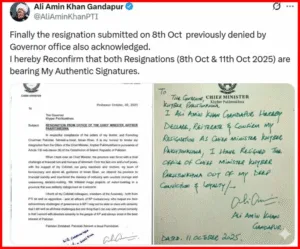
Previously, Governor Kundi had returned Gandapur’s resignation, stating that the signatures on it did not match. In a letter shared on his ‘X’ handle late Sunday night, the governor rejected two resignation letters sent on October 8 and 11, summoning Gandapur to appear in person at the Governor’s House on October 15 to verify his signature.
In response, Ali Amin Gandapur confirmed on ‘X’ that the signatures on both resignations were his. Later, speaking in the assembly on Monday morning, Gandapur stated that democracy was being turned into a joke in Pakistan, reaffirmed that he had submitted his resignation to the governor, and pledged to stand by his party on every issue.
PTI has reacted strongly to the governor’s actions. Party leader Naeem Akhtar Panjutha wrote on ‘X’ that Governor Kundi had committed a “clear violation of his oath” by rejecting the resignation and had “failed to uphold the sanctity of the constitution,” calling for his immediate removal.
The Legal and Constitutional Debate
The situation has created a divide among legal experts. Article 130(8) of the Constitution of Pakistan states that a Chief Minister may, by writing under his hand addressed to the Governor, resign his office.
Former Attorney General and constitutional expert, Ashtar Ausaf, told the BBC that the concept of “acceptance” of a resignation for constitutional posts like Prime Minister or Chief Minister does not exist in the Pakistani constitution. He argued that since Gandapur publicly announced his resignation and participated in the election of the new CM, there is no ambiguity, and the “intent of the constitution has been fulfilled.”
This view is supported by legal expert Maha Raja Tareen, who noted on ‘X’ that a Supreme Court of Pakistan ruling has already established that a Chief Minister’s written resignation is effective immediately upon its confirmed receipt by the governor, without the need for formal acceptance or notification.
However, senior jurist Dr. Khalid Ranjha holds a different opinion. Speaking to the BBC, he argued that the constitution gives the governor the authority to satisfy himself regarding the resignation before accepting it. He likened the situation to a bank verifying a mismatched signature on a check, stating that the governor can summon the chief minister in person if there are doubts about the signature’s authenticity or if the resignation is being submitted under duress. According to him, the election of a new chief minister cannot proceed until the previous one’s resignation is formally accepted.
Background of the Political Change
According to most party members, the decision by PTI’s founder, Imran Khan, to remove Ali Amin Gandapur stemmed from a combination of factors, including internal differences within PTI in Khyber Pakhtunkhwa, a perceived failure to effectively campaign for Khan’s release, and the rise of violent incidents in the province.
The nomination of Sohail Afridi itself drew criticism from the ruling party, Pakistan Muslim League (N). Federal Information Minister Atta Tarar had claimed that Afridi was being appointed to “facilitate terrorists.”
Who is the New Chief Minister, Sohail Afridi?
Sohail Afridi, 35, is an ideological worker for PTI who began his political career in the party’s student wing, the Insaf Student Federation (ISF). Hailing from the Khyber district, he was elected with a large majority from the provincial assembly constituency PK-71. He holds a degree in Economics and a diploma in Journalism. Afridi has served as the provincial and later central president of both the ISF and the Insaf Youth Wing. A video clip of him has recently gone viral in which he is seen stating that his “line will be the same as Imran Khan’s.”
(Source: BBC Urdu)