

A View from Space
Donald Pettit/X
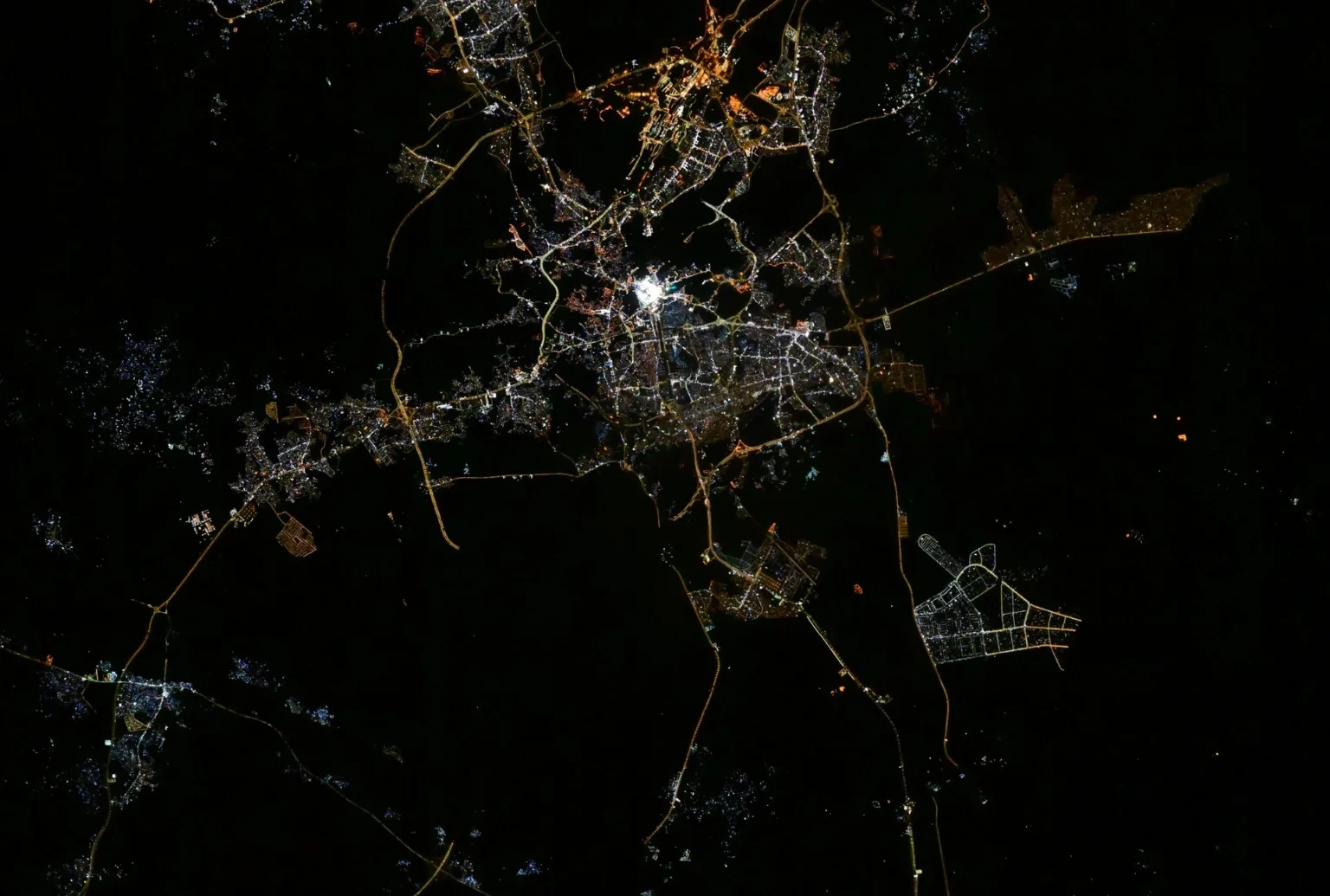
Astronaut and NASA photographer Donald Pettit, after completing a 220‑day mission aboard the International Space Station, shared a striking image of Makkah that has captivated audiences worldwide. The photograph, posted on social media, shows the holy Kaaba glowing at the heart of Masjid al‑Haram, described by Pettit as “the brightest spot in the city, visible even from space.”
Human Landmarks Seen from Orbit
From orbit, astronauts often identify monumental human creations such as Egypt’s pyramids or China’s Great Wall. While the Kaaba is not a towering structure, its spiritual significance and intense illumination make it stand out against the rugged valleys of Makkah, proving that even modest architecture can radiate extraordinary presence when viewed from above.
Why the Kaaba Appears Radiant
The cube‑shaped Kaaba, draped in its black kiswah, is surrounded by powerful floodlights that reflect both natural sunlight and artificial beams. This interplay of light creates a dazzling glow that contrasts with the surrounding hills and tents of pilgrims. Experts explain that the brilliance captured in Pettit’s image is due to thousands of LEDs and sodium lamps across Makkah, which scatter light into the atmosphere and are picked up by sensitive space cameras.
Global Reaction
The image quickly went viral, shared by hundreds of users who marveled at the diamond‑like sparkle of Islam’s holiest site. Many expressed awe at how the Kaaba’s radiance transcends earthly boundaries, while others turned to artificial intelligence tools to ask about the source of the glow. AI responses pointed to the extensive floodlighting system that makes the Kaaba visible even in the darkest hours of night.
Spiritual and Cultural Significance
Beyond its visual impact, the Kaaba remains the spiritual center for Muslims worldwide, serving as the qibla toward which prayers are directed. Each year, millions travel to Makkah for Hajj, while daily crowds perform Umrah, making Masjid al‑Haram the most visited religious site on earth. Pettit’s photograph has reignited global fascination with the Kaaba, symbolizing how faith and light converge to create a beacon visible from the heavens