

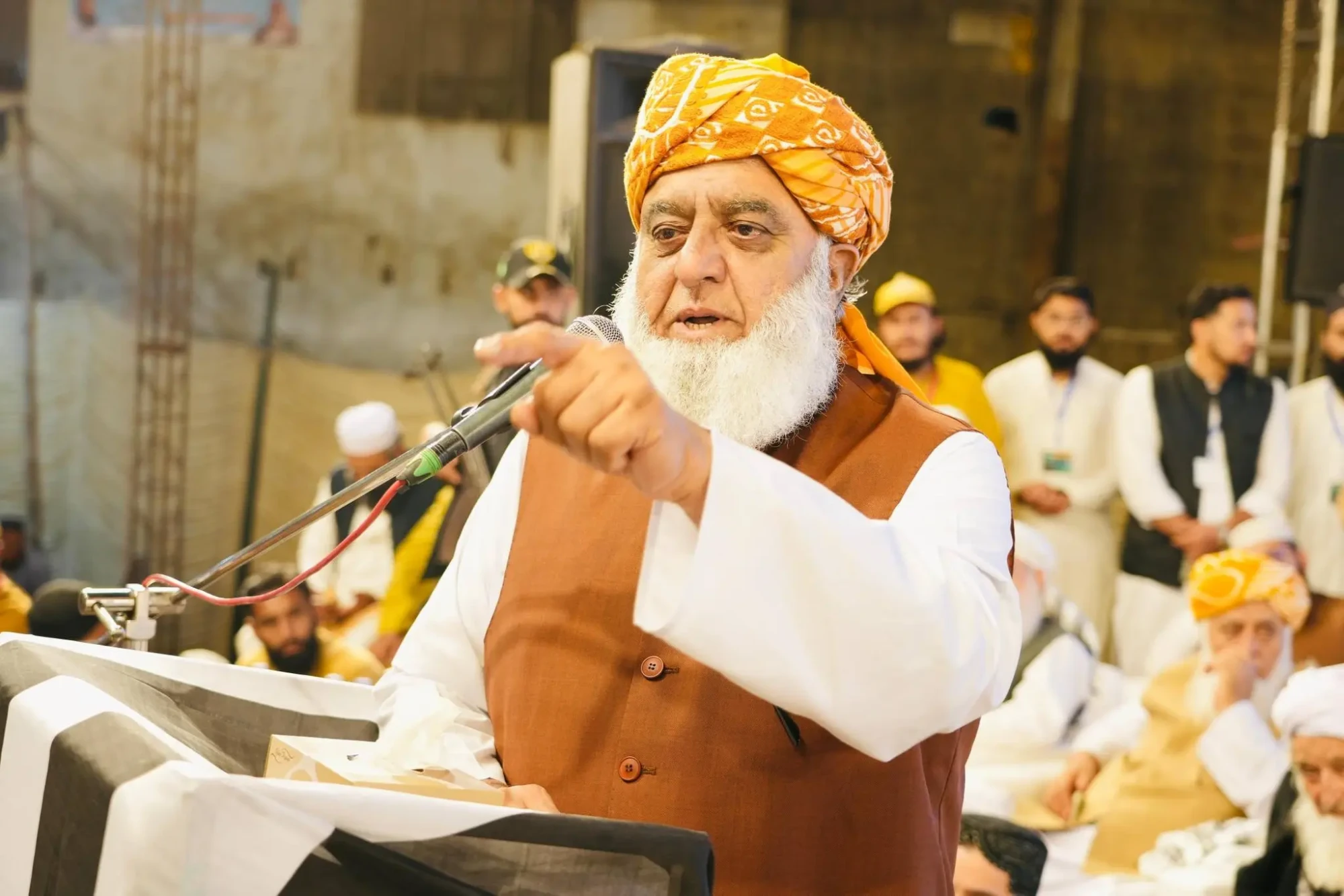
Karachi Press Talk with Governor Sindh
Karachi — Jamiat Ulema‑e‑Islam (JUI) chief Maulana Fazlur Rehman has said that Pakistan’s armed forces should remain strong in their defensive capacity but must not be turned into a political force. He stressed that political strength belongs to the people and elected representatives, not to the military. Speaking alongside Governor Sindh Kamran Khan Tessori, who awarded him an honorary degree, Fazlur Rehman reiterated that Pakistan must not send troops to Gaza under any circumstances.
Preserving Traditions and Identity
The JUI leader remarked that his struggle is aimed at safeguarding Pakistan’s traditions, where mutual respect and dignity are central. While thanking the governor for the honorary degree, he said he prefers to be addressed simply as “Maulana,” reflecting his religious identity.
Afghanistan Policy Under Scrutiny
According to Express News Fazlur Rehman criticized Pakistan’s long‑standing Afghan policy, noting that in 78 years no Afghan government from King Zahir Shah to Ashraf Ghani has proven to be a true friend of Pakistan. He argued that instead of blaming Afghanistan alone, Pakistan must reflect on its own policy failures. He urged a national debate on whether the country’s approach to Afghanistan has consistently undermined its interests.
Concerns Over Recent Legislation
The JUI chief expressed reservations about recent constitutional amendments, claiming that several laws including those on child marriage, domestic violence, and transgender rights were passed under international pressure and without adherence to Quran and Sunnah. He said his party is open to dialogue on these issues but insisted that legislation must remain aligned with Islamic principles.
Value of Religious Institutions
Fazlur Rehman defended religious seminaries, saying they remain Pakistan’s only institutions ranked highly in global recognition. He criticized the state’s one‑sided attitude towards madrassas, arguing that they deserve respect rather than suspicion. In contrast, he noted, Pakistan lags behind in judiciary, commerce, and other sectors.
Military Strength vs. Political Authority
He welcomed Pakistan’s improved defensive position but emphasized that the military should remain focused on defense, not politics. “Political authority must rest with the people and politicians,” he said, adding that strengthening civilian institutions is the only way to ensure constitutional supremacy and national progress.
Warning Against Sending Troops Abroad
On the Gaza conflict, Fazlur Rehman strongly opposed any move to send Pakistani forces, recalling past controversies when Brigadier Zia‑ul‑Haq participated in operations in Jordan against Palestinians. He warned that peacekeeping missions often turn into combat roles, and Pakistan should avoid repeating historical mistakes.
Afghan Refugees and Economic Impact
Addressing the issue of Afghan refugees, he said they should continue to be treated as guests, but Pakistan must also recognize their economic contributions. He cautioned that if Afghan nationals withdrew their deposits, several banks could collapse. He urged policymakers to channel the skills and resources of Afghan refugees into Pakistan’s economy rather than marginalizing them.
Elections and Establishment’s Role
Finally, Fazlur Rehman dismissed both the 2018 and 2024 elections as establishment‑driven rather than people‑driven, underscoring his long‑standing criticism of Pakistan’s political system.