

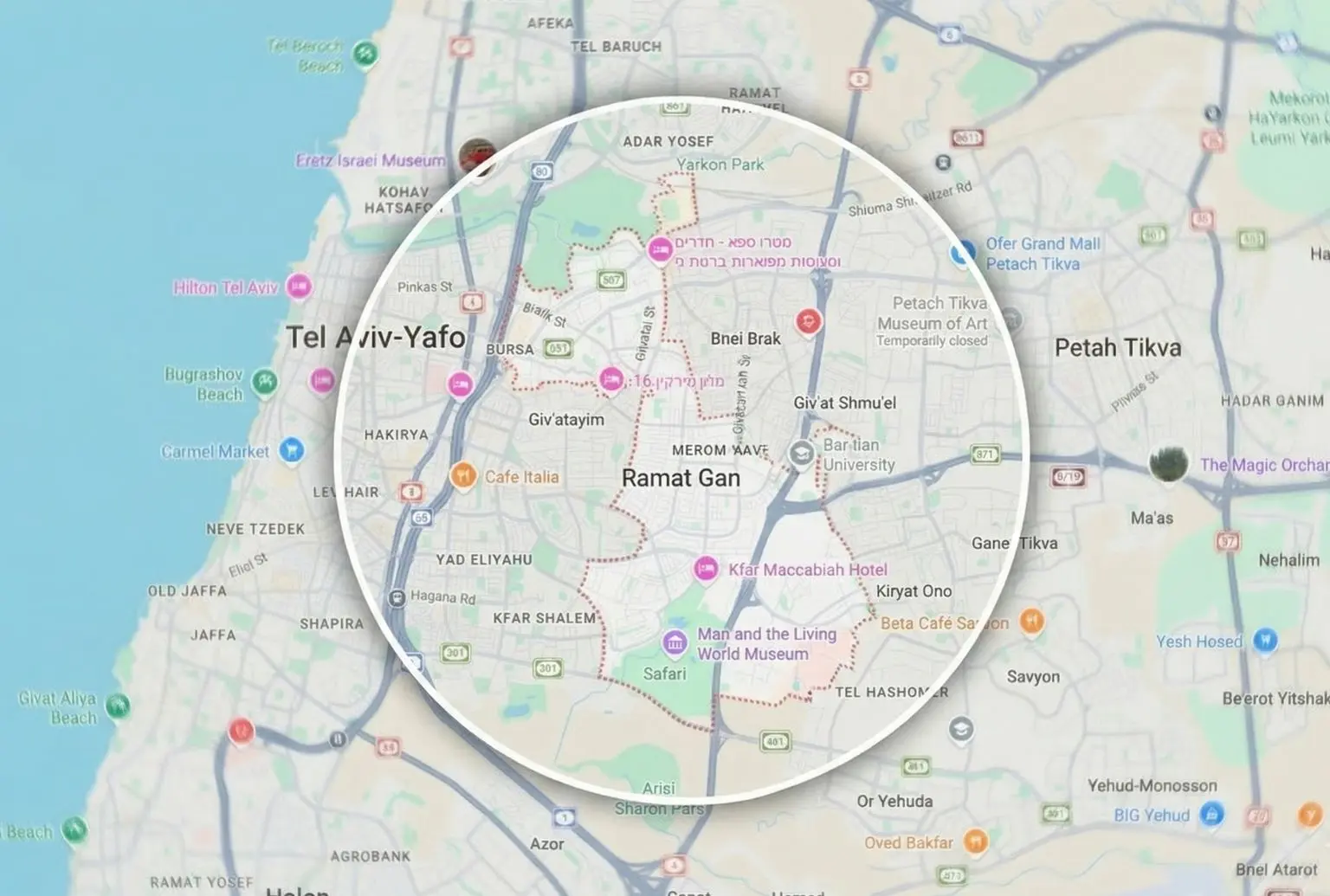
 Google Map
According to a report by the BBC, a devastating Iranian cluster bomb strike has claimed the lives of an elderly couple in the city of Ramat Gan. The incident occurred near Tel Aviv where a high rise residential building was directly impacted by sophisticated Iranian weaponry during the latest wave of regional hostilities. The strike has highlighted the increasing vulnerability of civilian areas to specific types of munitions that bypass traditional defense layers.
Ramat Gan Strike Details
The physical evidence at the scene in Ramat Gan illustrates the sheer power of the Iranian cluster bomb strike. Residents found the concrete roof of a top floor apartment completely shattered with exposed iron rods twisted from the force of the impact. A large hole now marks the point of entry where the munition pierced through the structure to explode within the living quarters.
Neighbors of the victims stated that the elderly man residing in the flat suffered from significant mobility issues. This physical limitation reportedly prevented the couple from reaching a fortified shelter in time after the sirens began to wail across the city. The speed and spread of the cluster submunitions left them with no window of opportunity to seek protection from the incoming blast.
Segal Amir who is a resident of the neighboring apartment provided a harrowing account of the immediate aftermath. She described emerging from her safe room to find the door of the affected flat hanging by its hinges amidst thick clouds of smoke. The front section of the apartment was entirely destroyed by the shrapnel and pressure generated by the cluster warhead during the late night attack.
Context of Iranian Munitions
Military analysts note that the Iranian cluster bomb strike represents a tactical shift in the munitions being deployed against Israeli population centers. Iran is reportedly utilizing missiles packed with cluster submunitions which are designed to scatter over a wide geographic area upon descent. These weapons are inherently difficult to intercept because the primary missile releases dozens of smaller explosives before impact.
The Israeli military has maintained that its aerial defense systems successfully neutralize a high percentage of incoming threats aimed at residential zones. Official statements from the Israel Defense Forces claim that approximately seventy percent of Iranian missile launchers have been successfully targeted and destroyed. Despite these defensive successes the sheer volume and nature of cluster munitions continue to pose a significant challenge to the Iron Dome and Arrow systems.
Cluster bombs are particularly lethal in urban environments due to the high density of residential structures and civilian populations. The shrapnel from such a strike can penetrate multiple walls and cause extensive damage to surrounding infrastructure within seconds of the initial explosion. This recent incident in Ramat Gan serves as a stark reminder of the technical difficulty involved in stopping saturated missile attacks involving submunitions.
Regional Humanitarian Impact
The death of the elderly couple has sparked renewed concerns regarding the safety of vulnerable populations during active missile barrages. Many senior citizens and individuals with disabilities in Ramat Gan find it physically impossible to comply with the strict time requirements for reaching underground shelters. This demographic reality often results in higher casualty rates among those who cannot move quickly during emergency alerts.
Local authorities have documented that the shrapnel from the Iranian cluster bomb strike caused perforations in the walls of multiple adjacent units. The widespread damage suggests that the munition was designed to maximize the lethality zone rather than striking a singular point of interest. This approach to warfare has drawn significant attention from international observers monitoring the humanitarian situation in the Middle East.
Residents in the vicinity of the strike have reported a heightened sense of anxiety as the conflict continues to escalate between regional powers. The visible destruction of a concrete reinforced building has undermined the sense of security that many felt within their own homes. The incident is being analyzed by safety experts to determine if existing shelter protocols need to be adjusted for those with limited mobility.
Strategic Future Implications
The ongoing use of such weaponry suggests that the technical arms race in the region is entering a more dangerous and unpredictable phase. If the Iranian cluster bomb strike is indicative of future salvos then air defense networks will require significant upgrades to handle multi part warheads. Defense contractors are already looking at high energy lasers and more advanced interceptors to counter the threat of scatter able explosives.
Furthermore the claim by the Israeli military regarding the destruction of Iranian launchers will be under intense scrutiny following this breach of defenses. While tactical successes on the ground are vital the ability of the adversary to launch sophisticated strikes remains a persistent threat. The balance of power remains fluid as both sides adapt their offensive and defensive capabilities to the evolving nature of modern missile warfare.
The international community continues to monitor the situation closely to prevent further escalation into a full scale regional conflict. For the residents of Ramat Gan the immediate focus remains on recovery and securing residential areas against potential future strikes. The tragic loss of life in this incident underscores the high civilian cost of the current geopolitical tensions spanning the Middle East.
Frequently Asked Questions
What makes an Iranian cluster bomb strike difficult to stop?
Cluster munitions are difficult to stop because they release many smaller submunitions over a wide area making it hard for interceptors to target every individual explosive. This saturated approach can overwhelm standard air defense systems like the Iron Dome.
Has Israel destroyed the Iranian missile launchers?
The Israeli military has claimed to have destroyed seventy percent of Iranian missile launchers to date. However sophisticated munitions continue to be launched from remaining mobile platforms or hidden sites across the region.