

- PAF launches retaliatory airstrikes on multiple Afghan cities recently.
- Opposition demands medical access for Imran Khan before any dialogue.
- Failed US-Iran Geneva talks raise fears of imminent military strikes.
Dr. Moeed Pirzada has identified three critical geopolitical and political conflicts that are currently unfolding simultaneously, creating a complex challenge for the region. These battle zones include the escalating military conflict on the Pakistan-Afghanistan border, the intricate internal political reconciliation efforts in Pakistan, and the looming threat of a massive United States military strike on Iran following a breakdown in diplomatic negotiations. Each of these fronts carries significant weight for Pakistan’s national security and regional stability.
Escalation on the Pakistan-Afghanistan Border
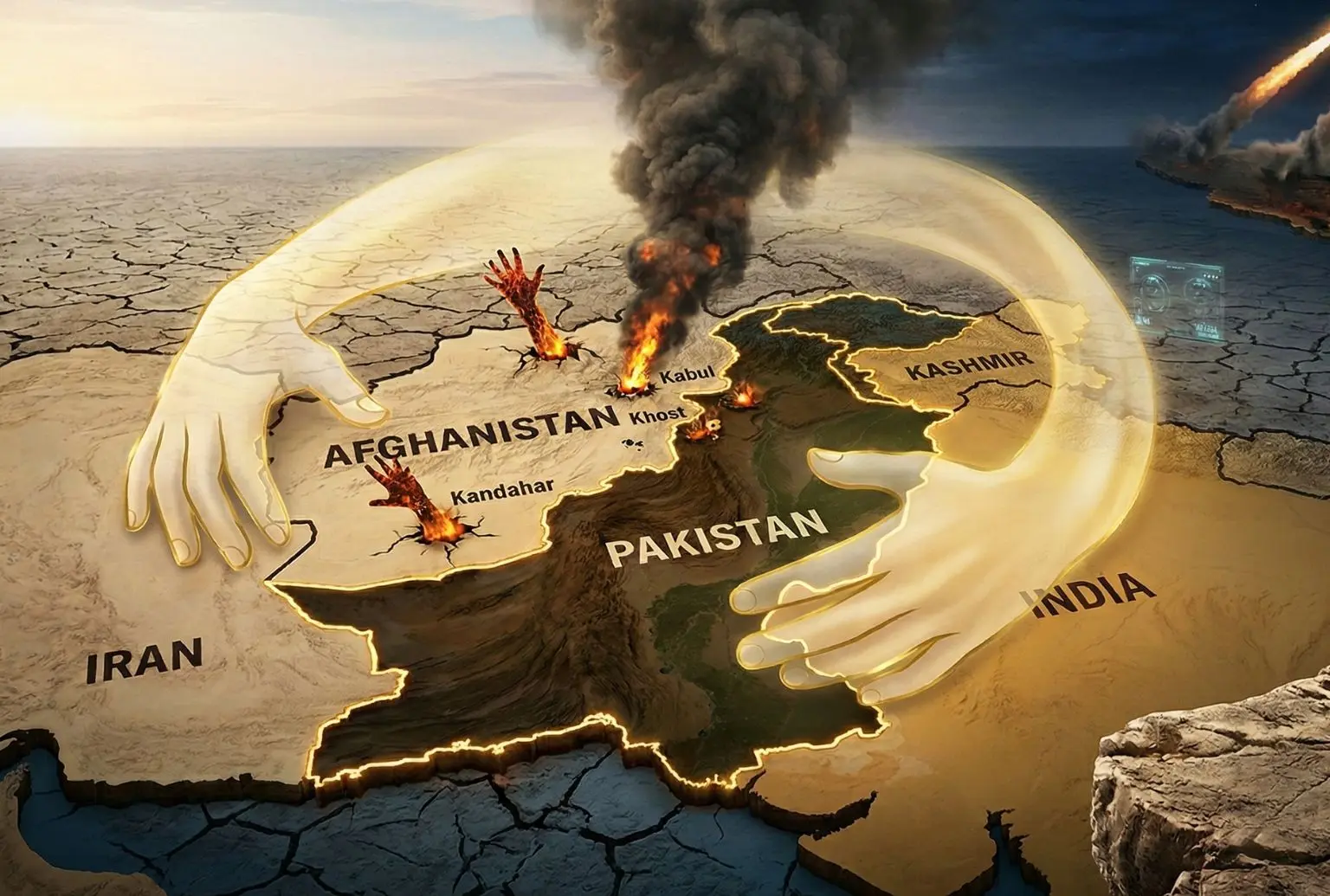
The conflict on the western border has reached a fever pitch following alleged attacks by Afghan Taliban militias on Pakistani border posts. In response, the Pakistan Air Force (PAF) launched heavy retaliatory airstrikes targeting multiple Afghan cities, including Kabul, Khost, and Kandahar. These operations, as noted by Dr. Moeed Pirzada on his YouTube analysis, reportedly resulted in significant casualties and the destruction of several Taliban outposts. This military escalation marks a sharp departure from previous engagement strategies.
The Narrative of Strength and Domestic Optics
The analysis suggests that the Pakistani military establishment has intentionally framed the Afghan Taliban as a manageable adversary to project strength to the domestic population. By showcasing military decisiveness and efficiency, the establishment aims to reinforce a specific narrative of security. However, Pirzada warns that this approach may be a strategic miscalculation. Alienating the Afghan Taliban could potentially ignite a long-term war of resistance that might eventually target specific internal regions of Pakistan.
India’s Strategic Gain in the Western Region
A significant consequence of the rift between Islamabad and Kabul is the opening it provides for regional rivals. India has capitalized on this tension by accepting an Afghan Taliban envoy in New Delhi, effectively securing a diplomatic and strategic presence on both the eastern and western borders of Pakistan. This shift allows India to gain “strategic depth,” complicating Pakistan’s regional security calculus significantly as it faces pressure from multiple sides.
Internal Political Maneuvering and Reconciliation
On the domestic front, rumors of political reconciliation have surfaced as Prime Minister Shehbaz Sharif’s government reportedly reached out to the opposition, Tehreek Tahafuz Aiyeen-e-Pakistan. This move draws parallels to the 2006 Charter of Democracy, suggesting an attempt to stabilize the volatile political landscape. However, the opposition’s participation remains contingent on specific demands regarding the treatment and medical care of PTI founder Imran Khan.
Imran Khan’s Health and Legal Optical Shifts
The primary condition set by the opposition for any meaningful dialogue is granting Imran Khan access to his private physicians and moving him to a specialized facility like Shifa International Hospital. Pirzada analyzes recent minor legal reliefs granted to Khan and Bushra Bibi as “political optics” rather than genuine judicial victories. These moves are viewed as attempts to defuse international scrutiny, particularly following recent debates on human rights and democracy in the British Parliament.
Failed Geneva Talks and the US-Iran Standoff
Beyond Pakistan’s borders, the global stage is set for a potential confrontation between the US and Iran. The third round of talks in Geneva, mediated by Oman, reportedly ended in failure due to maximalist American demands. The US representatives required Iran to dismantle key nuclear sites and surrender all enriched uranium, a condition that was almost certain to be rejected. This breakdown is seen by many analysts as a manufactured pretext for future military action.
Domestic US Pressures and Imminent Military Action
The push for a strike on Iran is heavily influenced by domestic US political pressures and the positioning of significant naval assets in the region, including the USS Abraham Lincoln. Pirzada suggests that any potential military action could be timed to minimize economic shocks to US financial markets. As the Zionist lobby maintains pressure on the Trump administration, the risk of a regional explosion remains high, adding another layer of uncertainty to Pakistan’s external environment.