

Federal and Provincial Representation
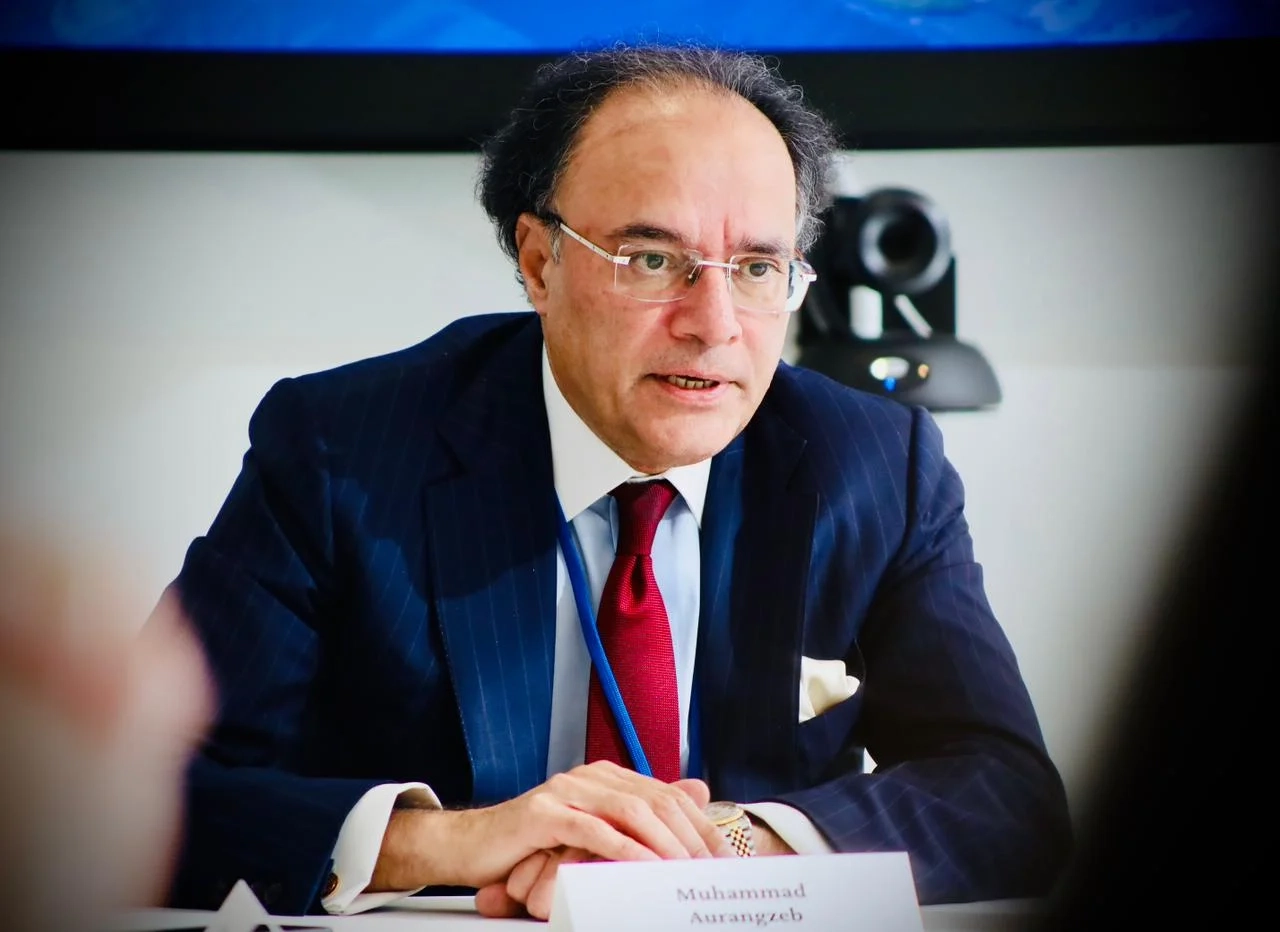
The 11th meeting of the National Finance Commission (NFC) commenced in Islamabad on Thursday under the chairmanship of Finance Minister Muhammad Aurangzeb. The session was attended by the chief ministers of Sindh and Khyber Pakhtunkhwa, acting as provincial finance ministers, while Punjab and Balochistan were represented by their respective finance ministers. Adviser to KP CM on Finance Muzzammil Aslam, FBR Chairman Rashid Langrial, and private members from all provinces also joined the deliberations.
Planning Minister’s Proposal
Minister for Planning Ahsan Iqbal emphasized the need to revisit both vertical and horizontal distribution formulas between the Centre and provinces. According to Geo TV, a working paper titled “Revisiting the NFC Award” was shared with Prime Minister Shehbaz Sharif, outlining two scenarios for vertical distribution.
- Scenario I: Upfront deductions of 2.5% from the divisible pool for national priorities such as the war on terror, water security, Civil Armed Forces, and grants to AJK & GB. The remaining pool would then be distributed 57.5% to provinces and 42.5% to the Centre.
- Scenario II: Expenditures for BISP and HEC deducted upfront, followed by the same 57.5%–42.5% split. By FY2030, federal resources would be 11–12% higher than baseline.
Horizontal Distribution Options
The working paper noted that the current formula gives 82% weight to population, leaving poverty, revenue generation, and density with minimal significance. Three alternative options were proposed:
- Option 1: Population weight reduced to 78%, with modest increases for density, fertility, and forest cover.
- Option 2: Population weight reduced to 68%, revenue generation raised to 10%, fertility and forest cover included.
- Option 3: Population weight reduced to 60%, revenue generation raised to 20%, fertility and forest cover at 5% each.
Provincial Shares Under Scenarios
- Punjab: Existing 51.74% → 47.26% (Scenario 1), 44.73% (Scenario 2), 41.89% (Scenario 3)
- Sindh: Existing 25.55% → 25.05%, 25.55%, 25.09%
- KP: Existing 14.62% → 17.12%, 16.95%, 15.67%
- Balochistan: Existing 9.09% → 9.75%, 11.5%, 12.02%
- ICT: Existing 0% → 0.83%, 1.26%, 5.33%
Fiscal Challenges
The report highlighted that despite provinces receiving 57.5% of divisible pool transfers, their revenues remain stagnant at around 1% of GDP, with weak performance in services taxation, agriculture income tax, and property taxation. It warned that structural imbalances threaten the sustainability of Pakistan’s fiscal federalism, as federal deficits of 5–8.4% over the past decade have fueled debt accumulation and rising debt servicing costs.