

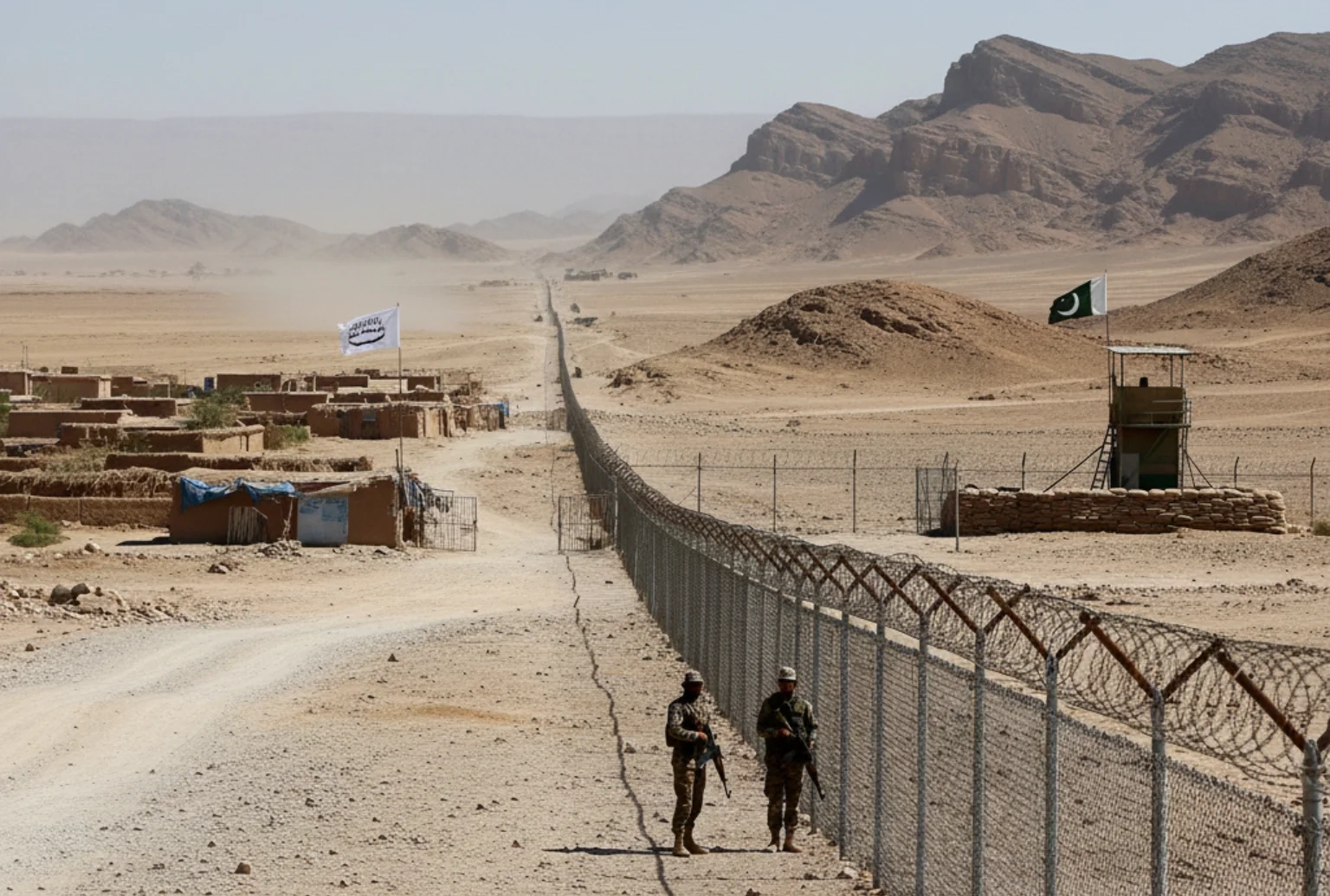
This article explores the historical background and political significance of the Durand Line, the border that has shaped relations between Pakistan and Afghanistan for more than a century. Drawing on the analysis of Muhammad Bilal Ghori, it highlights the treaties that established the line, the role of Afghan monarchs such as Zahir Shah, and the disputes that have kept the issue alive in regional politics. The narrative traces how the Durand Line became a symbol of unresolved tensions, influencing diplomacy, security, and national identity on both sides of the border.
Origins of the Durand Line
The Durand Line, the border separating Pakistan and Afghanistan, was first established in 1893 when Emir Abdul Rahman Khan signed an agreement with British Foreign Secretary Mortimer Durand. This line became the official boundary between British India and Afghanistan. Later, the Rawalpindi Treaty of 1919 reaffirmed Afghanistan’s recognition of the Durand Line as an international border, with Kabul pledging not to interfere beyond the Khyber Pass.
Zahir Shah and the Afghan Monarchy
The assassination of King Nader Shah in 1933 by Hazara student Abdul Khaliq brought his young son Zahir Shah to power. Zahir Shah, remembered as Afghanistan’s last monarch, ruled for nearly four decades. His reign was marked by relative stability and the introduction of the 1964 constitution, which emphasized human rights and personal freedoms. Despite his democratic vision, his government was heavily influenced by his uncles and later his cousin, Prime Minister Sardar Dawood Khan.
Border Tensions and Pak Afghan Relations
During the partition of India, Afghanistan attempted to renegotiate the Durand Line, arguing that Pashtun communities lived on both sides of the border. Britain rejected the request, declaring the line permanent. After Pakistan’s independence, Afghanistan initially opposed its membership in the United Nations, though it later withdrew its objection. Relations remained strained, with incidents such as the burning of Pakistan’s embassy in Kabul highlighting the hostility.
The Pakhtunistan Question
Prime Minister Sardar Dawood Khan pursued a nationalist agenda, calling for the abolition of the Durand Line and the inclusion of Pakistan’s North West Frontier Province into Afghanistan. In his autobiography Friends Not Masters, Pakistan’s President General Ayub Khan described Afghanistan’s deliberately vague demand for Pakhtunistan as a way to interfere in Pakistan’s internal affairs without making direct territorial claims.
Fall of the Monarchy
Differences between Zahir Shah and Dawood Khan eventually led to political upheaval. In 1973, while Zahir Shah was undergoing medical treatment in Italy, Dawood Khan seized power, ending the monarchy. Zahir Shah spent nearly three decades in exile before returning in 2002, after the fall of the Taliban regime. He participated in the Loya Jirga on Afghanistan’s future and lived in Kabul until his death in 2007 at the age of 92.
Legacy of the Durand Line
Analyst Muhammad Bilal Ghori concludes that the Durand Line is more than a border. It is a symbol of unresolved tensions between Pakistan and Afghanistan. From colonial treaties to modern disputes, the line continues to shape geopolitics, trade, and security in South Asia. Its legacy remains central to the challenges of regional integration and the quest for stability.