
 Ai
Ai
Is Your Gas Bill Increasing? New LPG Price Hike Explained
Liquefied Petroleum Gas prices in Pakistan have witnessed a sharp increase starting April 1 which directly impacts millions of households and public transport users across the country. This surge was officially announced by the Oil and Gas Regulatory Authority following shifts in the global energy landscape. The adjustment reflects the ongoing volatility in international markets where crude oil prices have remained sensitive to geopolitical shifts.
The BBC reported that the recent escalation in tensions involving the United States, Israel, and Iran has played a primary role in driving up energy costs. This regional instability has not only affected crude oil but has also trickled down to affect the pricing of secondary fuels like LPG. In Pakistan where a significant portion of the population relies on this fuel for daily survival the change is expected to have widespread economic consequences.
Significant Price Surge
According to the official notification released by the Oil and Gas Regulatory Authority the price of LPG has been increased by 78 rupees per kilogram. This adjustment brings the new consumer price to 304.12 rupees per kilogram for the month of April. Such a drastic jump represents one of the more significant monthly increases seen in recent times reflecting the pressure on the national energy sector.
The notification further clarifies that the minimum price for a domestic LPG cylinder weighing 11.8 kilograms is now set at 3,588 rupees. This domestic cylinder is the standard unit used by families for cooking and heating purposes especially in areas where natural gas infrastructure is absent. The price hike is expected to strain the budgets of middle and lower income groups who are already dealing with high inflation rates.
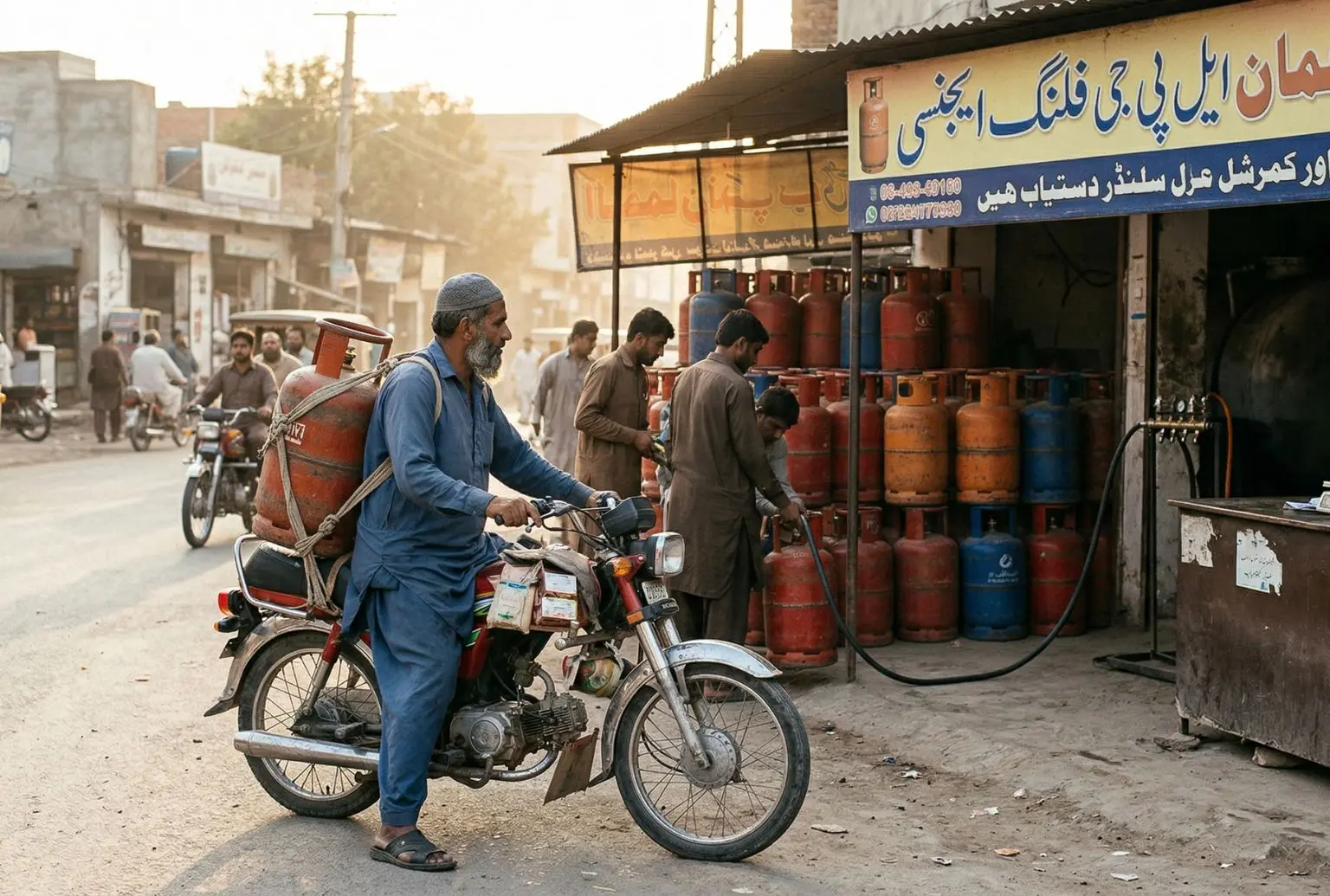
While the official rates are set by the government the actual cost to the consumer often varies based on location and supply availability. In many northern regions and remote areas of Pakistan LPG is the only viable source of energy for the population. For these citizens the increase in official rates translates to even higher costs at the retail level due to transportation and distribution overheads.
Global Market Impacts
The rise in domestic prices is inextricably linked to the broader geopolitical situation in the Middle East which remains a primary source of energy imports. Specifically the tensions between Iran and its regional adversaries have created a climate of uncertainty that affects supply lines and transport costs. Pakistan depends heavily on both sea routes and land routes for its LPG requirements making it vulnerable to these external shocks.
Irfan Khokhar who serves as the Chairman of the All Pakistan LPG Distributor Association noted that the conflict in the region had initially caused some disruptions in the land import routes from Iran. However he stated that the situation regarding these land routes is now showing signs of improvement. Despite this recovery the initial friction in the supply chain contributed to the necessity of a price adjustment in the local market.
Pakistan produces a small portion of its required LPG locally while the rest must be imported to meet the growing national demand. The reliance on imports means that any fluctuation in the value of the Pakistani rupee against the US dollar also plays a critical role in determining the final cost. This combination of international commodity pricing and currency valuation continues to pose a challenge for energy regulators in the country.
Domestic Consumption Trends
The demand for LPG in Pakistan has seen a steady rise over the last few years as the country grapples with a shortage of natural piped gas. According to data provided by the All Pakistan LPG Distributor Association the daily consumption of LPG in the country is approximately seven thousand metric tons. Due to the increasing scarcity of natural gas this figure has recently surged to around eight thousand metric tons per day.
Local production within Pakistan accounts for only about 2,200 metric tons of the total daily requirement leaving a massive gap of nearly 5,800 metric tons that must be filled through imports. This gap highlights the country’s growing dependence on foreign energy sources. Unlike neighboring countries like India and Bangladesh where piped gas is less common in cities Pakistan has historically relied on a vast natural gas network which is now failing to meet demand.
Because of the ban on new gas connections and the declining pressure in existing pipelines many urban residents have also shifted to using LPG cylinders. This shift has turned LPG from a rural fuel into a critical urban commodity. The use of LPG is also widespread in the public transport sector where rickshaws and small commercial vehicles rely on it as a cost effective alternative to petrol and diesel.
Market Rate Disparities
A significant issue currently facing consumers is the disparity between the rates fixed by the Oil and Gas Regulatory Authority and the actual market prices. While the government has fixed the domestic cylinder at 3,588 rupees private companies and retailers in major cities like Islamabad are reportedly selling the same cylinder for over 5,000 rupees. This massive difference highlights a breakdown in price control and regulation enforcement.
Chairman Irfan Khokhar emphasized that while the regulator sets the prices it is the responsibility of the district administration to ensure that these rates are implemented on the ground. The lack of strict monitoring allows retailers to exploit supply shortages and charge premium prices during periods of high demand. This practice further exacerbates the financial burden on the general public who have no choice but to pay the inflated costs for essential fuel.
Looking ahead the future of LPG pricing in Pakistan will depend on the stability of international oil prices and the ability of the government to manage domestic supply chains. If regional tensions persist the pressure on fuel prices is likely to remain high. For now the citizens of Pakistan must navigate a challenging economic environment where the cost of basic energy continues to rise far beyond official estimates.