
PTI’s Initial Response
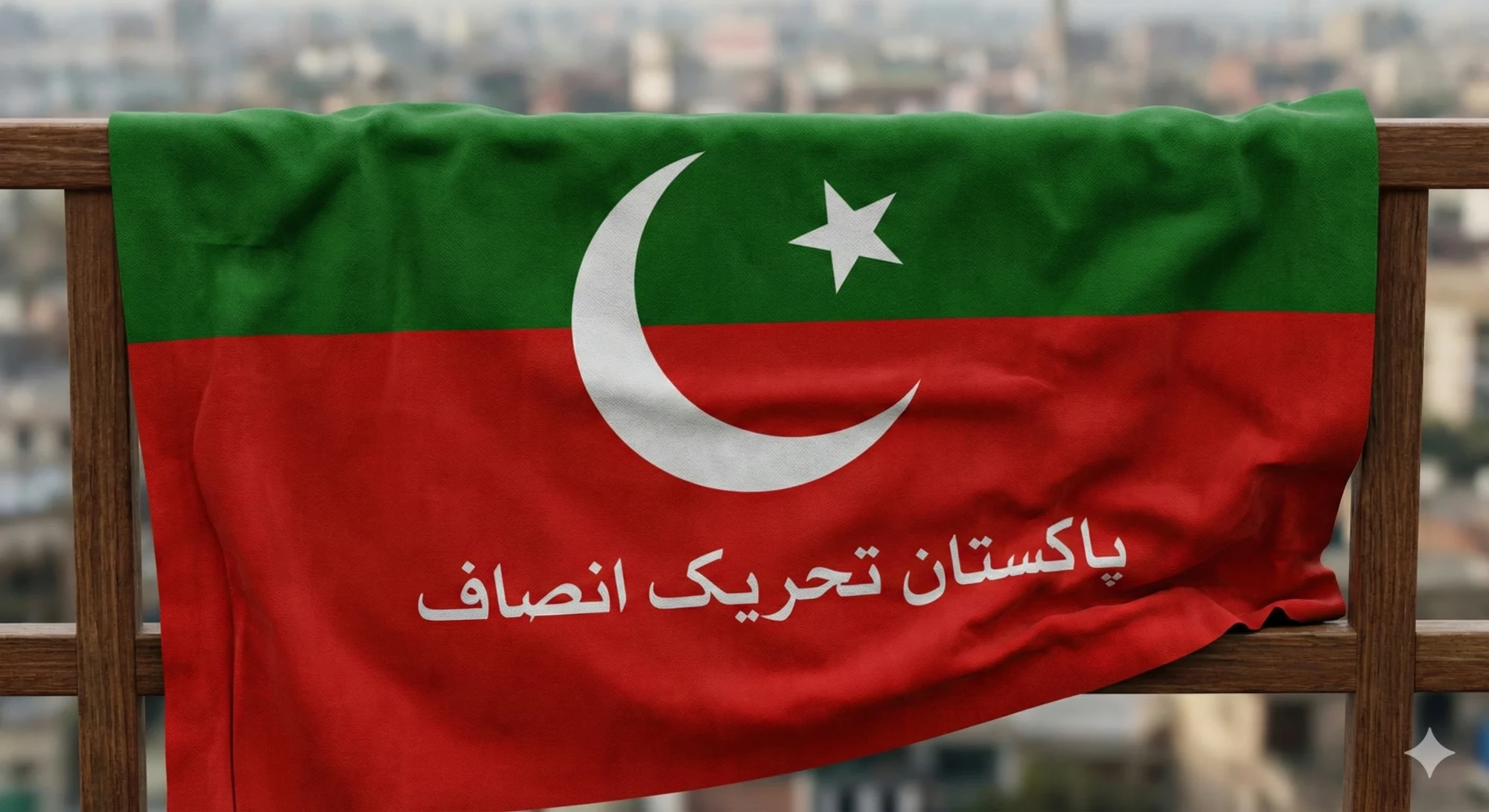
Pakistan Tehreek‑e‑Insaf (PTI) strongly rejected the allegations made by DG ISPR Lt. Gen. Ahmed Sharif Chaudhry against the party and its chairman, Imran Khan. In a statement, PTI said the press conference was part of a “series of irresponsible remarks” that had been continuing for several days, starting from government ministers, extending to political figures, and now reaching the military spokesperson.
Language and Tone Criticized
PTI expressed regret over the way Imran Khan and his family were mentioned during the press conference. The party argued that such language was not appropriate for a national institution and claimed it reinforced the impression that the political crisis was being blamed solely on Imran Khan. PTI maintained that respect for political parties should be reflected in both words and tone, and that referring to an elected prime minister in derogatory terms was not consistent with professional traditions.
Constitutional Concerns
Responding to DG ISPR’s repeated claim that “one person is a threat to the state,” PTI countered that the state becomes weak when the Constitution is ignored, when media is restricted, when dissent is criminalized, and when fear is used to suppress truth. The party argued that these practices, not political opposition, undermine national security.
Timing of the Press Conference
PTI questioned the timing and length of the press conference, noting that Pakistan is facing serious challenges including terrorism and tensions along the Pakistan–Afghanistan border. In such circumstances, PTI said, holding a two‑hour press conference was unnecessary and confusing for the nation.
Imran Khan’s Position on the Army
The party highlighted Imran Khan’s past statements in support of the armed forces, quoting him as saying: “If the army is strong, Pakistan will be strong.” PTI recalled that during the May conflict with India, Khan expressed full confidence in the army, navy, and air force, even while in prison, and publicly challenged India. PTI noted that DG ISPR himself had thanked young supporters and cyber activists at that time for countering propaganda.
Comparisons with Other Political Families
PTI contrasted Khan’s stance with what it described as silence from the Sharif family during the same period. The party recalled that government ministers who now criticize Khan had previously spoken in his favor during the India–Pakistan conflict, with speeches recorded in the parliamentary record. PTI also pointed out that media appearances by Khan’s sisters were being criticized, while past interviews and photographs of other leaders with Indian journalists had been celebrated.
International Advocacy
PTI emphasized that Imran Khan had effectively represented Pakistan’s defense internationally, particularly on the Kashmir issue, which he raised at global forums. The party argued that labeling every political statement as “enemy narrative” closes the door to legitimate dissent and debate.
Political Issues vs. Security Labels
The party listed several issues, overseas remittances, IMF policies, economic crisis, electoral irregularities, and prison conditions, as purely political matters. PTI warned that if every political statement is branded a “security threat,” future governments could misuse the label to silence opponents.
Respect for Public Mandate
PTI said that using derogatory language for an elected prime minister was not just an insult to Imran Khan but to the collective consciousness of the nation. The party accused authorities of ignoring the constitutional principle that sovereignty rests with the people. Despite alleged pre‑poll rigging, removal of election symbols, and rejection of nomination papers, PTI claimed the public expressed unwavering support for Khan in the February 8 elections.
Allegations of Electoral Manipulation
PTI pointed to Form‑47 results, which it said distorted the public mandate, and claimed that both domestic and international observers, including the Commonwealth, had raised concerns. The party criticized the use of constitutional amendments to weaken the sanctity of the vote and the judiciary’s independence.
Continued Pressure on Imran Khan
According to PTI, Khan’s democratic approach clashed with the ego of powerful individuals. The party alleged that Khan faced targeted actions, mental stress, and unfair treatment to divert attention from governance failures, economic difficulties, and IMF reports.
Institutions and Political Neutrality
PTI reiterated that institutions should not be dragged into political disputes. The party said using state powers for private interests was against Pakistan’s national interest. It criticized the DG ISPR’s tone, calling it unnecessarily harsh and politically colored.
Notification Controversy
Addressing the allegation of “politics over a notification,” PTI argued that the controversy was created by the ruling party itself. The party pointed to conflicting statements by government ministers, saying the confusion reflected internal divisions rather than PTI’s actions.
Media Restrictions
PTI also criticized restrictions on media coverage, claiming that Imran Khan’s name and image were censored on television while PTI news was suppressed. The party said such conditions made one‑sided press conferences appear as attempts to impose a narrative rather than inform the public.
Path to Stability
In conclusion, PTI said that national stability depends on respecting the public mandate, ensuring neutral institutions, and holding free elections — not on official narratives or governance imposed through force. The party stated that it leaves the judgment of the press conference and its tone to the people of Pakistan.
Upcoming Joint Press Conference
PTI announced that its central leadership, along with leaders of Tehreek‑e‑Tahafuz‑e‑Aeen Pakistan, including Salman Akram Raja, Asad Qaiser, Mahmood Khan Achakzai, and Raja Nasir Abbas, will hold a joint press conference to further clarify their position.