
- PTI demands inclusion in security policy processes.
- National consensus needed to uproot terrorism.
- Access to Imran Khan crucial for dialogue mandate.
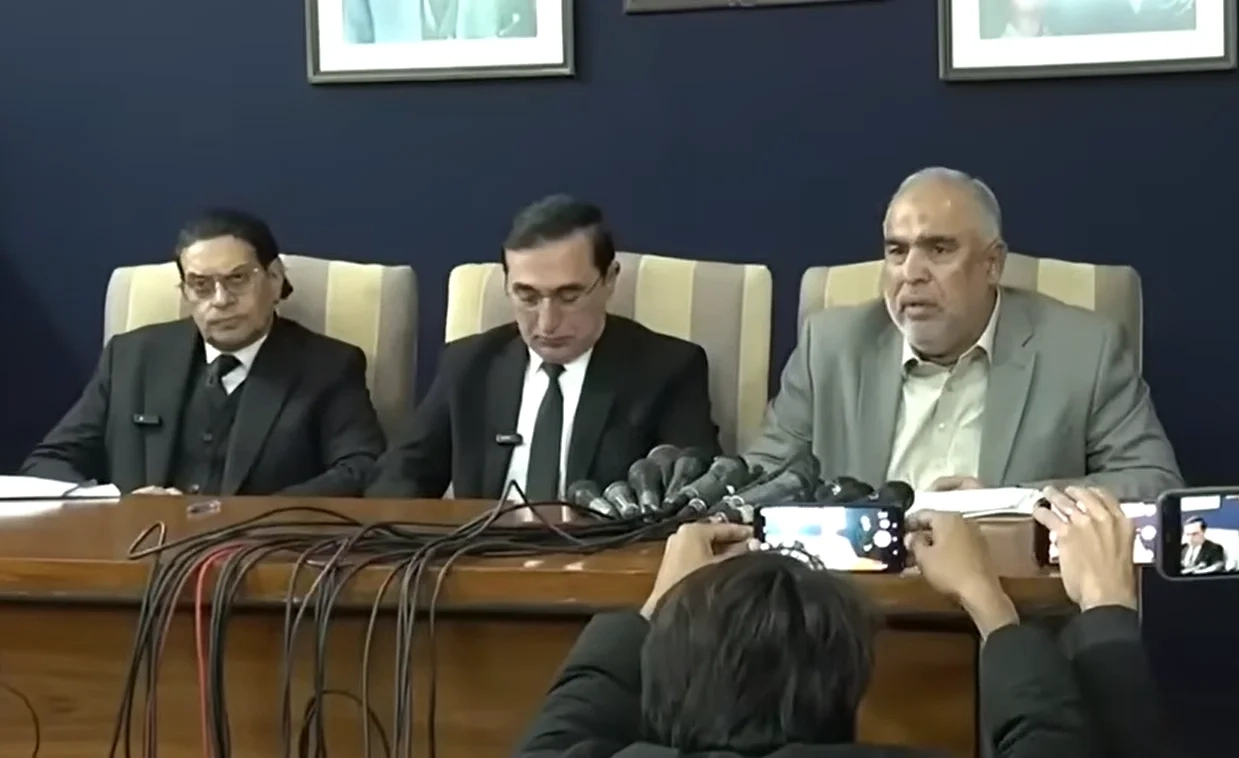
Addressing a critical press conference in Islamabad, Barrister Gohar Khan, Chairman of Pakistan Tehreek-e-Insaf, articulated the party’s unwavering position on counter-terrorism efforts, stating clearly that eradicating terrorism is a fundamental national duty. He stressed that PTI has always maintained a consistent viewpoint against politicizing security matters, advocating for comprehensive, root-level eradication of this menace.
Barrister Gohar vehemently rejected allegations suggesting that the PTI-led government in Khyber Pakhtunkhwa (KP) was withholding cooperation in security matters. He labeled such claims as inaccurate and contrary to facts, insisting that the KP government maintains high standards of governance. He emphasized the necessity of fully implementing the National Action Plan (NAP), arguing that terrorists have no religious or political affiliation, and their elimination requires a unified national approach. PTI leaders recalled that their party has historically stood on the front lines of this conflict and suffered significantly.
Shifting focus to political engagement, Gohar Khan stated that the mandate for conducting national-level negotiations has been delegated to Mahmood Khan Achakzai, who has already expressed readiness for dialogue. However, Gohar implied that high-level political talks remain contingent on the ruling establishment facilitating basic human rights access to their incarcerated leader. He specifically demanded that the government ensure meetings for Imran Khan with his sisters and for Bushra Bibi with her family. He confirmed that the ultimate direction for any political move would follow the instructions provided by the PTI founder.
During the same conference, senior leader Salman Akram Raja highlighted the urgency of crafting a long-term national policy, one designed to last five to ten years. Raja asserted PTI’s commitment to peace and solidarity, vehemently denying any ‘slander’ against the party regarding security matters. He proposed a collaborative approach, urging other political stakeholders to sit with PTI, learn from each other, and develop a collective strategy. He insisted that PTI must be included in the policy formulation process, as the party holds the unique ability to bridge the widening trust deficit between the public and state institutions. Asad Qaiser, another senior PTI figure, echoed these sentiments, highlighting the unified demand from the people of Khyber Pakhtunkhwa to end all forms of terrorism. Qaiser appealed to the federal government to take the provincial assembly into confidence before making major security decisions. He also pointed out that tribal areas have been neglected regarding essential funds, leading to increased poverty and contributing to instability. He called for adherence to constitutional rule and provision of hope and employment for the youth, concluding that harmony between institutions and the public is vital for national progress, criticizing the denial of permission for PTI to hold peaceful political gatherings.