

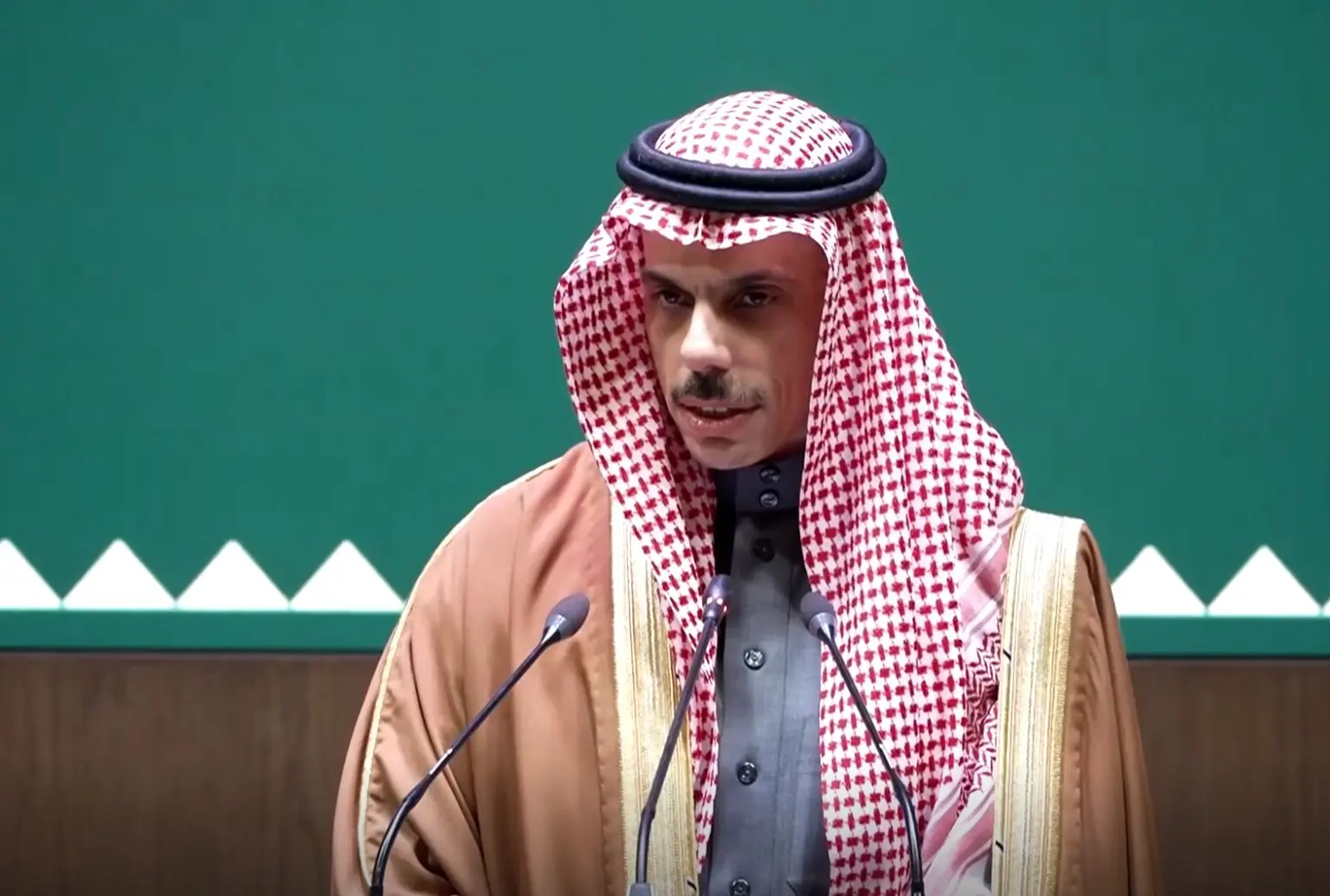
 Screen Grab
Saudi Foreign Minister Prince Faisal bin Farhan confirmed on Thursday that Saudi Arabia maintains the right to respond militarily to Iran following a series of ballistic missile strikes. According to Reuters, the minister stated that the trust established during recent diplomatic efforts has been completely shattered by these hostile actions. The statement marks a significant shift in rhetoric as regional tensions continue to escalate amid ongoing military operations.
Riyadh Missile Strike
The Saudi defense ministry reported the successful interception of four ballistic missiles targeting the capital city of Riyadh early Thursday morning. Although the vast majority of incoming projectiles were neutralized, debris from the interceptions reportedly fell near a major oil refinery located south of the city. This specific incident caused immediate concern regarding the safety of critical energy infrastructure and the potential for domestic disruption.
Witnesses in the capital reported seeing interceptors fired into the night sky from locations near the hotel where a major diplomatic summit was being held. For many residents, this event marked the first time they received emergency warning messages via text or heard audible blasts since the conflict began. The psychological impact on the civilian population has added a new layer of urgency to the government’s security assessments and public statements.
The timing of the attack was particularly sensitive as foreign ministers from approximately a dozen nations were gathered in Riyadh for consultative talks. Representatives from Turkey, the United Arab Emirates, Jordan, Qatar, and Syria were present when the defense systems were activated. The presence of these high level officials underscored the gravity of the security breach and the direct threat posed to regional diplomatic stability.
Regional Conflict Escalation
The missile attacks on Saudi Arabia are part of a broader wave of violence that has impacted several neighboring countries including Qatar and the United Arab Emirates. Authorities in these nations confirmed that their respective oil and gas facilities faced similar threats on Wednesday. Iran has claimed these actions are a direct retaliation for an alleged Israeli strike on the massive South Pars gas field.
Tehran accused Israel of conducting a major operation against its energy facilities which resulted in a significant escalation of the three week old war involving US and Israeli forces. This cycle of retaliation has sent global oil prices significantly higher as markets react to the instability in the Gulf. The disruption to global energy supplies is now reaching levels not seen in recent decades, causing widespread economic concern across the globe.
Saudi Arabia has reportedly been the target of hundreds of Iranian missiles and drones since the inception of the current regional conflict. While Saudi officials maintain that their defense systems have a high success rate, the persistence of these attacks suggests a prolonged period of instability. The use of advanced ballistic technology indicates a sophisticated level of planning and execution by Iranian forces and their regional proxies.
Shattered Diplomatic Trust
Foreign Minister Prince Faisal bin Farhan used his platform at the Riyadh news conference to deliver the harshest criticism of Tehran in recent memory. He accused the Iranian government of engaging in premeditated hostile actions against its neighbors both directly and through various proxy groups. The minister urged Tehran to reign in these entities to prevent further deterioration of the security situation.
The current state of affairs stands in stark contrast to the progress made in 2023 when Saudi Arabia and Iran reestablished diplomatic ties. That agreement was seen as a landmark effort to calm years of enmity and proxy warfare between the two regional powers. However, the recent missile strikes have effectively undone the goodwill generated by those diplomatic breakthroughs, leading to a complete breakdown in communication.
Bin Farhan noted that while Saudi Arabia previously preferred the path of diplomacy, the continued aggression from Iran makes such a path nearly impossible to maintain. He emphasized that the moral and political pressure resulting from these attacks will eventually backfire on Tehran. The minister made it clear that the kingdom will not hesitate to protect its sovereignty and its citizens through any necessary means.
Future Security Outlook
The future of regional security remains highly uncertain as both nations maintain a stance of military readiness. Saudi Arabia’s warning of potential military action suggests that the window for a purely diplomatic resolution is rapidly closing. The international community is watching closely to see if other regional actors will intervene to mediate or if the conflict will expand into a direct confrontation.
Energy security will continue to be a primary concern for the global community as long as Gulf facilities remain in the crosshairs. Any further strikes on refineries or gas fields could lead to a total halt in production from key exporters, which would have catastrophic effects on the global economy. Security experts suggest that the deployment of more advanced defense systems may be necessary to counter the evolving threat from ballistic missiles.
Ultimately, the restoration of trust between Riyadh and Tehran seems unlikely in the immediate future given the current trajectory of the conflict. The Saudi government has indicated that military necessity will dictate their next steps if Iran does not immediately cease its hostile activities. As the war enters its fourth week, the risk of a wider regional conflagration remains at an all time high.