

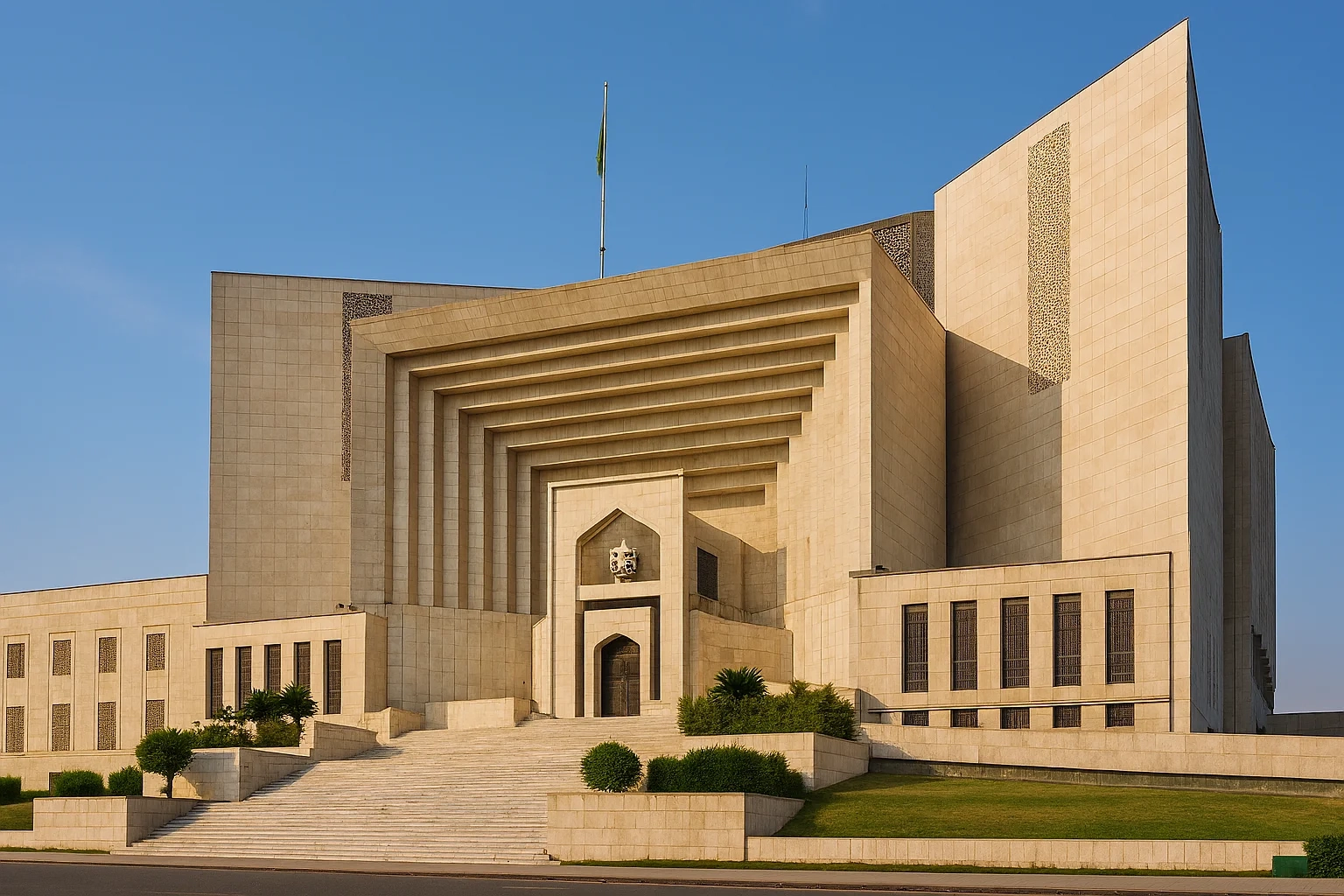
Two senior judges of Pakistan’s Supreme Court have voiced serious concerns over recent amendments to the Code of Conduct for superior court judges, cautioning that the changes could weaken judicial independence and create avenues for control.
According to a report by Dawn, Justice Mansoor Ali Shah and Justice Munib Akhtar conveyed their reservations in a letter addressed to the Supreme Judicial Council (SJC), chaired by Chief Justice Yahya Afridi. The SJC had approved the amendments on October 18, introducing restrictions on judges’ public engagement, media interaction, and participation in social or diplomatic events.
The two judges argued that the revisions, particularly those affecting Article V of the Code, would discourage judges from speaking or writing on matters of constitutional importance, even where legal questions are involved. They warned that undefined terms such as “public controversy” and “political questions” could be misused to silence judicial voices.
They also objected to a new provision requiring judges to report any “influence” to their respective chief justice, who would then inform the Chief Justice of Pakistan. In their view, this mechanism could be manipulated to suppress whistleblowing by judges resisting external pressure.
Follow Us on WhatsApp for latest updates
Further criticism was directed at the incorporation of earlier SJC guidelines barring judges from attending cultural, political, or diplomatic functions. The judges said such restrictions reduce the judiciary’s visibility and disconnect it from the community. Similarly, a clause treating the solicitation of invitations to international conferences as misconduct was described as counterproductive, since such forums enhance professional competence.
Justice Shah and Justice Akhtar also highlighted procedural concerns, noting that the amendments were approved despite pending challenges before the Supreme Court regarding the seniority of Islamabad High Court Chief Justice Sardar Muhammad Sarfraz Dogar and the 26th Constitutional Amendment. They argued that constitutional propriety required postponement until those matters were resolved.
The judges cautioned that, in Pakistan’s fragile democratic environment, these restrictions could be weaponized to silence independent voices within the judiciary. “Judicial independence requires openness and moral courage, not silence or conformity,” they wrote.
The debate over the Code of Conduct is expected to remain a flashpoint in discussions about the balance between judicial accountability and independence.