

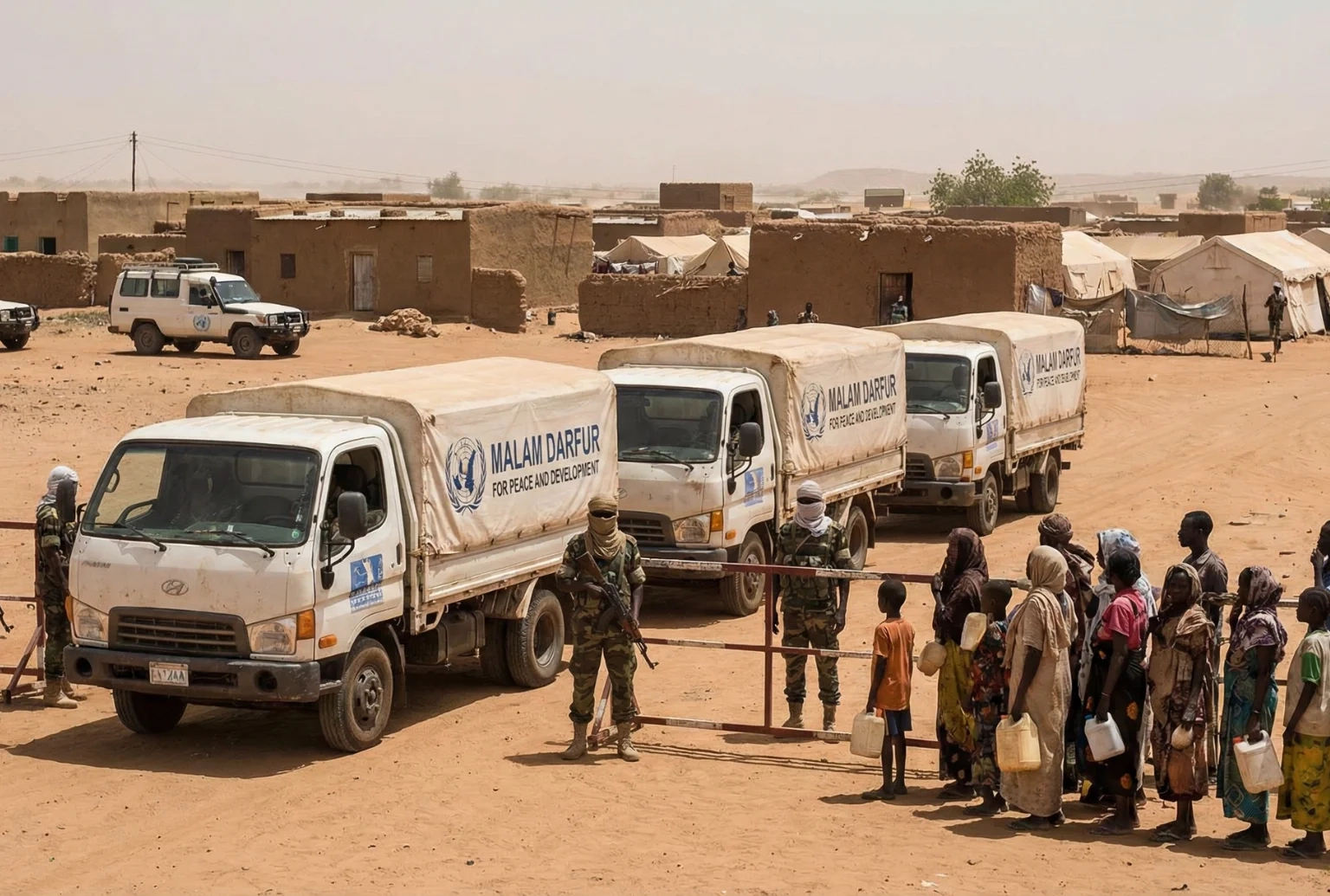
Rare Humanitarian Access
According to The New York Times, Sudan’s RSF, which captured El Fasher in October, has permitted restricted and intermittent humanitarian aid into the city. This marks the first time aid has entered since the takeover, though the blockade and communication blackout remain firmly in place.
Humanitarian Conditions
Local organization Malam Darfur for Peace and Development managed to deliver food supplies to around 1,200 families in two phases. The group confirmed severe shortages of water and medical services, particularly affecting the wounded, elderly, and patients requiring urgent care. Its head, Luqman Ahmed, described the situation as “a disaster in every sense,” noting that residents are desperate and without food.
International Response
Despite weeks of UN negotiations with RSF leaders, safe humanitarian corridors have not materialized. The World Food Programme (WFP) has warned that ongoing military activity makes access unsafe. WFP’s Ross Smith stated that no food convoys are currently able to reach El Fasher. He further announced that due to funding shortages, Sudan’s food rations will be cut from January, with existing resources sufficient for only four months even at survival-level distribution.
Security Risks
Reports cited by The New York Times confirm that aid convoys face extreme danger in RSF-controlled areas, including armed checkpoints, landmines, ambushes, and looting. A WFP truck was attacked last week. Prior to RSF’s capture, El Fasher endured 18 months of siege and shelling, leaving basic services nearly destroyed. Satellite analysis by Yale University’s Humanitarian Research Lab in November revealed no signs of normal civilian life or freedom of movement inside the city.
Human Rights Concerns
Following RSF’s takeover, evidence of mass killings, sexual violence, and arbitrary arrests has emerged, supported by video clips and UN reports. Sudan’s civil war is now considered one of the world’s gravest humanitarian crises, with an estimated 12 million displaced and up to 40,000 deaths.