

 Amwaj.media
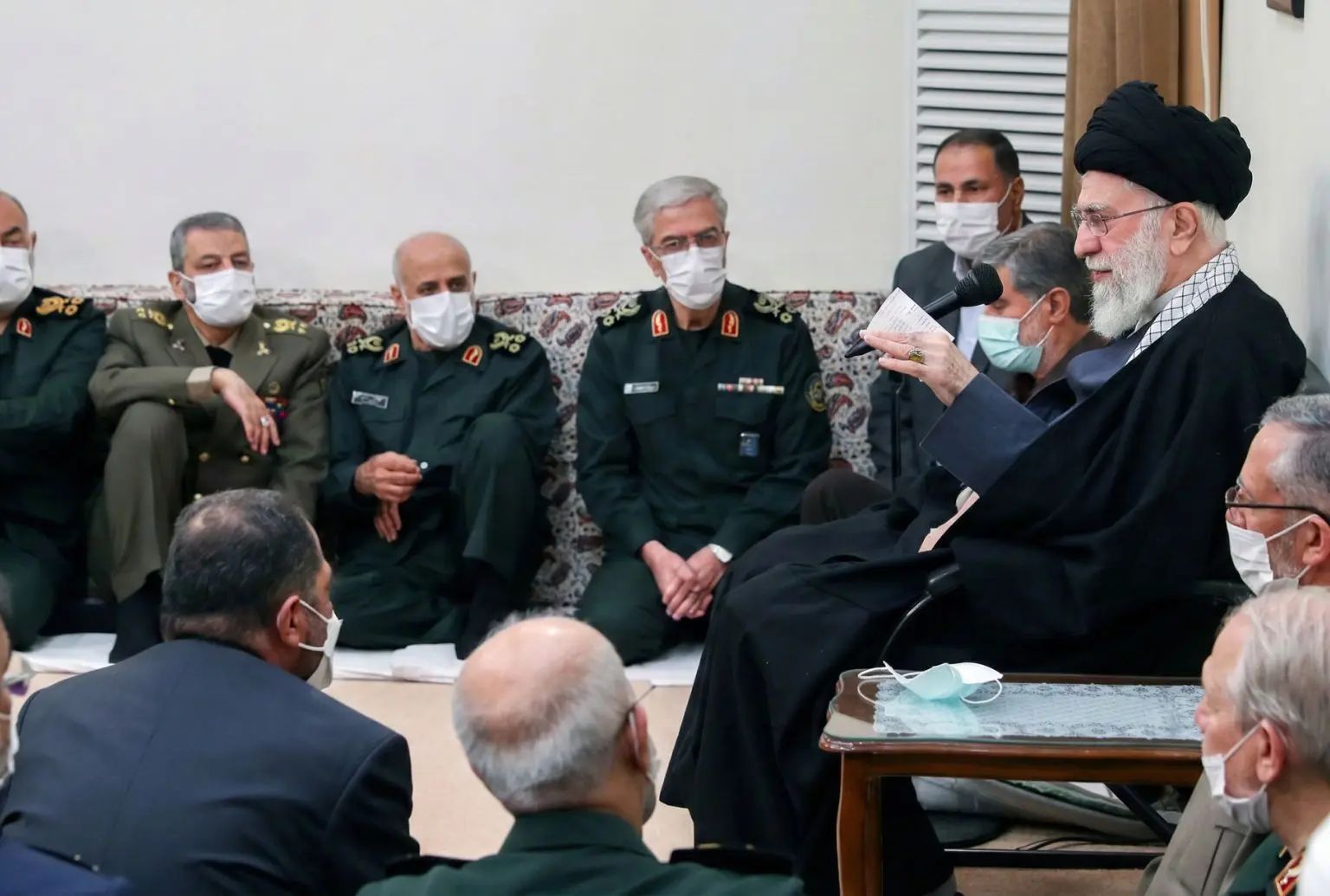
Supreme Leader Ali Khamenei Killed Alongside Top Military Brass in Massive US and Israeli Offensive
The Middle East stands on the precipice of an unimaginable regional conflict following confirmation that a massive wave of coordinated United States and Israeli military strikes has killed Iranian Supreme Leader Ayatollah Ali Khamenei. The devastating bombardment targeted leadership compounds and strategic military installations across the country essentially wiping out the highest echelons of Irans political and military command in a matter of hours.
Iranian state media verified the supreme leaders death within his heavily fortified Tehran office. Satellite imagery analysis of the leadership compound corroborated extensive structural devastation in the immediate area. The catastrophic strikes also claimed the lives of Khameneis daughter son in law and granddaughter demonstrating the profound reach and precision of the incoming munitions.
Intelligence sources shared with international broadcasters that the offensive successfully eliminated approximately forty senior Iranian officials. Among the confirmed casualties are Armed Forces Chief of Staff Abdolrahim Mousavi Islamic Revolutionary Guard Corps Commander in Chief Mohammad Pakpour and Defense Minister General Aziz Nasirzadeh. Furthermore state news agencies announced the death of Ali Shamkhani the secretary of Irans Supreme Defense Council marking a complete decapitation of the nations defense infrastructure.
The Justification and The Ultimatum
Israeli Defense Minister Israel Katz described the operation as a preemptive offensive designed to neutralize imminent and existential threats. He cautioned his citizens to brace for severe retaliatory bombardments from remaining Iranian forces. Merely an hour later Donald Trump verified American participation in the strategic strikes escalating the geopolitical gravity of the crisis.
He delivered a stern ultimatum demanding that Iranian armed forces surrender entirely to secure absolute immunity while openly encouraging Iranian citizens to dismantle the clerical establishment. The president vowed that American forces would obliterate the Iranian missile industry ensuring Tehran never acquires nuclear capabilities.
The Retaliatory Inferno
In swift retaliation Iranian Foreign Minister Abbas Araghchi condemned the offensive as an illegal unprovoked and illegitimate war. The Ministry of Defense alongside surviving elements of the Revolutionary Guards initiated fierce retaliatory bombardments targeting both Israeli territory and regional American military assets.
A barrage of Iranian drones and missiles penetrated Israeli airspace striking Tel Aviv directly. Emergency responders confirmed an apartment building was destroyed resulting in eight civilian fatalities and leaving over one hundred twenty individuals wounded.
Simultaneously Iranian armed forces expanded their counterattack across the region. Military officials claimed successful strikes on five major American military installations including Al Udeid Air Base the Al Dhafra facility in the United Arab Emirates and the headquarters of the American Fifth Fleet in Bahrain. Additional strikes reportedly targeted outposts in Jordan a strategic radar system in Qatar and an American naval support vessel. The conflict has severely disrupted international transit with explosive incidents at the Dubai airport injuring four individuals alongside reported attacks near the Bahrain international airport.
Staggering Civilian Toll
The humanitarian nightmare unfolding inside Iran remains staggering. Emergency response services confirmed that military operations spanned twenty four of the nations thirty one provinces indicating a nationwide bombing campaign.
At least two hundred fifty Iranians have perished in the initial waves. This death toll includes a horrific incident where one hundred forty eight victims died following a blast at a girls school in southern Iran reflecting the immense collateral devastation accompanying the targeted assassinations.
The Fallen Command
The obliteration of Irans military leadership creates a profound operational vacuum. General Mousavi born in Qom during nineteen fifty five held a doctorate in defense management. His appointment represented a historic shift as he was the first regular army commander to lead the armed forces a position previously monopolized by the Revolutionary Guards.
General Nasirzadeh took over the defense ministry portfolio earlier this year after extensive service leading the air force. Meanwhile Pakpour had recently assumed total command of the Revolutionary Guards during a previous intense twelve day regional skirmish. He was known for pledging fierce retribution against Israeli forces promising to unleash absolute destruction to avenge fallen scientists and commanders.
A Constitutional Crisis
A profound constitutional crisis now unfolds in Tehran as the nation grapples with an unprecedented leadership void. Traditionally an eighty eight member Assembly of Experts selects the supreme leader through a deliberate voting process. However due to wartime security constraints assembling these senior clerics is currently deemed impossible.
Emergency constitutional protocols dictate that a provisional council comprising the president the judiciary chief and a Guardian Council cleric will assume executive leadership functions. Intelligence reports previously suggested Khamenei had prepared a confidential succession document naming three senior clerics to ensure continuity of government in the event of his assassination. Despite these preparations intense speculation remains focused on his son Mojtaba Khamenei though the sheer scale of the ongoing bombardment leaves the immediate future of the Iranian state entirely uncertain.