
 AI Gen
Strategic Shifts and the Shadow of a Middle East War
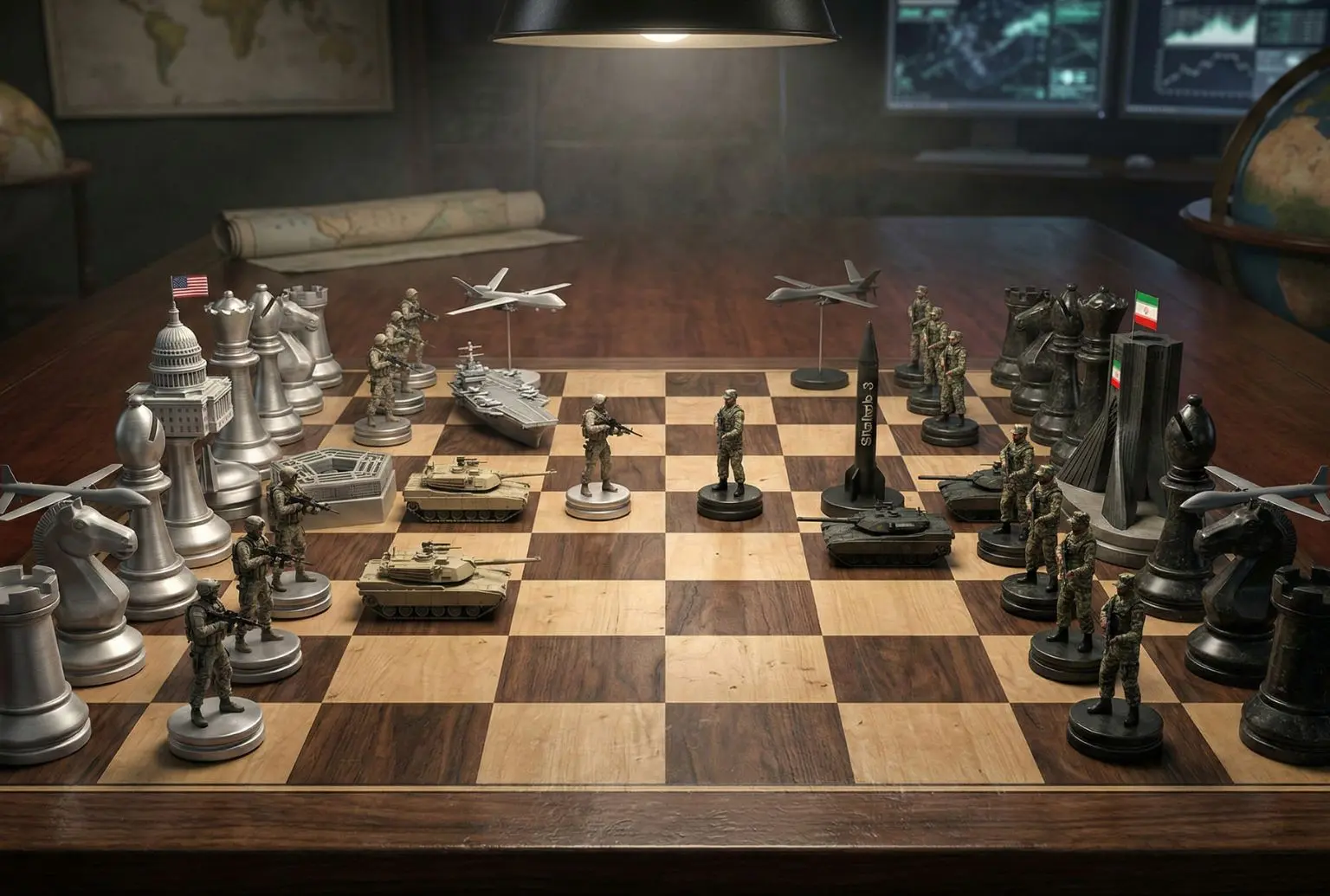
The geopolitical architecture of the Middle East is currently undergoing a profound transformation that challenges the conventional wisdom long held by Western policy circles. As the confrontation between Washington and Tehran intensifies, the underlying mechanics of this struggle suggest a reality far removed from the headlines of mainstream media outlets. Those monitoring the situation through alternative channels have noticed a significant shift in how strategic power is being projected and countered. The current landscape is defined by Iran creating high levels of strategic friction for both the United States and Israel, leveraging asymmetric methods that have caught many seasoned observers off guard. Dr. Moeed Pirzada, a prominent journalist providing analysis from the United States, suggests that the traditional narratives regarding military superiority are being tested by innovative and often low cost Iranian strategies. This evolution in the US Iran conflict dynamics is not merely about troop movements but involves a sophisticated psychological and technological chess match. The way information is consumed in the West has also changed, with alternative media providing a platform for viewpoints that highlight the limitations of conventional military interventions in the region.
Changes in American Military Command and Strategy
The internal structure of the American administration has seen a notable departure from the norms established during previous terms. In his initial years in office, Donald Trump was often guided by a cadre of experienced generals who acted as a stabilizing force against impulsive foreign policy decisions. However, the current environment sees the president surrounded by a circle of loyalists who lack extensive military backgrounds. This change in the advisory landscape has seemingly made the administration more inclined to use military action as a primary political instrument. The lack of traditional military checks within the inner circle has led to a series of uncharacteristic actions that prioritize immediate political optics over long term strategic stability.
The Miscalculation of Targeted Assassinations
A pivotal moment in the current escalation was the decision to target high ranking Iranian figures, a strategy based on the assumption that such strikes would destabilize the regime. Western strategists believed that removing central pillars of the Iranian leadership, such as Imam Ali Khamenei, would trigger internal fractures and public uprisings. These assumptions proved to be fundamentally flawed. By executing such operations during the holy month of Ramadan, the actions served to unify the Iranian public rather than divide them. Instead of the expected regime collapse, the move boosted the popularity of the government and galvanized a sense of national resilience against external aggression.
Emergence of Radical Leadership and Nuclear Concerns
The resulting shift in the Iranian power structure has brought forward an interim leadership that is perceived as significantly more radical than its predecessors. While previous leaders were often constrained by religious edicts against the development of weapons of mass destruction, the new guard may not feel similarly bound. There is a growing concern among international analysts that if the Iranian state perceives an existential threat, the leadership might feel justified in pursuing a nuclear option. This shift in doctrine represents a major escalation in the regional threat level and complicates any future diplomatic negotiations aimed at non proliferation.
Multi Front Retaliation and Asset Targeting
Iran has spent years preparing for the possibility of a regime change war, and its response strategy is now becoming visible. Rather than a localized defense, Tehran has expanded the battlefield to encompass US and Israeli assets across the Gulf and beyond. Reports indicate that strategic targets now include the US Embassy in Saudi Arabia, critical gas infrastructure in Qatar, and even British military installations in Cyprus. By widening the scope of the conflict, Iran aims to increase the cost of any military action for the United States and its regional allies, turning traditional strategic assets into liabilities.
Drone Warfare and the Exhaustion of Defense Systems
The technological aspect of this conflict has seen the effective use of Shahed drone tactics to bypass expensive air defense networks. Iran is deploying these relatively inexpensive drones as decoys to force the US and its partners to deplete their stocks of costly Patriot missiles. Once the defensive shield is saturated or exhausted, Iran then follows up with hypersonic missiles that are much harder to intercept. This asymmetric approach allows a smaller power to neutralize the technological advantage of a superpower by focusing on the economic and logistical costs of missile defense.
Internal Political Pressure and Global Risks
As the military situation becomes more complex, domestic pressure within the United States is mounting. Lawmakers are increasingly vocal about the need to invoke the War Powers Act to limit the executive branch’s ability to wage an undeclared war. This internal friction has led to contradictory statements from the administration as it attempts to justify preemptive strikes while navigating legal hurdles. Furthermore, the lack of sufficient ground troops for a full scale invasion creates a dangerous vacuum. Analysts warn that if conventional objectives fail, there is a heightened risk that leaders might consider the use of tactical nuclear weapons to avoid the appearance of defeat, a move that would have catastrophic global consequences.
Call for International Diplomatic Intervention
The current trajectory of the conflict necessitates a coordinated global response to prevent a full scale regional disaster. There is an urgent need for the Muslim world and international intellectuals to organize peaceful movements demanding an end to the hostilities. Global powers such as Russia, China, and Brazil are being looked upon to intervene through the United Nations to provide a diplomatic off ramp. Without such intervention, the cycle of escalation and retaliation could lead to a war that no side is truly prepared to manage.
Frequently Asked Questions
Q:What are the primary US-Iran conflict dynamics today?
A:The current dynamics are defined by Iran’s use of asymmetric drone warfare to exhaust expensive Western defense systems and a shift toward more radical leadership in Tehran following targeted assassinations.
Q:How do tactical nuclear weapons risks factor into the conflict?
A:Experts fear that if a ground invasion is not feasible and conventional strategies fail, the US or its allies might consider tactical nuclear weapons as a desperate measure to achieve regime change goals.