

 Digital
The United States would need to mobilize at least one million soldiers to achieve total dominance over Iranian territory during a potential ground invasion. This assessment, originally published by a British newspaper and reported by Express News, suggests that current deployment plans are significantly underpowered for such a vast objective.
Military analyst Sam Kiley noted that historical precedents in the region serve as a stark warning against underestimating the requirements for stability. He emphasized that the sheer size of the Iranian landmass combined with its sophisticated defense infrastructure makes a limited strike strategy highly improbable for long term success.
Force Requirements Analysis
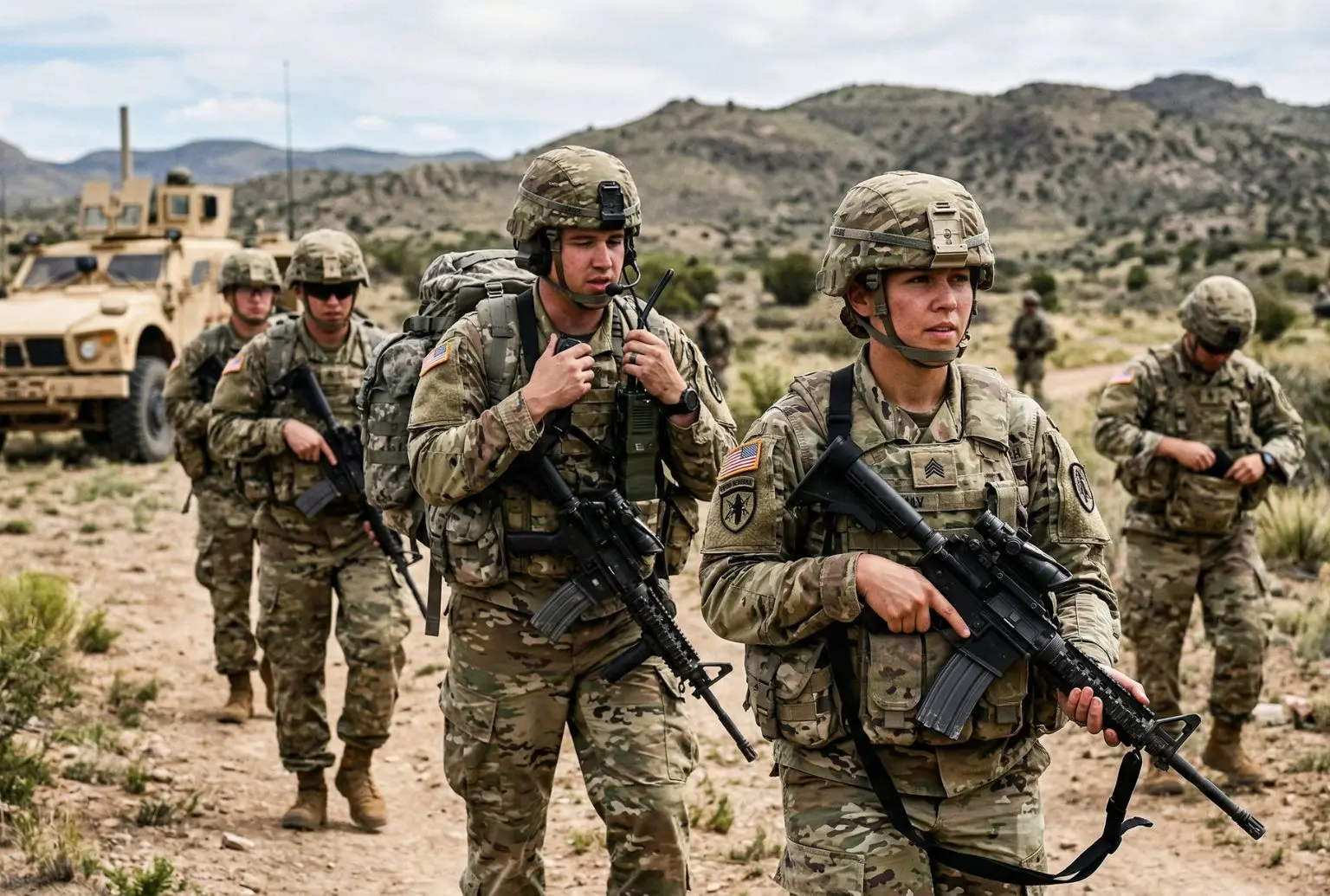
The strategic review highlights that any attempt to secure a nation as large and populous as Iran requires a footprint far beyond current capabilities. While American officials have considered sending an additional 10,000 troops to join existing forces, experts argue this would be a drop in the ocean compared to the actual needs.
Totaling approximately 18,000 personnel would only allow for localized protection or very specific tactical strikes rather than a comprehensive occupation. Sam Kiley argued that a US Iran military conflict involving anything less than a massive surge would likely end in a tactical stalemate or a prolonged strategic retreat.
The Iranian military apparatus includes the Islamic Revolutionary Guard Corps and the regular army which are deeply integrated into the national defense structure. These forces are supported by the Basij militia which provides a secondary layer of resistance that any invading force would find nearly impossible to pacify with limited numbers.
Historical War Context
Looking back at the troop surges in Iraq during 2007 and 2008 provides a clear window into the logistical nightmares of Middle Eastern warfare. At that time, nearly 185,000 US and coalition troops were deployed alongside hundreds of thousands of local security forces to stabilize a much smaller nation.
Even with those massive numbers, total stability remained elusive for years as insurgencies continued to challenge the foreign presence. Similar difficulties were observed in the Helmand province of Afghanistan where thousands of troops struggled to maintain control over relatively small districts against persistent local resistance.
These historical examples suggest that the US Iran military conflict would be exponentially more difficult due to Iran’s superior terrain and more unified military command. The geographic complexity of the Iranian plateau offers natural defensive advantages that neither Iraq nor Afghanistan provided to such an extent.
Iranian Defense Strength
Iran possesses one of the most resilient military frameworks in the Middle East which is designed specifically to counter a technologically superior adversary through asymmetric means. Their strategy relies on a combination of conventional hardware and highly trained paramilitary groups that can operate independently if the central command is disrupted.
The defensive analysis indicates that while the US could initially secure vital oil installations or offshore islands, the inland resistance would be fierce and decentralized. A US Iran military conflict would quickly evolve from a conventional battle into a high intensity guerrilla war across multiple urban and mountainous fronts.
Furthermore, Iran has invested heavily in domestic drone technology and precision missile systems that can target invading forces from great distances. These capabilities mean that even the most advanced military units would face significant casualties and equipment losses in the early stages of a ground campaign.
Strategic Security Risks
Senior former officers from the British military have warned that launching such a campaign without a clear and achievable political end goal is a recipe for disaster. They noted that the global economic fallout from a US Iran military conflict would be unprecedented due to the potential closure of the Strait of Hormuz.
The sheer cost of maintaining a million man army in a hostile environment would likely strain the American economy and lead to severe domestic political pressure. Experts believe that the logistical tail required to support such a force would be vulnerable to constant disruption from long range Iranian strikes and cyber warfare.
In the final analysis, the move toward a full scale ground war is seen as a high risk gamble that could reshape the global order in unpredictable ways. Most military thinkers conclude that diplomacy remains the only viable path to avoid a quagmire that could last for decades and deplete Western military resources.
Frequently Asked Questions
How many troops would the US need for an Iranian ground invasion?
Experts and military analysts estimate that at least one million troops would be required to gain and maintain full control over Iran.
Why is a limited military deployment considered insufficient?
Iran has a large population, vast geography, and strong military forces including the IRGC, making it impossible to secure the country with only a few thousand soldiers.
What lessons were learned from Iraq and Afghanistan?
Previous conflicts showed that even hundreds of thousands of troops often struggle to provide total stability against localized insurgencies and guerrilla tactics.