

 Created
Escalating Middle East Conflict Leaves Over One Thousand Dead as Regional Powers Mobilize
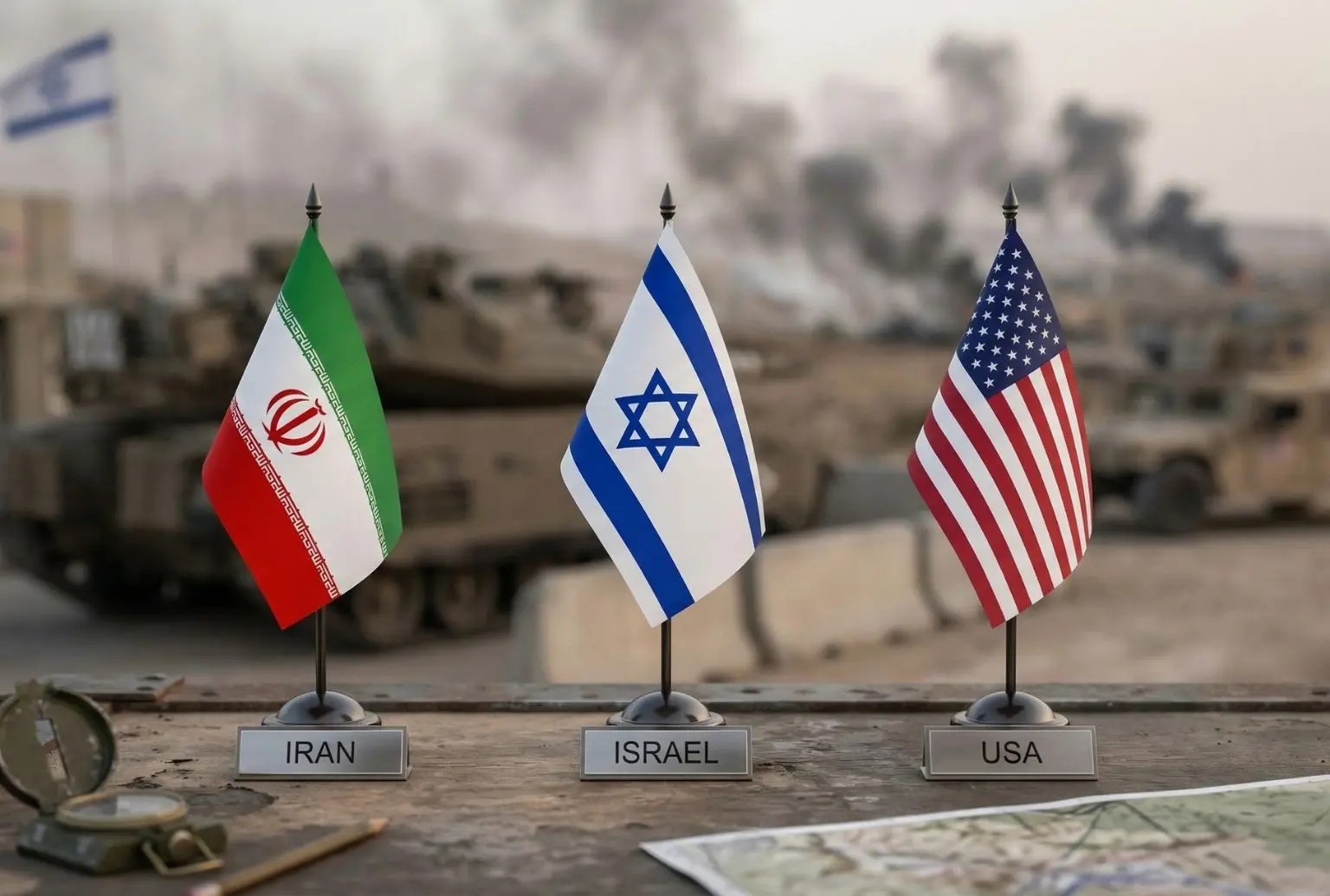
The conflict engulfing the Middle East has entered its eighth day with staggering casualties and a rapidly expanding footprint. At least one thousand three hundred thirty two people have died in Iran following sustained military assaults by the United States and Israel. The relentless bombing campaign began on February 28 and has now drawn multiple nations into a widening regional crisis. Fresh waves of intense bombardments struck the Iranian capital early Saturday morning, shaking the region and sending shockwaves through the international community.
Immediate Facts and Military Scale
The United States Central Command reports striking more than three thousand targets across Iran while destroying forty three Iranian warships. American President Donald Trump has issued a stark ultimatum, demanding an unconditional surrender from Iranian leadership and ruling out any diplomatic agreements until this condition is met. The financial and logistical scale of the American military effort continues to grow at an unprecedented rate. The Center for Strategic and International Studies estimates the first one hundred hours of the campaign, dubbed Operation Epic Fury, cost approximately three billion seven hundred million dollars. Most of this expenditure reportedly falls outside the current defense budget. Officials in Washington have provided conflicting timelines for the operation. While White House representatives suggested the campaign might span four to six weeks, Pentagon leadership declined to offer a definitive conclusion date. President Trump announced a massive mobilization of the defense sector, aiming to quadruple weapons production to sustain prolonged operations.
Iranian Defiance and Global Entanglements
In response to the overwhelming firepower, Iranian forces remain deeply defiant. While military officials confirmed the vital Strait of Hormuz remains open for international shipping, they issued explicit threats to target any American or Israeli vessel attempting to navigate the waterway. Iranian authorities have also broadened their warnings beyond primary combatants. The deputy foreign minister of Iran cautioned European nations that they would become legitimate military targets if they actively allied with American and Israeli forces in the ongoing operations. Global powers are increasingly entangled in the unfolding crisis. Russian President Vladimir Putin engaged in discussions with Iranian President Masoud Pezeshkian, offering condolences for the mounting civilian deaths. Anonymous American officials report that Moscow is supplying Tehran with critical intelligence regarding United States military positions. The conflict has simultaneously triggered an energy shock. The Kremlin noted a significant spike in demand for Russian energy exports, a development that follows an American decision to grant India a thirty day waiver on specific trade restrictions.
Regional Spillage and Economic Impact
The theater of war has expanded well beyond Iranian borders, affecting neighboring Gulf states. Defense systems in Qatar, Kuwait, and the United Arab Emirates have intercepted multiple incoming drones and missiles. The government in Doha confirmed that their air defenses successfully neutralized nine out of ten Iranian drones launched toward Qatari territory on Friday. Saudi Arabia reported similar defensive actions, intercepting numerous drones approaching the airspace around Riyadh. The disruption is echoing through global energy and aviation sectors. Sources close to the Kuwaiti government revealed that the nation has initiated production cuts at select oil fields after exhausting storage capacity for unrefined crude. Global oil prices have surged due to threats surrounding the Strait of Hormuz, a critical maritime passage responsible for approximately one fifth of the global oil supply.
Aviation Operations and European Defense Pledges
Aviation authorities are scrambling to manage regional airspace closures and ensure passenger safety. Hamad International Airport in Qatar has partially resumed operations using dedicated emergency navigation routes. Qatar Airways also announced special repatriation flights destined for major European hubs including London, Paris, Madrid, Rome, and Frankfurt. European nations are actively bolstering defense postures for their regional allies. British Prime Minister Keir Starmer assured Saudi Crown Prince Mohammed bin Salman of comprehensive military backing. The United Kingdom pledged to deploy fighter jets, helicopters, and a naval destroyer to safeguard Saudi territory if required. Additional British Typhoon fighter jets are currently en route to Qatar to support defensive aerial patrols. To reinforce strike capabilities, the United States military is repositioning strategic assets. A B1 bomber recently arrived at a British airbase following an agreement allowing American forces to utilize United Kingdom facilities for defensive operations. Beyond the British commitment, nations including France and Spain have agreed in principle to provide supplementary military support aimed at protecting the interests of their regional allies.
The Israeli and Lebanese Fronts
Inside Israel, authorities are grappling with persistent aerial assaults. Iranian forces are launching continuous waves of drones and missiles toward Israeli targets, prompting frequent air raid sirens and explosions in Tel Aviv, northern districts, and areas near Beersheba in the Negev Desert. Security analysts suggest Tehran is deploying a strategy designed to exhaust Israeli air defense networks and deplete valuable missile interceptor stockpiles. The diplomatic front is equally volatile. Speaking at the United Nations, Iranian ambassador Amir Saeid Iravani accused both Israel and the United States of operating without boundaries, alleging the commission of war crimes against civilian populations. The northern Israeli border faces simultaneous pressure from Lebanon. Hezbollah forces have launched rocket barrages at several northern Israeli settlements in retaliation for military operations in Lebanese territory. Clashes between Hezbollah fighters and Israeli ground troops erupted in the Bekaa Valley in eastern Lebanon. A statement from Hezbollah confirmed their forces intercepted four Israeli military helicopters crossing from Syrian airspace.
Humanitarian Crisis and Displacement
Israeli jets have conducted extensive bombing runs across southern and eastern Lebanese towns. The Ministry of Public Health in Lebanon reports two hundred seventeen fatalities since the military operations commenced. The violence has ignited a severe displacement crisis, with residents fleeing areas like Tyre and the Dahiyeh suburb of Beirut. Educational institutions in the Lebanese capital have been converted into makeshift refugee shelters. Lebanese President Joseph Aoun has urgently appealed to international allies to halt the bombardments, receiving rhetorical support from French President Emmanuel Macron during a recent telephone consultation. Further destabilizing the region, a drone struck a prominent hotel in the Erbil region of Iraqi Kurdistan. The attack followed explicit warnings from the United States embassy regarding potential strikes by Iranian aligned militia groups on facilities housing foreign nationals. The human cost of the conflict remains the most devastating metric. Over the past week, infrastructure including schools and hospitals has suffered extensive damage. The death toll stands at one thousand three hundred thirty two civilians in Iran, more than two hundred in Lebanon, eleven in Israel, and six American military personnel. According to Al Jazeera, United Nations agencies estimate that at least three hundred thirty thousand individuals have been forcibly displaced across the Middle East as the relentless violence continues to reshape the geopolitical landscape.
Source: Al Jazeera
FAQs
Q:What is the current death toll in the Middle East conflict?
A:Over one thousand three hundred people have died in Iran, with additional fatalities reported in Lebanon, Israel, and among American personnel.
Q:Which nations are intercepting drones in the regional escalation?
A:Defense systems in Qatar, Kuwait, Saudi Arabia, and the United Arab Emirates have all intercepted incoming drones and missiles.