

Background: Deadly Assault on US Forces
The United States military has announced a large‑scale operation against the militant group ISIS in Syria, carried out in response to a recent deadly attack on American forces. On December 13, ISIS fighters ambushed US troops near Palmyra, Syria, killing two American soldiers and one civilian interpreter. The incident reignited concerns about ISIS’s resurgence in central Syria and prompted President Donald Trump to vow a decisive response.
Details of the Operation
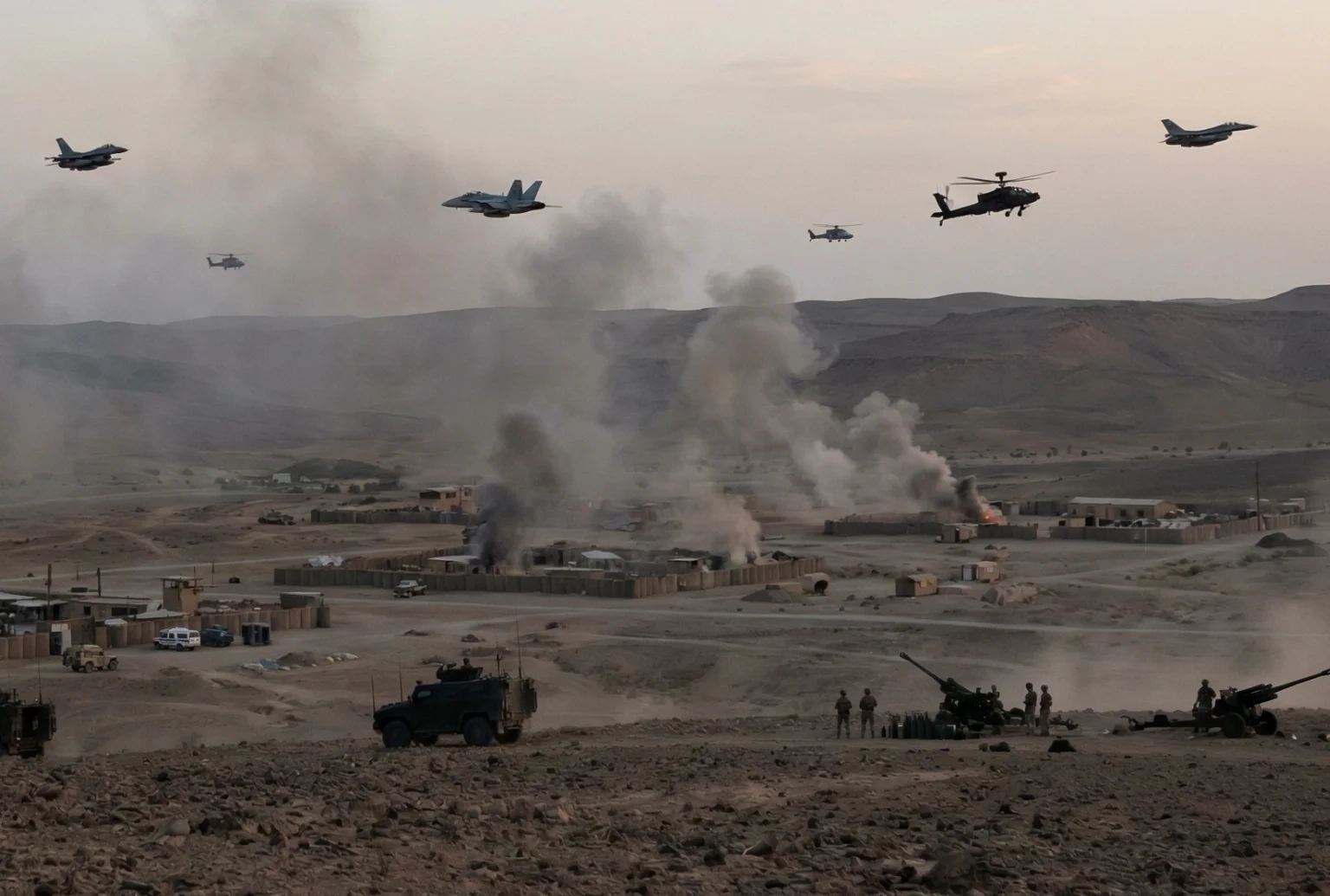
According to US Central Command (CENTCOM), the retaliatory strikes targeted more than 70 ISIS positions across central Syria. The operation involved a combination of fighter jets, attack helicopters, and artillery units, with support from Jordanian aircraft. CENTCOM reported that the strikes destroyed ISIS infrastructure, weapons depots, and command centers, aiming to cripple the group’s ability to stage further attacks.
According to international media reports, the scale of the campaign was unprecedented. ABC News noted that the operation, dubbed “Hawkeye Strike”, was carried out to eliminate ISIS fighters, infrastructure, and weapons sites in direct response to the Palmyra attack. The New York Times, citing US officials, reported that the strikes were conducted by F‑15 and A‑10 aircraft as well as artillery rockets, hitting dozens of targets across Raqqa, Deir ez Zor, and Homs provinces. Syrian state media also acknowledged coalition strikes in the Maadan desert and Jabal al Amour near Palmyra.
Statements from US Officials
Admiral Brad Cooper, CENTCOM’s commander, emphasized that the US will continue to pursue militants who threaten American personnel and allies. He stated:
“We will relentlessly hunt down terrorists who seek to harm Americans and our partners across the region.”
US Defense Secretary Pete Hegseth framed the operation not as the beginning of a new war but as a direct act of retaliation. Speaking to reporters, he said:
“If you target Americans, know this, your life will be short. The United States will hunt you, find you, and kill you without mercy.” He added: “Today, we hunted and we killed our enemies.”
Strategic Context
The strikes highlight the fragility of security in Syria, where ISIS remnants continue to exploit ungoverned spaces despite years of international campaigns to dismantle the group. While ISIS no longer controls large swathes of territory as it did in 2014 to 2017, it maintains sleeper cells and staging grounds in the Syrian desert, particularly around Palmyra and Deir ez Zor.
The US presence in Syria, estimated at around 900 troops, is primarily focused on supporting Kurdish‑led Syrian Democratic Forces (SDF) and preventing ISIS’s resurgence. However, the December attack underscored the risks faced by American personnel operating in contested zones.
Regional Implications
The involvement of Jordanian aircraft signals regional cooperation against ISIS but also reflects broader anxieties among Middle Eastern states about the group’s ability to destabilize borders and fuel extremism. Analysts suggest the strikes were designed not only to punish ISIS but also to reassure allies that Washington remains committed to counterterrorism operations in the region.
Observers warn that while the operation may have dealt a significant blow to ISIS infrastructure, the group’s decentralized nature means it can regroup and adapt. The US response, however, sends a clear deterrent message: attacks on American forces will trigger overwhelming retaliation.
The incident and subsequent strikes may also shape future US policy in Syria, balancing the need to protect troops and allies with the broader geopolitical challenge of managing tensions with Russia, Iran, and the Assad regime, all of whom maintain influence in Syrian territory.