

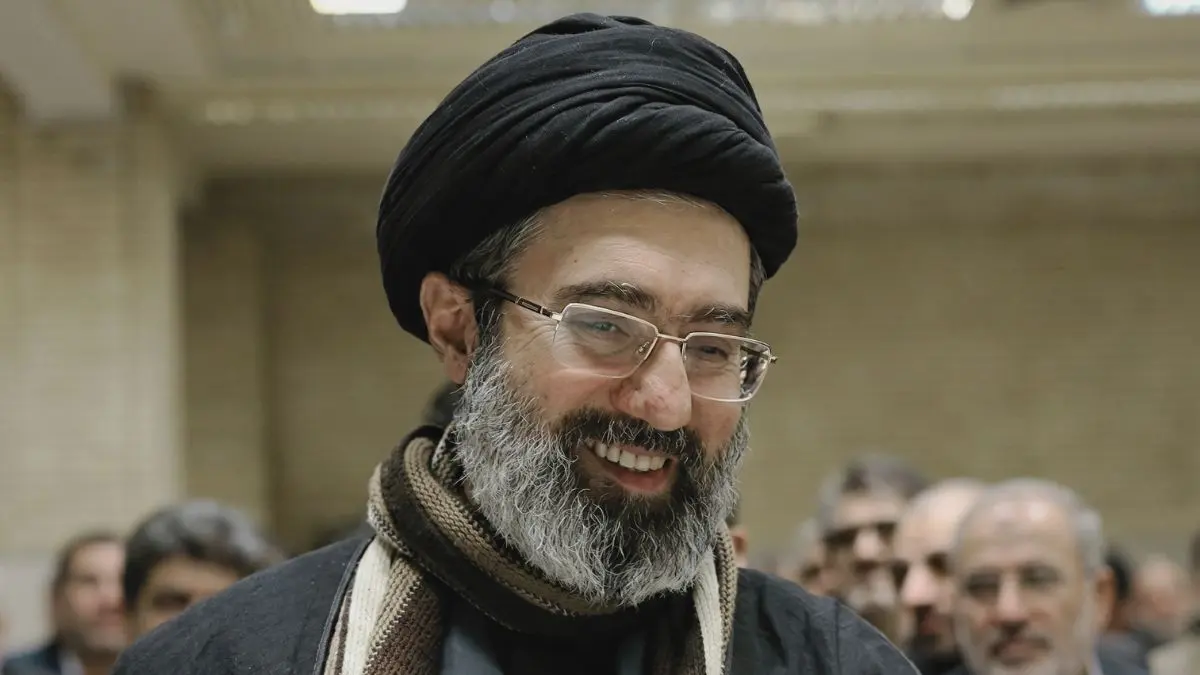
The Ascension Of The Shadow Cleric Mojtaba Khamenei Takes Control Of Iran
Iran finds itself navigating a historic and precarious transition following the assassination of Ayatollah Ali Khamenei. The devastating joint airstrike by the United States and Israel on February 28 eliminated the long reigning Supreme Leader and forced the Iranian state into an immediate recalibration of power. State media reports confirm that the Assembly of Experts has officially appointed his second son Mojtaba Khamenei as the third Supreme Leader in the history of the Islamic Republic. This swift elevation signals a profound shift in the political landscape of the Middle East and raises crucial questions regarding the future trajectory of Tehran under a man who has operated entirely in the shadows.
The appointment was decided by the 88 member Assembly of Experts. This clerical body holds the constitutional authority to select the Supreme Leader and they overwhelmingly voted in favor of the 56 year old Mojtaba. Their official statement called upon the Iranian populace to maintain national unity and pledge allegiance to the new leadership amid an environment of unprecedented existential threat. Observers note that this transition was far from spontaneous. Elements within the Iranian elite alongside the powerful office of his late father had long viewed Mojtaba as the natural successor. However his ascension introduces a significant ideological contradiction for a system built upon the overthrow of the Pahlavi monarchy. Critics argue that handing power from father to son revives the specter of hereditary rule which the 1979 Islamic Revolution explicitly sought to eradicate.
Profile Of A Hidden Powerbroker
To understand the implications of this appointment one must examine the profile of the new Supreme Leader. Mojtaba Khamenei is classified as a middle ranking cleric. Unlike his father or the founder of the Republic Ayatollah Ruhollah Khomeini Mojtaba lacks a robust public persona. He has never stood for public office and has meticulously avoided delivering public speeches. Many Iranians have never even heard his voice. Yet beneath this veil of obscurity lies an extensive network of influence. Over the past two decades he has cultivated a formidable presence within the inner circles of the Iranian leadership. His power does not stem from charismatic public appeal but rather from his deep structural ties to the security apparatus.
Also Read: A National Farewell as Tehran Prepares for a New Era in Leadership
Central to Mojtaba Khamenei securing the ultimate seat of power is his profound alliance with the Islamic Revolutionary Guard Corps. The Revolutionary Guards represent the ultimate military and economic powerhouse within Iran. Political analysts contend that in the current climate of severe regional warfare ideological purity takes a backseat to security and institutional control. The Revolutionary Guards endorsed Mojtaba because he represents continuity and possesses a shared vision of uncompromising resistance against external adversaries. His installation was made possible largely through the backing of these power centers who view him as a reliable steward capable of navigating the tumultuous waters ahead.
A Leadership Forged In Personal Tragedy
The circumstances surrounding his rise are steeped in profound personal and national tragedy. The February 28 aerial bombardment on the leadership compound in Tehran was devastatingly precise. Alongside Ayatollah Ali Khamenei the strike claimed the lives of Mojtaba Khamenei’s mother his wife and one of his sisters. Mojtaba survived solely because he was away from the premises during the attack. Stepping into the highest office of the land while mourning the abrupt and violent eradication of his immediate family adds a deeply volatile dimension to his psychology and potential policy making. Analysts warn that such immense personal loss could harden his resolve and push the Iranian state toward even more confrontational postures against Washington and Tel Aviv.
Also Read: CIA’s covert trail led to Tehran’s decisive strike on Iran’s Supreme Leader
Mojtaba Khamenei is not a stranger to domestic controversy and brutal statecraft. His legacy among reformist and opposition circles is dark. During the massive nationwide protests following the disputed 2009 presidential elections known as the Green Movement he was widely accused of orchestrating the violent crackdown on demonstrators. Survivors and activists from that era point to his invisible hand guiding the security forces to suppress dissent with lethal force. This historical baggage means he assumes the supreme leadership with an established reputation for ruthlessness. Citizens who desire democratic reforms view his appointment as an absolute entrenchment of the hardline security state.
The Challenge Of Internal Governance
Navigating the current domestic landscape will be exceptionally challenging for the new leader. Iran is operating under severe wartime conditions. Information flow has been heavily curtailed by the government which has imposed sweeping internet blackouts across the nation. These restrictions make it difficult to gauge the immediate public reaction to his appointment. The state apparatus is working overtime to project an image of seamless transition and unshakeable resolve. The urgency of war demands obedience but simmering economic frustrations and social grievances remain unresolved beneath the surface.
Also Read: Did Forty Commanders’ Deaths Signal Collapse of Iran’s Defense?
Furthermore the economic reality of Iran presents a monumental hurdle. Years of crippling sanctions coupled with massive inflation and currency devaluation have eroded the purchasing power of the average Iranian citizen. The wartime economy requires immense sacrifice from a populace that is already exhausted. If the new Supreme Leader fails to provide any economic relief or diplomatic pathways the internal pressure could eventually boil over into renewed civil unrest.
International Repercussions And Warnings
On the international front the reaction to the new Iranian leadership has been notably calculated. United States President Donald Trump refrained from making an extensive direct comment regarding Mojtaba Khamenei taking power. In an interview with an Israeli newspaper Trump offered a brief and ambiguous statement noting only that the world will see what happens next. He emphasized that any decisions regarding the ongoing conflict with Iran will be made through close coordination and consensus with Israeli Prime Minister Benjamin Netanyahu. Trump indicated that discussions between Washington and Tel Aviv are actively taking place and that a decisive course of action will be finalized at the appropriate moment.
Also Read: What Made Ayatollah Khamenei the Most Hunted Man in the Middle East?
Conversely other voices within the United States political establishment have chosen a far more aggressive tone. Senator Lindsey Graham a prominent ally of President Trump issued a stark warning directed specifically at the new Supreme Leader. Graham publicly declared that Mojtaba Khamenei could easily meet the exact same fate as his late father if he continues the hostile policies of the regime. Such rhetoric underscores the perilous reality facing the new leadership. The deterrence equation in the Middle East has been fundamentally shattered and the United States alongside Israel has demonstrated a willingness to target the absolute pinnacle of the Iranian hierarchy.
Regional Strategy Under A New Command
The strategic calculations for Iran must now evolve rapidly. For decades Ayatollah Ali Khamenei employed a strategy of calculated risk aiming to expand Iranian influence through proxy militias while avoiding direct catastrophic conflict with superpowers. The success or failure of Mojtaba Khamenei will depend on whether he possesses the strategic acumen to manage an empire under siege. His immediate priorities will likely involve consolidating power among the various clerical and military factions ensuring the survival of the nuclear program and projecting strength to the network of allied militias across Lebanon Yemen Iraq and Syria.
The legacy of the 1979 revolution is now under microscopic scrutiny. The founding doctrine established a system where the supreme authority was meant to be derived from religious scholarship and divine mandate rather than bloodline. The rapid installation of the second son of the late leader challenges the very foundations of this narrative. While state television broadcasts messages of unity and continuity theological scholars in the holy city of Qom may quietly debate the theological legitimacy of this move.
Also Read: The Truth On Modern US-Iran Conflict Dynamics Is Now Revealed
Looking ahead the global community waits with bated breath to see the first major policy directives from the new Supreme Leader. Will he pursue a path of devastating retaliation for the death of his family or will he recognize the existential threat to his nation and seek a tactical pause in hostilities? The absolute secrecy surrounding his character makes forecasting his moves incredibly difficult. Western intelligence agencies are undoubtedly scrambling to update their psychological profiles on a man who has suddenly stepped out from the background into the center stage of global conflict. What remains undeniably clear is that Iran has definitively turned a page and the new era under Mojtaba Khamenei will drastically reshape the political and security architecture of the world.