

 Al Arabiya
An In Depth Look at the Evolution and Strategy of the Iranian Missile Arsenal
An Unprecedented Geopolitical Hurdle
The recent declarations by American President Donald Trump regarding massive potential strikes on Iran have once again highlighted the central friction point in global diplomacy. Trump emphatically stated that the United States would destroy the Iranian missile industry, reducing it to ashes to prevent the development of weapons that threaten American allies. For years, the Iranian missile program has stood as a formidable barrier to successful negotiations between Washington and Tehran. Western powers have consistently demanded stringent limits on these ballistic capabilities, largely driven by the existential concerns of Israel. Israeli Prime Minister Benjamin Netanyahu has repeatedly urged American leadership to look beyond nuclear frameworks, citing the proven effectiveness of Iranian projectiles during recent escalations.
According to research from the Stimson Center and former NATO arms control officials, recent Iranian military operations have permanently altered the security landscape of the Middle East. Over several decades, this military program has advanced at an astonishing pace. The Iranian government places immense trust in these weapons, often referring to them as pointers due to their pinpoint accuracy. Today, this massive arsenal remains a profound concern for the Western world, Israel, and several neighboring Arab nations.
From Scarcity to Regional Dominance
Reports from the United States Institute of Peace and the BBC indicate that Iran possesses the largest and most diverse stockpile of ballistic missiles in the Middle East. Iran stands as the only nation in the region without nuclear weapons but with ballistic capabilities capable of reaching targets two thousand kilometers away. Despite severe international sanctions spanning over two decades, Tehran successfully acquired and indigenously developed this advanced technology. Iranian Supreme Leader Ayatollah Ali Khamenei recently emphasized that the very military might causing anxiety in the West was built entirely under the shadow of oppressive sanctions.
In two thousand and six, the United Nations Security Council passed resolutions banning the sale of nuclear and dual use military technology to Iran. Subsequent resolutions placed a comprehensive embargo on conventional weapons, effectively targeting both the nuclear and ballistic missile programs. These restrictions severed traditional supply lines from nations like Russia and China. Although the two thousand and fifteen Joint Comprehensive Plan of Action temporarily eased some economic pressures, a designated snapback mechanism kept the arms embargo largely intact to monitor the missile developments. However, Iran accelerated its testing, prompting the United States, Britain, France, and Germany to accuse Tehran of violating United Nations agreements. Ultimately, this relentless expansion was a primary catalyst for the American withdrawal from the nuclear pact in two thousand and eighteen.
The Genesis of the Missile Command
The origins of this vast arsenal trace back to the devastating war between Iran and Iraq. During that conflict, Iraqi forces wielded Scud B ballistic missiles with a range of three hundred kilometers, striking deep into Iranian cities. In stark contrast, Iranian artillery could only reach thirty five kilometers. Recognizing this massive vulnerability, the leadership authorized the creation of a specialized missile unit.
In November nineteen eighty four, Hassan Tehrani Moghaddam established the Islamic Revolutionary Guard Corps Missile Command. A pivotal moment occurred in nineteen eighty five when Iran procured a small batch of Russian made Scud B missiles from Libya, accompanied by technical advisors. When political pressure forced the Libyans to leave and sabotage the equipment, a small dedicated group of Iranian technicians began reverse engineering the dismantled parts. Moghaddam, widely revered as the father of the Iranian missile program, sent a team to Syria for intensive training. Within a short period, they mastered the intricate technology.
William Alberque, a global security researcher at the Stimson Center and former director of the NATO Arms Control Program, shared his analysis with BBC Persian and international media outlets. He noted that during those formative years, North Korea and China provided extensive cooperation. Alberque emphasized that Iran is a technologically advanced nation, fully capable of mastering complex engineering challenges through rigorous research.
Underground Cities and Advanced Arsenal
The Islamic Revolutionary Guard Corps has historically veiled the exact locations of its production facilities, yet they occasionally showcase underground missile cities. First conceptualized in nineteen eighty four, these sprawling subterranean fortresses are carved into solid mountains, reaching depths of up to five hundred meters. Recent military disclosures also revealed marine missile cities along the Persian Gulf coast, housing vast numbers of strategic weapons and launching systems.
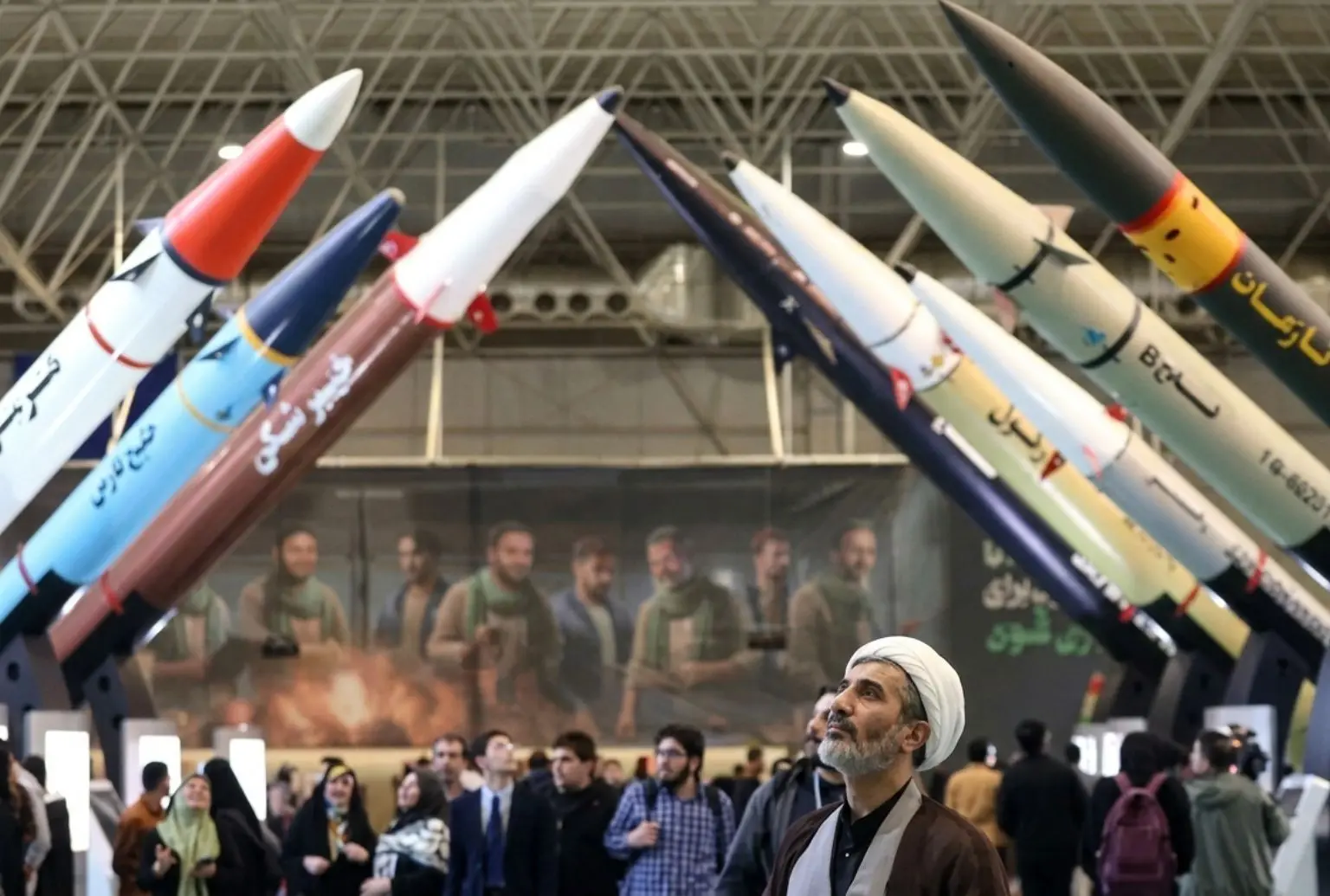
Today, Iran manufactures over fifty distinct types of rockets, ballistic missiles, cruise missiles, and combat drones. These systems are categorized into four primary groups encompassing rockets, cruise missiles, ballistic missiles, and the newly unveiled hypersonic weapons.
During the unprecedented April two thousand and twenty four assault on Israel, Iran deployed a combination of Emad 3 ballistic missiles, Paveh cruise missiles, and Shahed combat drones. The Emad boasts a range of seventeen hundred kilometers and carries a heavy payload. The Paveh cruise missiles, capable of traveling sixteen hundred and fifty kilometers, feature advanced targeting algorithms that allow them to alter their flight paths dynamically.
Furthermore, the military apparatus introduced the Fattah hypersonic missile series. The Fattah 1 can strike targets fourteen hundred kilometers away, reaching velocities between Mach thirteen and Mach fifteen before impact. Iranian commanders claim this speed renders traditional defense mechanisms obsolete. Following this, the Fattah 2 cruise missile was unveiled, possessing the ability to glide at extremely low altitudes and evade advanced radar detection.
Currently, the maximum operational range of Iranian missiles is capped at two thousand kilometers, acting on a direct directive from Ayatollah Khamenei. While this prevents them from targeting Western Europe, it covers the entirety of the Middle East.
The Strategic Pivot from Airpower to Projectiles
Before the Islamic Revolution, Iran was a premier client of the American defense industry, boasting a formidable fleet of F4, F5, and F14 Tomcat fighter jets. Following the revolution and the subsequent embassy hostage crisis, diplomatic ties dissolved, and sweeping embargoes grounded the Iranian air force by choking off spare parts.
Faced with a crippled aerial fleet and the traumatic memory of Iraqi bombardments, Iranian strategists determined that a robust missile program was the most viable defense alternative. Missiles presented a highly cost effective solution compared to maintaining an expensive fleet of modern fighter jets. They required less specialized pilot training and offered an immediate, reliable deterrent against regional adversaries.
According to defense analysts, this strategic pivot allowed Tehran to project power across borders without risking valuable aircraft. Over the past decade, Iran has launched cross border missile operations against various targets. These include striking ISIS strongholds in Syria, targeting Kurdish opposition groups in Iraq, bombing the American Al Asad airbase in retaliation for the assassination of Qasem Soleimani, and conducting operations against militant bases in Pakistan. The most significant demonstration occurred during Operation True Promise, where hundreds of projectiles were fired directly at Israel following a deadly strike on the Iranian consulate in Damascus.
William Alberque noted that while some projectiles failed to reach their marks during the Israeli assault, the strategic learning curve for Iran was immense. The operation allowed Iranian military planners to gather invaluable intelligence on the integrated defense networks of Israel and its regional allies.
As Iran continues to refine its missile technology and expand its arsenal, the balance of power in the Middle East remains incredibly fragile. Whether the current strategic patience of Western and regional powers will endure, or if Iran will eventually decide to extend its missile ranges beyond the two thousand kilometer threshold, remains one of the most pressing questions in global security today.