 Digitally Created

A narrow stretch of water, barely visible on the ward map, now comes the weight of global fear.
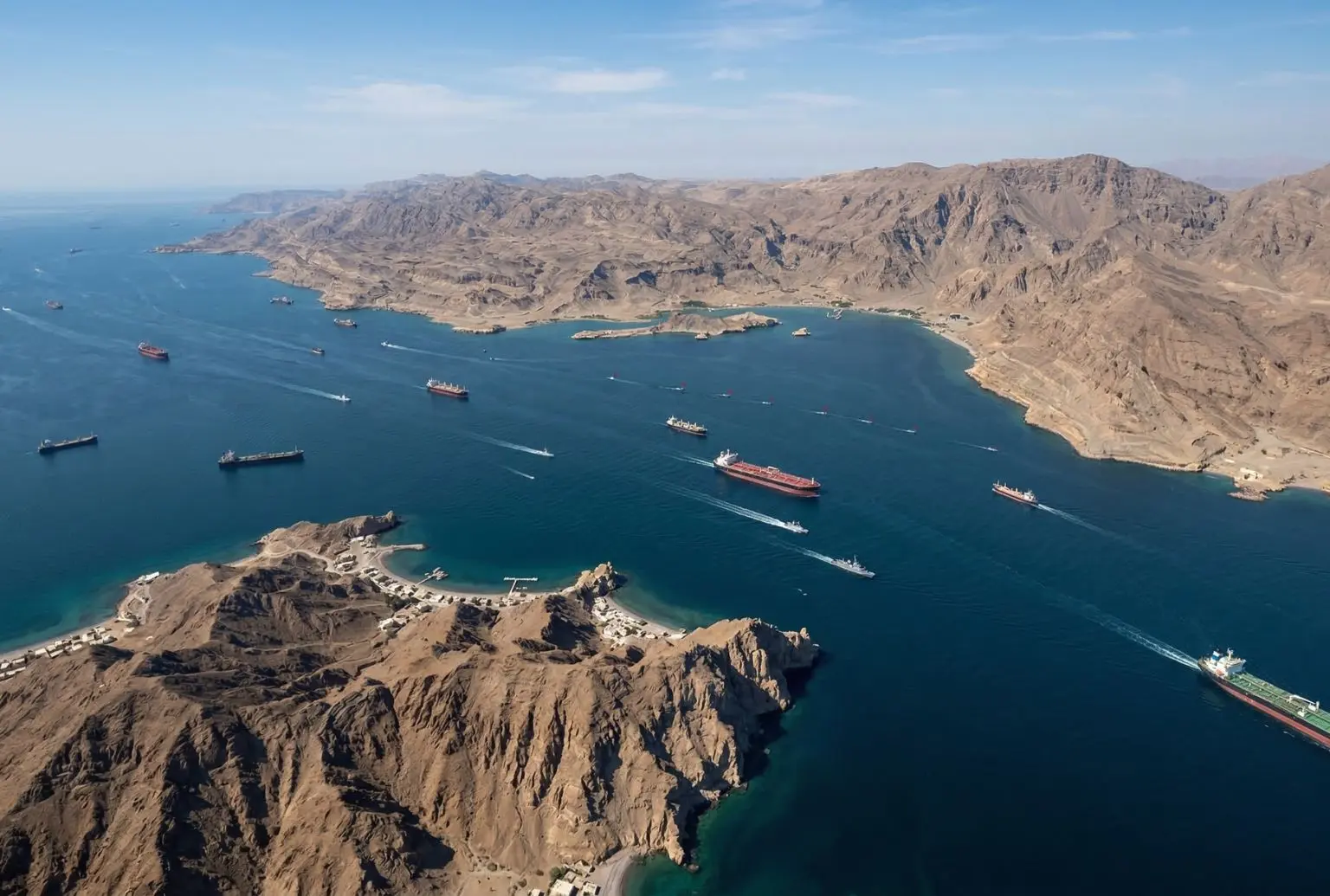
The Strait of Hormuz once was just a vital route for trade of oil and has turned into one of the most dangerous flashpoints on Earth. As in the current situation, in which tension rises among Israel, the United States and Iran, this narrow passage is no longer about geography only but it came all about power, control and survival. At this point, every ship that has to cross the Strait of Hormuz has to face uncertainty, where one decision of a country of Iran can shake or change the international economy, it can increase a lot of lives in the world.
One announcement from a country Iran has the power to move the whole world into a deep crisis, the global crises that will be too costly to recover and time taking too.
A narrow strip of water, only a few kilometers wide, now holds the power to shake the entire economy of the world. This is the paradox of Strait of Hormuz small in size, yet enormous in influence.
It is positioned between Iran and Oman, it connects the Persian Gulf and Gulf of Oman and Arabian Sea, in short we can say that it connects producer marketers to Asia, America and Europe. Nearly 20 percent of the world’s oil supply flows through it which means about 20 barrel oil passes through it everywhere, making it one of the most critical arteries of international trade.
Under normal conditions, it is simply a route. But in times of conflict, it becomes a weapon.
For years, the Strait has quietly supported global trade, all Middle East countries made trade of oil to almost all parts of the world. But today it stands at the center of growing confrontation. The rising tensions between Iran and its adversaries, particularly Israel and US, has transformed this passage to battleground. The military presence has intensified, surveillance has increased, and every small movement is controlled and monitored on it.
In this conflict, Iran has used the Strait of Hormuz as a weapon, as it is that Iran has not fully closed the strait, it is selectively closed. Iran appears to allow some of the countries that are not involved in conflict or are not allies of US. On the other hand it blocked the passage completely for Israel and the US and their close allies too. This turns a strait into more than a waterway; it becomes a geopolitical chokepoint.
- As India and Turkey have received permission for their tankers, specifically carrying goods like liquefied petroleum gas.
- China is allowed to pass. Iran has cited Beijing’s supportive stance as a reason for this exemption.
- Russia is explicitly included in Iran’s list of permitted nations allowed to use strait.
- Pakistan-flagged tanker, the Karachi successfully transited the strait on 15–16 March 2026. It might be one time pass or they may allow Pakistan to cross the passage under conditions, let’s see.
So, trade is no longer just economic, it is political. Trade is no longer just about routes, it is about relationships.
Even for those allowed to pass the journey is far from normal. Insurance costs soar. Delays increase. Every voyage carries a question: What if this is the last safe crossing?
Even if there is selective blockade, and not completely blockade of Strait of Hormuz, even after this the world is going towards the global crises such as Energy, Security. A world on edge.
Energy security has become one of the most immediate global concerns. Even if a significant portion of the world’s oil is passing through the Strait of Hormuz, even partial disruption creates instability. Countries are forced to look for alternative routes, longer, more expensive and far less efficient. Strategic oil reserves may offer temporary relief, but they are not a permanent answer and if war prolongs, instability continues, shortages would emerge and automatically force governments to make difficult decisions about fuel distribution. This is the quiet fear behind the headlines, not just rising prices but uncertain supply.
Food Security: The Crisis Beyond Oil
While oil dominates the headlines, another crisis grows quietly food security. Roughly 50 million people in countries like Saudi Arabia, UAE, Kuwait and Qatar face potential cut-offs of wheat, rice, sugar and vegetable oil. Because crises are not only measured in barrels of oil, they are felt on dining tables.
The Petrodollar Under Pressure
Beyond physical trade, the strait also influences global financial systems. The dominance of US dollar in oil trade is under pressure. The petrodollar system can go in crises too. If this situation goes on, countries might shift towards alternative currencies, especially towards those who are maintaining diplomacy in today’s world. China, in particular, stands in such a position to promote alternative methods, reducing reliance on the US petrodollar. Change in the global system is often slow. But history shows it accelerates in moments of crises.
Security at Risk
The strait today represents a fragile balance between tension and escalation. With rising hostility between Israel, Iran and the US, the risk of miscalculation remains dangerously high. Is that all it takes to turn tension into war?
The future of the Strait remains uncertain. Diplomatic efforts may ease tensions or fail them. Because everyone understands one thing: What happens here, will not stay here.
It shows how a single geographic point can influence economies, reshape alliances. This is perhaps the most unsettling truth in a world that depends on movement. Control over a single passage can decide the fate of many. Because sometimes the smallest place holds the greater power.