

 Ai
Ai
A high-stakes diplomatic effort to bridge the gap between Tehran and Washington faced a major setback today as Donald Trump abruptly cancelled a planned visit by US envoys to Pakistan. The Iranian Foreign Minister, Abbas Araghchi, has already departed Islamabad following a series of intense consultations with top Pakistani leadership.
According to the Iranian state news agency IRNA, Abbas Araghchi left the Pakistani capital early today after concluding his official engagements. The news agency Reuters recently released images of a motorcade traveling through the city, which were identified as the Iranian delegation heading towards the airport for their departure.
The High-Level Engagement in Islamabad
Following a pivotal meeting with the Iranian delegation, Prime Minister Shehbaz Sharif shared his reflections on the encounter through a post on X. The Prime Minister described the discussions as extremely cordial and productive, focusing on both regional security and bilateral interests.
Shehbaz Sharif noted that the two nations exchanged views on the current regional situation with great warmth. He emphasized that the primary focus remained on strengthening the existing ties between Pakistan and Iran to ensure mutual prosperity and stability in the region.
Deputy Prime Minister Ishaq Dar further detailed the depth of these diplomatic exchanges, noting that the meeting between Shehbaz Sharif and Abbas Araghchi lasted for approximately two hours. During this time, the leadership delved into the complexities of the Middle Eastern crisis and the potential for a peaceful resolution.
According to Ishaq Dar, the Pakistani Prime Minister stressed the vital importance of dialogue and diplomacy. He reiterated Pakistan‘s commitment to peace and stability within the region and beyond, advocating for a multilateral approach to de-escalate tensions between global powers.
Trump Directs Envoys to Abort Pakistan Trip
In a surprising turn of events, President Donald Trump announced that his designated envoys, Steve Witkoff and Jared Kushner, would no longer be traveling to Pakistan for negotiations. The US President took to his social media platform, Truth Social, to clarify his position on the matter.
Donald Trump stated that he had personally cancelled the trip for his representatives, citing the long travel time and the immense workload currently facing his administration. “The trip takes too much time, and there is much work to be done!” the President wrote in his post, signaling a shift in priorities.
Speaking to Fox News, Donald Trump elaborated on his decision, mentioning that his team was already preparing for departure when he intervened. He told the network’s White House correspondent that he refused to let his team take an 18-hour flight for what he termed as “mere talk” or lip service.
The President claimed that the United States currently holds all the leverage in these negotiations, asserting that “we have all the cards.” He suggested that the Iranian leadership knows how to reach him if they are serious about discussing a resolution to the ongoing conflict.
Uncertainty Surrounding Iranian Leadership
In his Truth Social message, Donald Trump expressed deep skepticism regarding the internal cohesion of the Iranian government. He claimed that there is significant ambiguity and disagreement among the leaders in Tehran regarding who is actually in charge.
“No one knows who is really in control over there,” Donald Trump remarked, pointing to what he perceives as a lack of clear authority within the Iranian administration. This perceived instability appears to be a factor in the United States‘ decision to pause direct mediated talks in Islamabad.
Despite this, the Iranian Foreign Minister Abbas Araghchi characterized his visit to Pakistan as “highly useful.” In a post on X, he expressed Iran‘s appreciation for Pakistan‘s fraternal efforts to restore peace and stability to the broader region.
Abbas Araghchi confirmed that he had shared a practical framework for a permanent end to the war with Pakistani officials. However, he remained cautious about the United States‘ intentions, questioning whether Washington is genuinely committed to the path of diplomacy or merely posturing.
The Road Ahead: Oman and Potential Returns
While the US delegation’s visit is off the table for now, Abbas Araghchi is moving forward with his regional tour. CBS News reported that the Iranian Foreign Minister is currently traveling to Muscat, the capital of Oman, which has historically served as a neutral ground for back-channel communications.
Pakistani officials, however, remain hopeful that the dialogue is not entirely dead. CBS News cited sources suggesting that Abbas Araghchi is expected to return to Islamabad as early as Sunday or Monday for further consultations with the Pakistani government.
The role of Pakistan as a diplomatic bridge is now under intense scrutiny. BBC correspondent Kerry Davies noted that the day in Islamabad was filled with non-stop activity, but the sudden cancellation by the US has complicated the situation significantly.
Speculation continues to grow regarding the specific messages exchanged between Iranian and Pakistani officials during their two-hour meeting. While Donald Trump had previously extended a ceasefire to allow Iran to develop a unified proposal, it remains unclear if such a proposal was delivered during this trip.
The Strained Bridge of Diplomacy
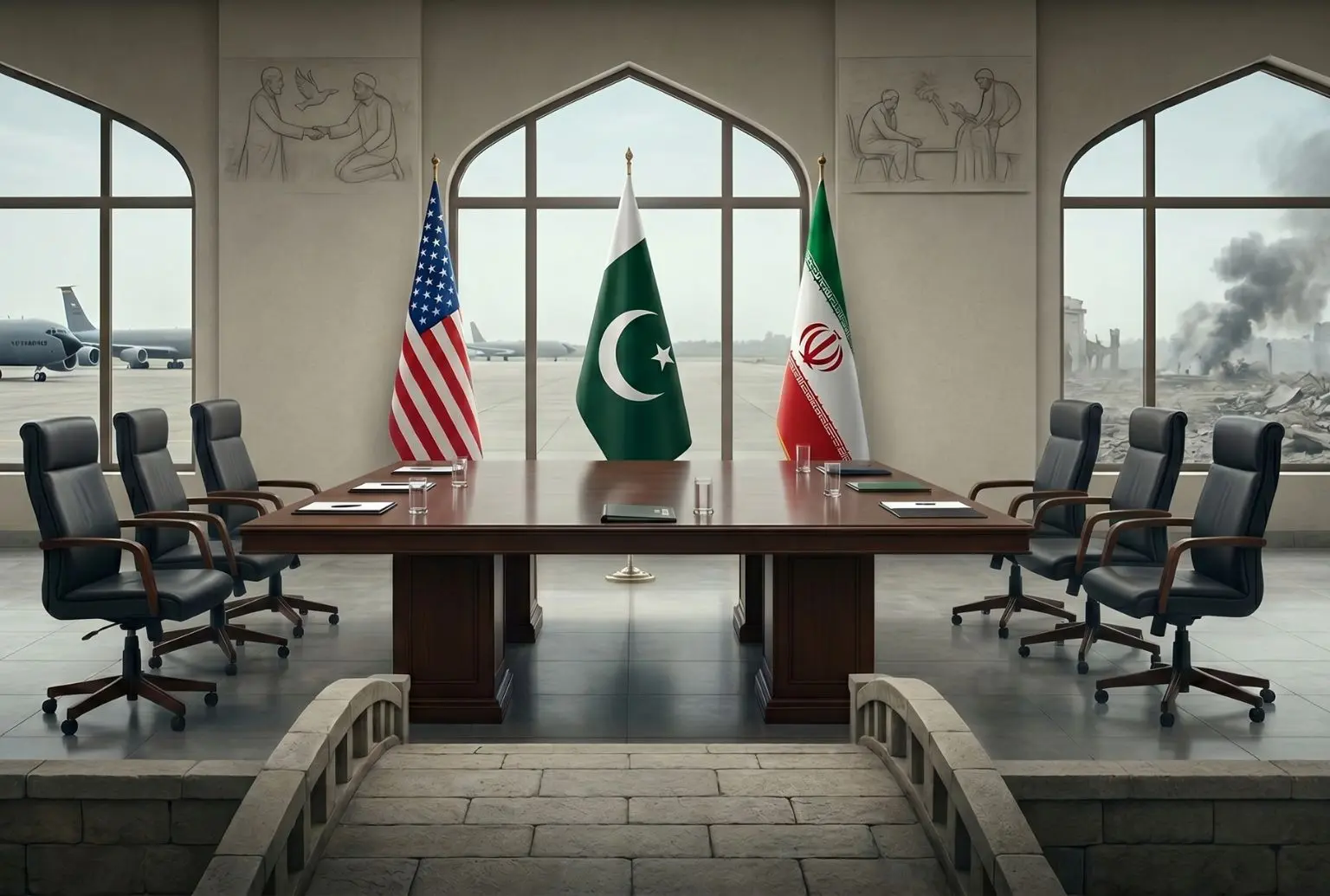
As Pakistan continues to position itself as a facilitator for peace, the task is becoming increasingly difficult. The tension between the two parties has reached a point where bringing them back to the same table seems like a monumental challenge for any mediator.
The United States‘ insistence that they hold all the leverage suggests a more aggressive bargaining stance, while Iran‘s skepticism of US sincerity keeps the threat of conflict alive. Pakistan‘s attempt to act as a bridge is now caught between these two rigid positions.
With Abbas Araghchi now in Oman and the US envoys grounded in Washington, the next few days will be critical. The international community is closely watching to see if Pakistan can revive the stalled talks or if the window for diplomacy has temporarily closed.
For now, Islamabad remains the center of a geopolitical tug-of-war. The departure of the Iranian delegation and the cancellation of the American visit mark a significant, albeit uncertain, chapter in the ongoing quest for Middle East stability.