

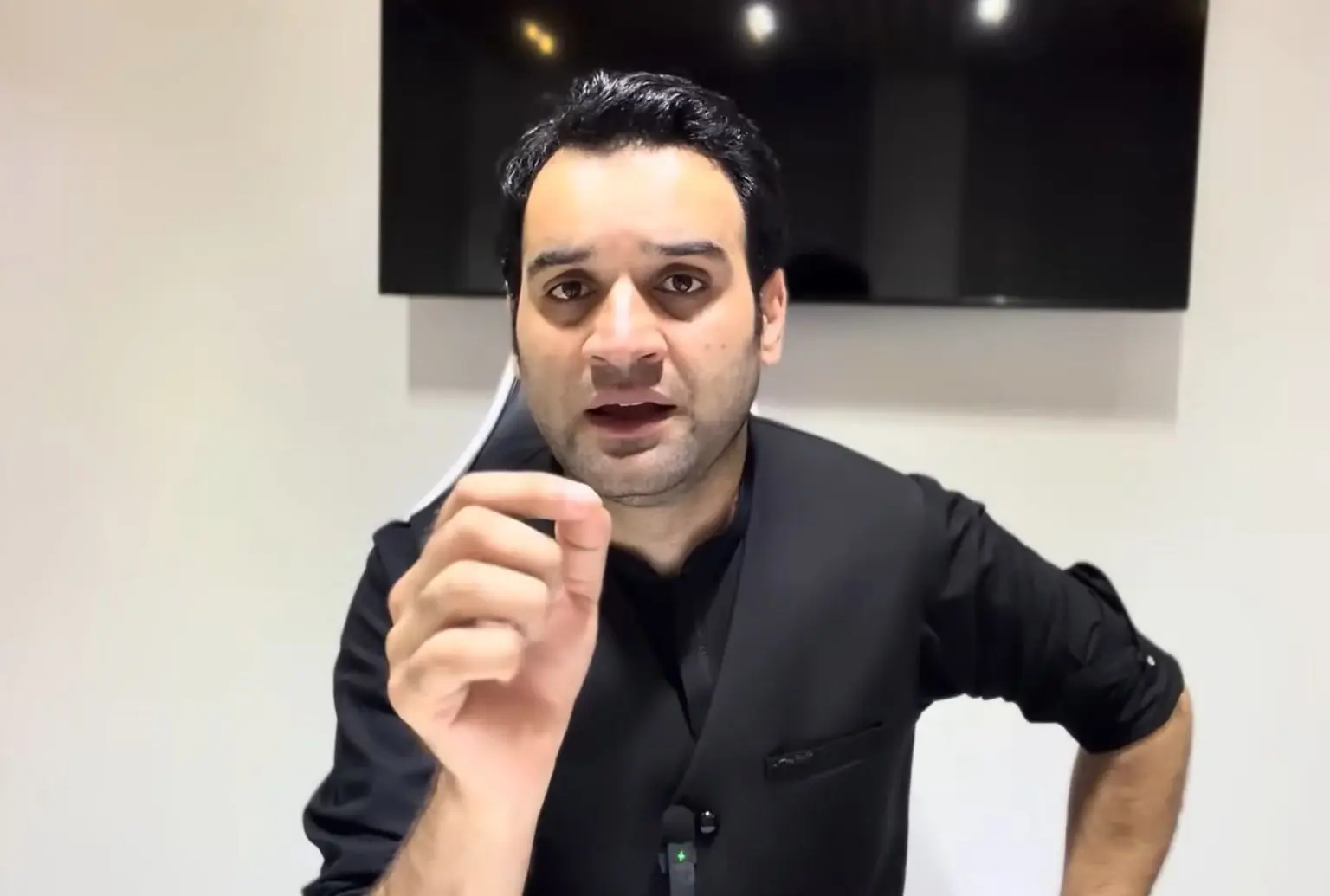
 Screen Grab
Journalist Sohrab Barkat addressed his audience for the first time after spending 103 days in prison following his detention at Islamabad International Airport. He provided a detailed account of the events leading to his arrest and the subsequent legal battle that eventually reached the highest court in Pakistan. The release marks a significant moment for the journalist who insists his work is dedicated to the country’s progress.
The Arrest Incident
The ordeal began on November 27th when Journalist Sohrab Barkat was stopped at the immigration counter while traveling to cover the UN Climate Change Conference in Brazil. According to a vlog posted by the journalist, he had previously secured clearance from the Islamabad High Court to ensure no legal barriers existed for his travel. The Federal Investigation Agency had even provided a handwritten statement confirming he was not wanted in any active cases or inquiries.
Despite this documented clearance, officials prevented him from boarding his flight and transferred him to Camp Jail under the pretense of multiple pending cases. Journalist Sohrab Barkat clarified that he was not attempting to flee the country, as his travel was purely professional and sanctioned by legal protocols. The sudden detention at the airport turned a routine reporting assignment into a long term struggle for personal liberty and justice.
The journalist expressed that being accused of spreading public panic was particularly distressing given his background in academic research and climate advocacy. He maintained that every step taken prior to his departure was meant to comply with the law and demonstrate his commitment to the state. The initial days of his detention were marked by confusion as the legal basis for his arrest appeared to contradict the earlier FIA clearance.
Climate Diplomacy Mission
One of the most significant losses during his 103-day incarceration was the missed opportunity to represent the climate interests of Kashmir at the global level. Journalist Sohrab Barkat had recently completed an MPhil thesis focusing specifically on Kashmir Climate Diplomacy and intended to present his findings in Brazil. His research included extensive translations of local literature and interviews with 17 professors to highlight the severe environmental challenges facing the region.
His primary goal was to secure international climate funding which could amount to millions of dollars for the affected areas in Kashmir. Having covered COP29 in Baku previously, he identified a critical lack of representation for the region and sought to bridge that gap through academic and journalistic rigor. The mission was designed to bring global attention to the melting glaciers and changing weather patterns that threaten the livelihoods of millions.
The journalist believes that the arguments he prepared would have provided a strong case for international organizations to intervene and provide necessary support. By being detained, he was unable to deliver this crucial research to the United Nations delegates as planned. He noted that this work was not just an academic exercise but a vital effort to protect the natural heritage of Pakistan and the broader region.
The Legal Struggle
The journey toward freedom was described by Journalist Sohrab Barkat as a complex and frustrating legal ping-pong situation across various courts. Throughout the 103 days, bail was granted multiple times only to be canceled shortly after, creating a cycle of hope and disappointment. Despite these hurdles, he and his legal team led by Barrister Saad Rasool decided to strictly follow the judicial process without seeking any non-legal shortcuts.
Barrister Saad Rasool remained a steadfast ally, encouraging a belief that the system would eventually deliver justice if challenged correctly. This persistence led the case all the way to the Supreme Court of Pakistan where the legal arguments finally prevailed. The highest court restored his bails, validating the defense’s position that the detention lacked a proper legal foundation and should be terminated immediately.
Journalist Sohrab Barkat credited the public and his colleagues for their unwavering support which he viewed as a stand for the rights of future generations. He emphasized that fighting the case within the system was essential to prove that the rule of law can still function despite its many visible flaws. This legal victory is seen as a testament to the importance of specialized legal counsel and the resilience of those wrongly accused.
Prison Reform Vision
Following his release, Journalist Sohrab Barkat has shifted his focus toward highlighting the desperate need for reforms within the Pakistani jail system. He observed firsthand the conditions under which prisoners live and the stories of vulnerable individuals who have been forgotten by society. He plans to launch a marathon series of content that will provide a window into the realities of prison life and the systemic issues that require urgent attention.
The journalist clarified that his previous criticisms of authorities were rooted in a desire to improve the country rather than a sign of disloyalty. He compared addressing national issues to fixing problems within one’s own home, asserting that constructive critique is necessary for growth and accountability. His experience in jail has provided him with a unique perspective on the judicial and administrative failures that lead to the suffering of many.
By advocating for jail reforms, he aims to ensure that the rights of all citizens are protected even when they are in state custody. Journalist Sohrab Barkat remains committed to his profession and intends to use his platform to voice the concerns of those who cannot speak for themselves. His future work will likely combine his previous interests in climate diplomacy with this new mission for social and legal justice in Pakistan.