

 X
X
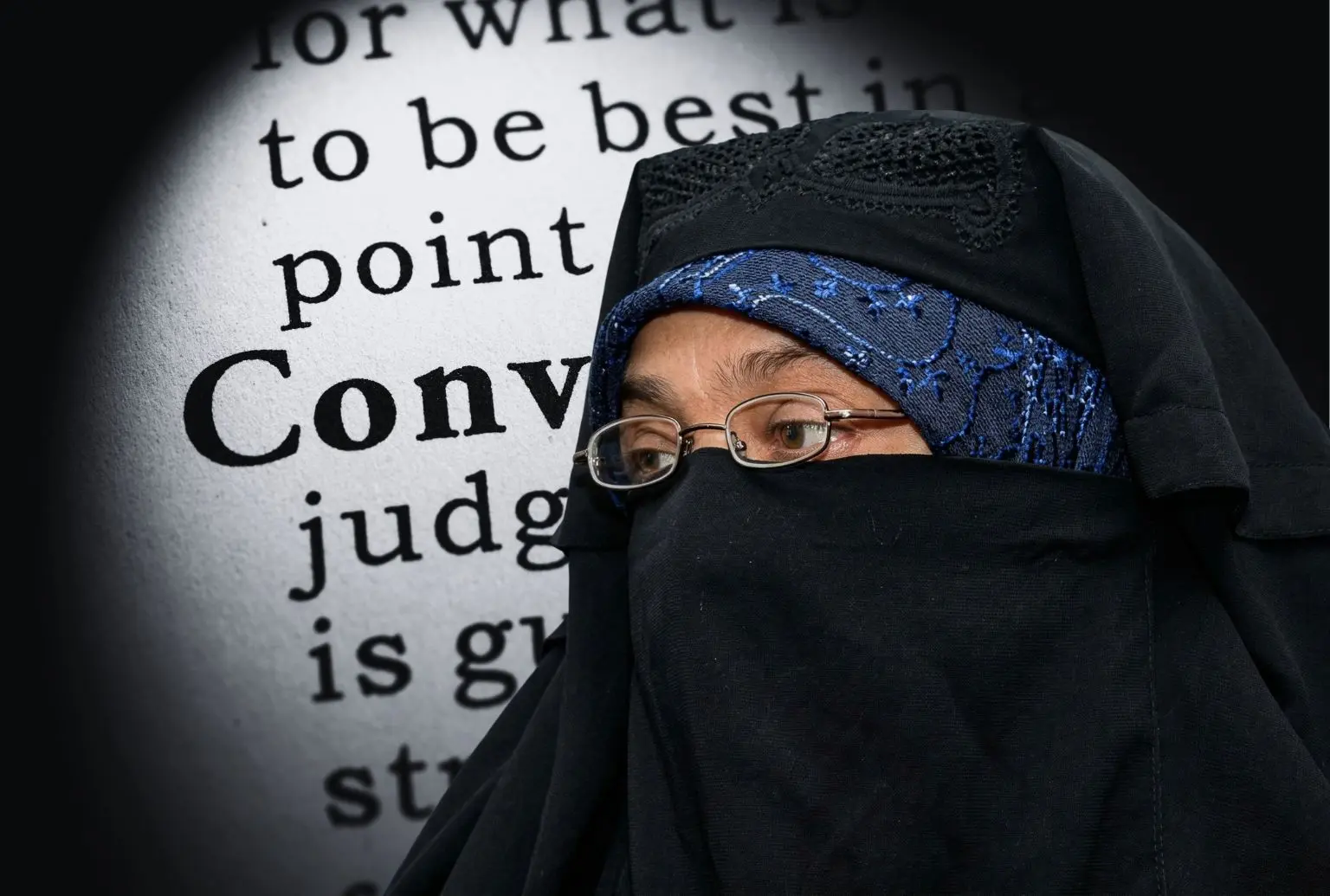
A special court in the Indian capital of New Delhi has sentenced Syeda Asiya Andrabi, the head of the banned organization Dukhtaran e Millat, to life imprisonment. According to reports from BBC Urdu, the court also handed thirty year prison sentences to her close associates, Sofi Fehmeeda and Nahida Nasreen, under the Unlawful Activities Prevention Act. The trio was convicted on charges related to waging war against the state and hatching a criminal conspiracy against India.
Judge Chander Jit Singh delivered the verdict following recommendations from the National Investigation Agency, which sought the maximum penalty for the accused individuals. The agency argued that any lesser punishment would undermine public confidence in the supremacy of the law within the country. All three women have been held in New Delhi high security Tihar Jail since 2017 while facing multiple charges linked to their political and social activities in Jammu and Kashmir.
Delhi Court Verdict
The National Investigation Agency presented a comprehensive charge sheet alleging that Syeda Asiya Andrabi maintained close ties with Hafiz Saeed, the founder of Lashkar e Taiba. Investigators claimed that her public speeches and interviews were designed to incite violence and encourage Kashmiri youth to join militant organizations. The court examined several old interviews where Andrabi reportedly stated that armed struggle was a necessary tool to achieve political objectives in the region.
Defense lawyer Shariq Iqbal argued that the evidence presented by the federal agency was insufficient to warrant such severe sentencing for the three women. He highlighted that the convicts are highly educated individuals who have already spent nearly eight years in a prison located eight hundred kilometers away from their homes. Iqbal also pointed out that his clients suffer from various health ailments and requested the court to consider their educational backgrounds and physical conditions during the sentencing phase.
Despite these pleas, the court upheld the NIA stance regarding the gravity of the allegations involving national security and sovereignty. The prosecution noted that Asiya Andrabi faced thirty three separate cases across different police stations, while Fehmeeda and Nasreen faced nine and five cases respectively. The final judgment on March 24 followed a lengthy legal battle that saw the Indian Supreme Court previously directing the lower court to expedite the framing of charges.
Andrabi Family History
Syeda Asiya Andrabi belongs to the prominent Andrabi family of Srinagar, which traces its lineage back to the Middle East and the Hijaz region. Her ancestors, Syed Ahmed and Syed Muhammad Andrabi, reportedly traveled from Afghanistan to Kashmir in the fourteenth century alongside Islamic missionaries. The family has a long history of intellectual and religious scholarship, and Andrabi herself holds a master degree in Arabic literature and a graduation degree in Home Science.
Her husband, Ashiq Hussain Faktoo, also known as Qasim, is currently one of the longest serving prisoners in South Asia, having spent twenty seven years in detention. Faktoo was a former militant commander and later earned a PhD in Islamic Studies while serving his life sentence in prison. He has authored twenty books on various Islamic subjects, several of which are written in the English language, reflecting the academic tradition of the family.
Asiya Andrabi has often credited her ideological shift to a book titled Khawateen Ke Dilon Ki Baatein, which she read during her youth. The book featured the story of Maryam Jameela, an American woman who converted to Islam and moved to Pakistan for her ideological beliefs. This narrative inspired Andrabi to abandon her studies in biochemistry and dedicate her life to Islamic activism and the cause of Kashmiri resistance through her own unique perspective.
Dukhtaran Millat Activism
The organization Dukhtaran e Millat, or Daughters of the Nation, began as a religious reform movement in the early 1980s within the heart of Srinagar. Initially, the group focused on teaching the Quran and Hadith to young girls through the Madrasa Taleem ul Quran. However, it quickly evolved into a social and political force that campaigned against what it termed as moral degradation and foreign cultural influence in the valley.
In 1987, Andrabi led groups of veiled women through the streets of Srinagar to protest against the screening of Hollywood films in local cinemas. These activists were often seen using black ink to deface movie posters and campaigning against the sale of alcohol and gambling. These moral policing efforts attracted a significant number of college and university students to the organization, expanding its influence across various districts of Jammu and Kashmir.
Following the outbreak of armed insurgency in 1989, the group became increasingly vocal about its pro Pakistan stance and the implementation of Sharia law. Asiya Andrabi frequently hoisted the Pakistani flag on August 14 and publicly called for the region to be recognized as a natural part of Pakistan. Her consistent support for the resistance movement and her refusal to compromise on her ideological goals made her a controversial figure in South Asian media.
Legal Future Implications
The sentencing of Asiya Andrabi to life imprisonment carries significant legal weight under the current Indian judicial framework. In 2012, the Indian Supreme Court clarified that life imprisonment generally means incarceration for the remainder of a person natural life unless the government grants specific remission. Given the nature of the charges under the Unlawful Activities Prevention Act, legal experts believe that obtaining such remission will be a difficult challenge for the defense.
The conviction of Nahida Nasreen and Sofi Fehmeeda for thirty years each also sets a strict precedent for cases involving political conspiracy and anti state activities. The NIA has maintained that these sentences are necessary to prevent the further spread of separatist ideologies and to maintain regional stability. The defense team is expected to challenge these sentences in higher courts, citing procedural issues and the alleged lack of direct evidence linking the women to specific acts of violence.
As this legal process continues, the impact of these convictions on the ground in Kashmir remains a subject of intense observation by human rights groups. The case highlights the rigorous application of the amended UAPA laws, which have granted the state broader powers to designate individuals as terrorists and hold them for extended periods. The future of Dukhtaran e Millat, which remains a banned entity, will likely be shaped by the outcome of these high profile judicial proceedings.
Frequently Asked Questions
Who is Syeda Asiya Andrabi?
Syeda Asiya Andrabi is the founder of Dukhtaran e Millat, a banned women organization in Kashmir known for its pro Pakistan stance and religious activism. She has been a central figure in Kashmiri resistance politics for several decades.
What is the UAPA law mentioned in the case?
The Unlawful Activities Prevention Act is an Indian law designed to prevent unlawful activities and deal with terrorist threats. It allows the government to designate individuals and organizations as terrorists and provides for strict sentencing like life imprisonment.