
 Screen Grab
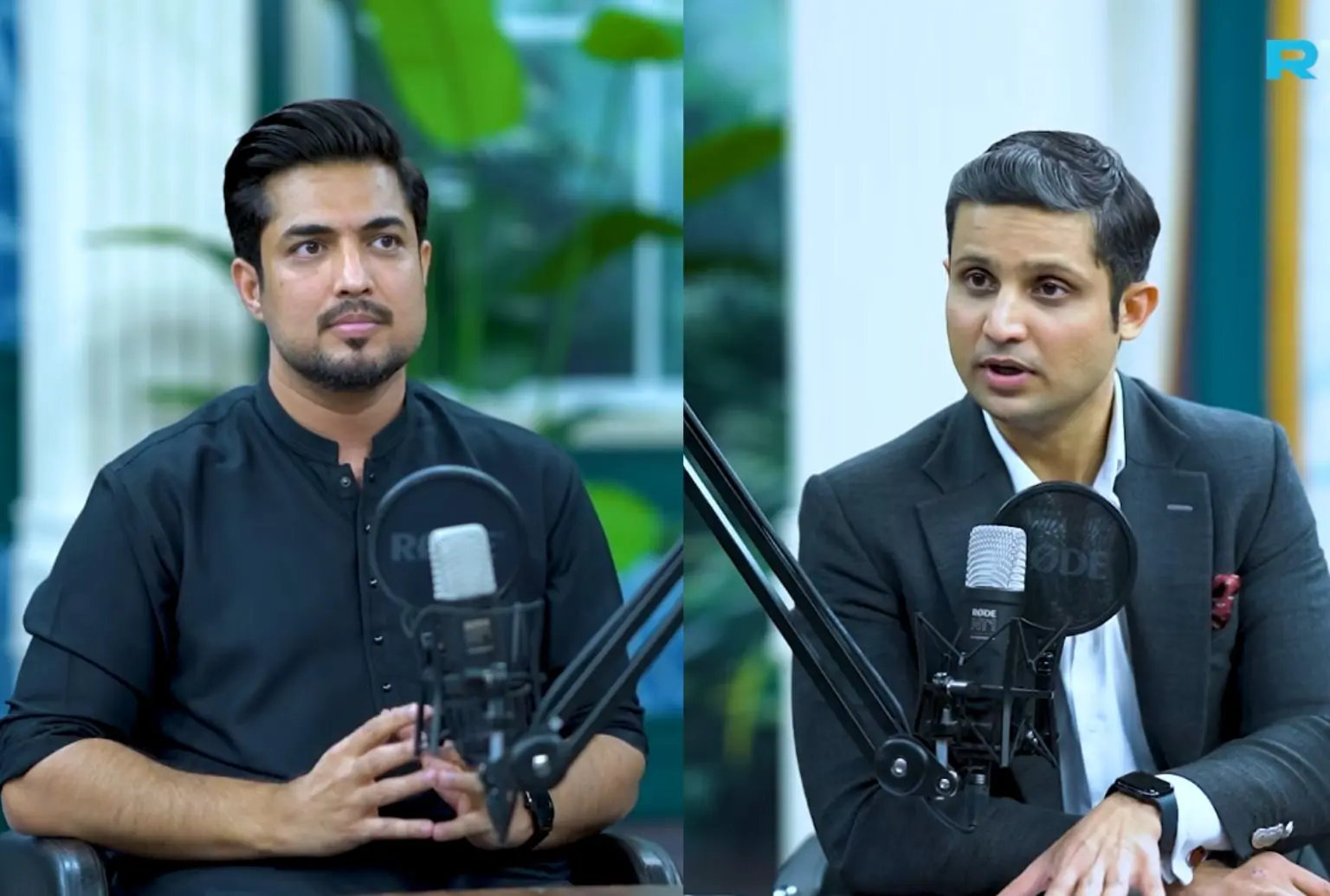
A candid and deeply personal conversation recently unfolded on the RTS 24 Plus digital platform, where prominent journalist Iqrar ul Hassan faced a series of tough questions. Hosted by Rehan Tariq, the podcast delved into the shifting allegiances, financial realities, and political aspirations of one of Pakistan’s most recognizable media figures.
The discussion highlights the growing friction between traditional journalism and the polarized political landscape of Pakistan. It offers a rare glimpse into the personal motivations of a man who has spent decades exposing social evils through his show, Sar-e-Aam.
The Moral Debate Surrounding Leadership and Privacy
One of the most friction-filled segments involved the host confronting the journalist regarding his public commentary on Imran Khan and Bushra Bibi. Specifically, the focus turned toward the Iddat case, a matter that has polarized the Pakistani public and legal circles alike.
The guest maintained that his critique was not a personal vendetta but a necessary questioning of the moral integrity expected from national leaders. He argued that the private lives of public figures often carry significant weight in the public’s perception of their ethical standing.
However, Rehan Tariq challenged this perspective, accusing the journalist of crossing ethical boundaries into deeply personal matters. The host suggested that focusing on such cases distracts from larger governance issues and unfairly targets the personal dignity of individuals.
In response, Iqrar ul Hassan defended his right to question the moral fabric of those who seek to lead the nation. He emphasized that transparency and character are essential components of leadership that cannot be separated from political life.
The Evolution of Political Allegiances and Disillusionment
The conversation took a historical turn as the host reminded the guest of his former support for the Pakistan Tehreek-e-Insaf (PTI) between 2013 and 2018. This included various glowing remarks and tweets from as recently as 2022 that seemed to favor the party’s narrative.
Explaining his shift in perspective, the journalist noted that his disillusionment began when he perceived the PTI aligning more closely with the establishment. He claimed that while he still recognizes the positive achievements of the party, he fundamentally disagrees with its current political methodology.
This transition from a supporter to a vocal critic has drawn significant backlash from political activists. The journalist clarified that his criticism is based on principles rather than personal animosity toward any specific individual within the PTI leadership.
He expressed a belief that political movements should remain independent of external pressures to truly serve the public interest. According to him, the deviation from this path was a primary driver for his changing stance on the country’s political trajectory.
Awam Raaj Tehreek: A Technocratic Approach to Politics
Shifting away from past controversies, the focus moved toward the newly launched Awam Raaj Tehreek. This movement is presented not as a traditional political party, but as a system-driven initiative aimed at empowering the common citizen.
The founder explained that the movement utilizes an AI-driven platform designed to identify and promote middle-class individuals based on merit. This approach seeks to bypass the traditional hurdles of wealth and feudal backgrounds that often dominate Pakistani parliament.
By leveraging technology, the movement aims to create a transparent selection process for potential candidates. The goal is to ensure that those who represent the people are chosen for their expertise and dedication rather than their financial influence.
The journalist emphasized that the Awam Raaj Tehreek is not centered around a single personality. Instead, it focuses on building a sustainable system that can function independently of its founders or any specific leader.
Confronting Allegations of Personal Bias and Agendas
During the podcast, Rehan Tariq explicitly accused the guest of suffering from “Bugz-e-Imran,” a term often used to describe irrational hatred toward the former Prime Minister. The host suggested that the journalist was merely creating a counter-narrative to maintain his own relevance in the media.
The journalist vehemently denied these allegations, asserting that his focus remains on systemic reform rather than any individual. He argued that obsessing over a single political figure hinders the progress of the country and prevents meaningful discourse on the rule of law.
He further stated that his primary concerns are judicial independence and the establishment of a robust legal framework. In his view, these are the pillars necessary for Pakistan to overcome its current socio-political challenges.
By prioritizing system reform over personality-driven politics, he hopes to encourage a more analytical and less emotional approach to governance. He maintains that his critiques are aimed at policies and actions rather than personal identities.
Life After ARY News and Current Financial Realities
In a surprising revelation, the veteran journalist discussed his recent departure from his highly-paid position at ARY News. He addressed questions about his middle-class roots and his current financial standing after leaving the network.
He claimed that his bank balance is currently almost empty, as he is still waiting for pending financial clearances from his former employer. Despite the uncertainty, he expressed a sense of relief in moving away from traditional newsroom pressures to focus on his own initiatives.
To support his family moving forward, he shared plans to venture into the real estate business. This transition marks a significant shift from his career as a full-time investigative journalist to a more entrepreneurial path.
This transparency regarding his finances was intended to counter rumors of him being a wealthy agent of the establishment. He aimed to portray himself as a common man facing the same economic struggles as many of his viewers.
Engaging with the Public: Addressing Hostile Questions
The podcast featured an extensive session where the guest interacted with a live audience, fielding questions on a wide range of topics. These included inquiries about his work with Sar-e-Aam, his stance on disabled rights, and his ongoing rivalry with various fake faith healers.
Some audience members posed hostile questions, accusing him of being a plant for the establishment. He handled these accusations by reiterating his commitment to systemic change and his refusal to seek any formal government office.
He explicitly stated that he has no intention of running for the office of Prime Minister or any other executive position. His goal, he claimed, is to remain a facilitator for reform rather than a traditional politician seeking power.
The journalist also touched upon his past investigative work, noting the personal risks involved in exposing corruption. He maintained that his primary loyalty lies with the public and the pursuit of justice, regardless of the political climate.
A Poetic Conclusion to a Tense Dialogue
As the conversation drew to a close, Rehan Tariq offered a powerful summary of the debate’s themes. He concluded the show by reciting a poem that criticized the hypocrisy of leaders who contribute to national division.
The host thanked the journalist for his willingness to engage in a transparent and often difficult debate. The session served as a platform for both the host and the guest to air their grievances and clarify their positions in a public forum.
While many questions remain about the future of the Awam Raaj Tehreek, the podcast provided significant insight into the motivations of its founder. It highlighted the complex intersection of media, personal ethics, and political ambition in modern Pakistan.