

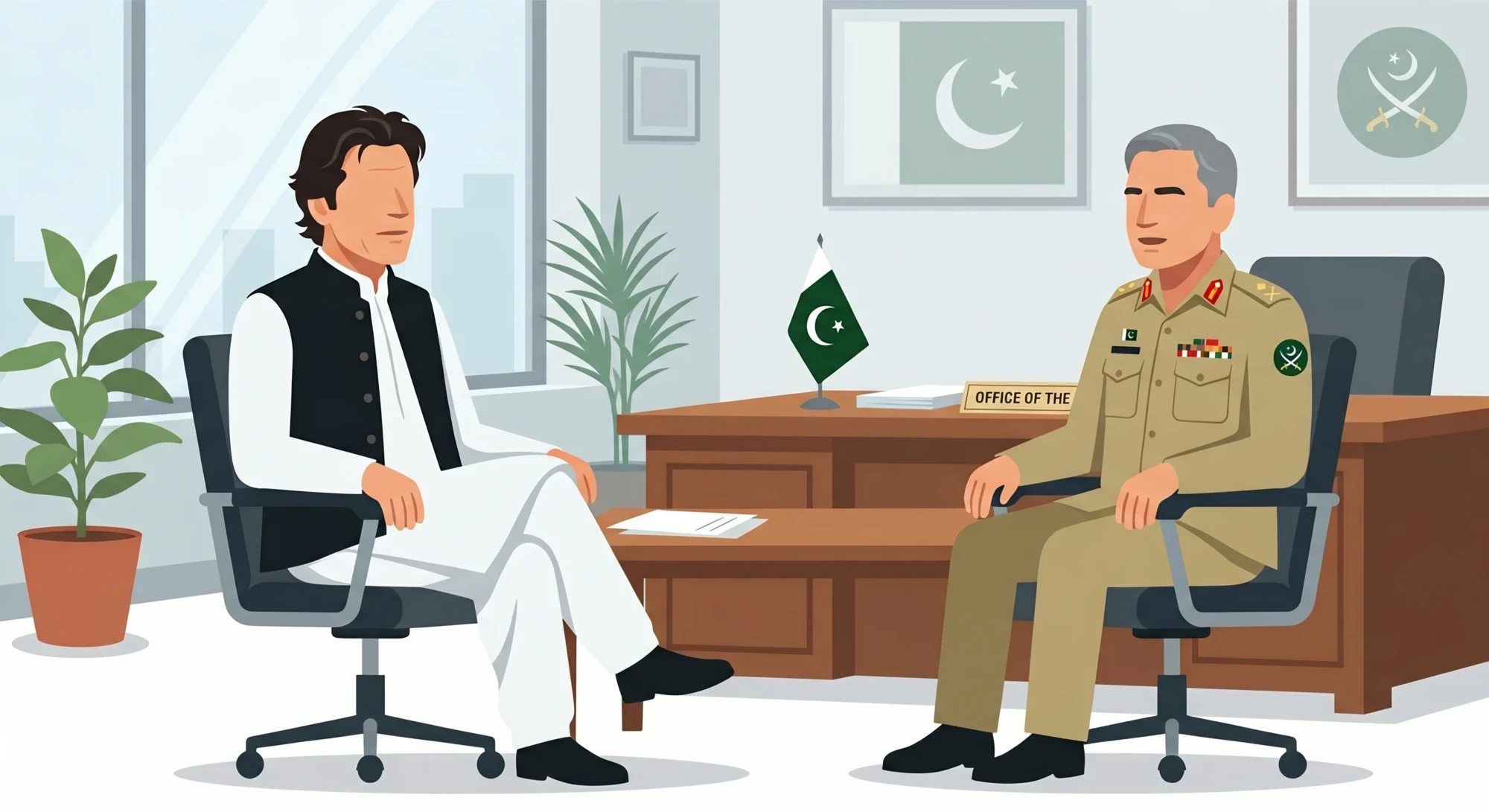
The political landscape of Pakistan is currently witnessing a complex intersection of international diplomacy and domestic power struggles. As the standoff between Imran Khan and the Establishment continues, new developments suggest a recalibration of strategies on both sides of the aisle.
Journalists Adeel Sarfraz and Asad Toor recently discussed these unfolding events in a detailed vlog, highlighting how regional shifts might influence local politics. They noted that the atmosphere in Islamabad is thick with anticipation as high-profile foreign delegations prepare for critical discussions.
The Arrival of the Iranian Delegation and US Involvement
A significant diplomatic move is on the horizon with the expected arrival of the Iranian Foreign Minister, Abbas Araghchi, in Islamabad. According to reports shared by the journalists, this visit marks a crucial step in resuming stalled negotiations between the two neighboring nations.
What makes this visit particularly intriguing is the simultaneous presence of American technical teams in the capital. Adeel Sarfraz and Asad Toor pointed out that these overlapping visits suggest Pakistan may be serving as a junction for broader regional diplomatic maneuvers.
The possibility of the United States and Iran engaging in indirect or technical discussions through Pakistan cannot be ruled out. Such high-level engagement often carries significant weight for Pakistan’s internal stability and its standing with global financial institutions.
The Shifting Dynamics at Adiala Jail
While international diplomats converge on Islamabad, the situation for the Pakistan Tehreek-e-Insaf (PTI) founder remains challenging. There has been a notable and documented drop in the number of individuals allowed to visit Imran Khan at Adiala Jail.
This reduction in access includes people who were previously on the officially approved visitation list. Asad Toor noted that this tightening of restrictions often signals a period of heightened sensitivity or ongoing behind-the-scenes negotiations.
The lack of communication with the outside world has fueled various speculations regarding Imran Khan’s current mindset and strategy. However, the Establishment maintains a firm grip on the conditions of his incarceration, leaving little room for party workers to coordinate directly with their leader.
The Mystery of the Liaquat Bagh Rally Cancellation
One of the most debated topics in recent days is the sudden cancellation of the PTI rally scheduled at Liaquat Bagh. This move caught many supporters by surprise and led to rumors of potential backdoor deals between the party and the authorities.
According to the vlog by Adeel Sarfraz and Asad Toor, the cancellation is believed to be linked to unofficial political developments. While formal assurances of relief for PTI remain unconfirmed, the decision to step back from a major protest is seen as a tactical pause.
Some analysts suggest that PTI leadership might be showing restraint to create a conducive environment for dialogue. However, the lack of a clear public explanation has left the party’s grassroots supporters in a state of confusion and uncertainty.
Debunking the Resignation Rumors
In the midst of this political fog, rumors began to circulate that Imran Khan had instructed PTI parliament members to resign from their seats. These rumors suggested that the message was conveyed through his legal counsel, Salman Safdar.
However, Salman Safdar has firmly shut down these reports, clarifying that his meetings with Imran Khan are strictly focused on legal defense. He emphasized that no such political directives regarding mass resignations were issued during their recent consultations.
This clarification was essential to stabilize the party’s parliamentary wing, which has been under immense pressure. The journalists noted that such rumors are often floated to test the internal unity of the party and provoke hasty reactions.
Skepticism Over Political Relief
Despite the hope among some PTI circles for imminent relief, Adeel Sarfraz and Asad Toor expressed strong skepticism. They argued that the Establishment has spent months successfully marginalizing PTI’s operational structure.
By limiting the party’s ability to organize large-scale protests, the Establishment has significantly reduced the pressure on the current setup. The speakers believe that with PTI internally divided and weakened, there is very little incentive for the powers that be to offer major concessions.
The discussion concluded that any “breathing space” provided to the party would likely be extremely limited and conditional. The narrative that a major breakthrough is just around the corner may be more of an optimistic projection than a grounded reality.
Economic Challenges and the Energy Factor
A critical component of the current diplomatic talks involves Pakistan’s struggling economy. If successful diplomacy between Iran and the US leads to eased sanctions, Pakistan could potentially import cheaper oil and gas from Iran.
While this would be a welcome development for consumers, Adeel Sarfraz warned that it is not a “magic bullet” for the nation’s woes. Cheaper fuel might slightly temper inflation, but the core structural issues of the economy remain unaddressed.
The journalists highlighted that the industrial sector is still struggling, and the agricultural sector faces massive challenges from climate change. Without addressing these foundational problems, temporary relief from energy imports will not lead to sustainable long-term growth.
The Road Ahead for Imran Khan and PTI
The path forward for Imran Khan appears to be fraught with legal hurdles and political isolation. While his legal team, led by Salman Safdar, continues to fight his cases, the political path depends on shifting power dynamics.
The Establishment appears content with the current status quo, where the PTI is effectively contained within the legal system. Unless there is a massive shift in the geopolitical or domestic environment, the party may have to brace for a long period of opposition.
In conclusion, the convergence of international diplomatic missions in Islamabad provides a fascinating backdrop to Pakistan’s internal crisis. However, for the common citizen and the PTI supporter, the wait for substantial political and economic stability continues.