


Pakistan’s Missing Tier of Democracy: Why Local Government Matters
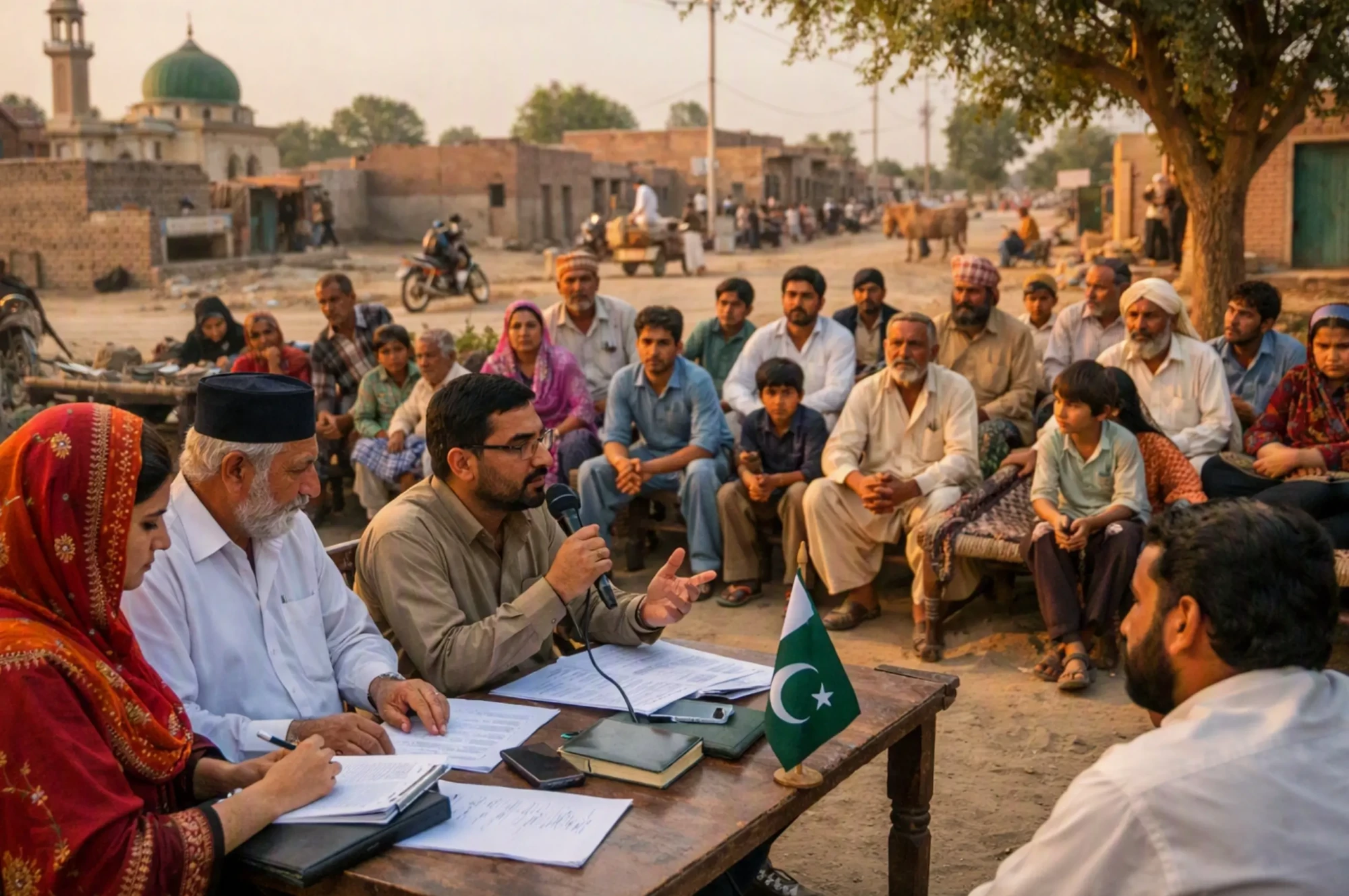
Most citizens do not experience government through speeches in parliament or policy announcements in Islamabad. Instead, they experience it through the condition of the street outside their home, the availability of clean drinking water, the collection of waste, the quality of the local school, and the response of authorities during an emergency.
These are local problems, yet Pakistan continues to manage them through highly centralised provincial systems. Citizens expect provincial ministers, legislators, and bureaucrats to make decisions for communities they rarely visit and cannot fully understand. This distance between the citizen and the decision-maker remains one of the main reasons for weak governance.
A strong local government system can bridge this distance. It does not represent an additional or unnecessary layer of government; it is the missing link between the state and the citizen.
Bringing Government Closer to the People
Improved citizen satisfaction stands as one of the greatest benefits of local government. People become dissatisfied when they cannot access basic services or find anyone responsible for solving their problems. A citizen should not have to approach a provincial minister to repair a damaged road, clean a sewer, or install a streetlight.
Elected mayors, councillors, and district representatives live closer to the people experiencing these problems. They understand which road floods after rain, which neighbourhood lacks sanitation, and which village requires a basic health facility. Voters can also approach them more easily and hold them accountable.
Local governments can therefore solve Pakistan’s “last-mile governance” problem, the failure of government policies and resources to reach citizens at the grassroots level.
They also reduce the information gap between provincial capitals and local communities. Officials sitting in Lahore, Karachi, Peshawar, or Quetta may have statistics about a district, but local representatives possess direct knowledge of its everyday needs. When citizens participate in setting priorities, local councils are more likely to spend public money on projects that the community actually requires.
Together, better information and stronger accountability create a governance feedback loop. Citizens communicate their needs, local representatives respond, people observe the results, and then voters reward or reject those representatives through elections. This defines how democratic government should work.
Local Governments as Democratic Nurseries
Pakistan’s political parties regularly complain about a shortage of capable and experienced leadership. Yet the same parties provide very few opportunities for new leaders to gain meaningful experience.
Local governments act as democratic nurseries. Young politicians can begin by managing municipal services, preparing budgets, consulting communities, and supervising development projects. Through this process, they gain practical experience before stepping up as provincial ministers, federal ministers, or members of parliament.
Currently, political advancement depends more on family connections, personal wealth, and influence within party leadership than on public service. This trend strengthens dynastic politics and keeps many talented people outside the system.
Regular local elections create alternative routes into politics. Women, minorities, workers, peasants, professionals, and community leaders can earn public support at the neighbourhood, village, or district level. Their performance, rather than their surname, builds the foundation of their political career.
While local government will not end dynastic politics overnight, it weakens the monopoly of a small number of political families by creating thousands of elected positions to help new leaders emerge.
Creating Fiscal Ownership
Pakistan also needs to change the relationship between citizens and taxation. People often hesitate to pay taxes because they do not see a clear connection between the money they pay and the services they receive.
This relationship improves when accountable local representatives collect taxes and fees and spend them within the same community. A shopkeeper feels more willing to pay a trade licence fee if they visibly see the money improving the local market, sanitation, parking, and road access. Similarly, residents accept property taxes more readily if they witness improvements in drainage, public spaces, and waste collection.
Local taxation therefore creates a sense of fiscal ownership. Citizens transform from mere taxpayers into stakeholders who question how the government spends their money.
Local governments also avoid the prestige costs associated with higher levels of government. Local representatives generally live within their own communities, and municipal offices already exist. This reality eliminates the justification for dedicated residences, large transport fleets, elaborate security arrangements, and other expensive privileges.
The purpose of local government focuses on making public administration more responsive and affordable, not on creating another political elite.
Building District Economies
Strong local governments play a crucial economic role. Pakistan concentrates its economic activity heavily in a limited number of large cities. Young people from smaller districts frequently move to Lahore, Karachi, Islamabad, or overseas to find employment and business opportunities.
Local governments help districts develop their own economic strengths. They simplify local permits, issue trade licences, improve marketplaces, enforce sensible zoning regulations, and establish incubation centres for small businesses. They identify opportunities based on local agriculture, tourism, manufacturing, technology, or services.
A district with a functioning local government attracts investors because authorities make decisions closer to the area and resolve local administrative problems more quickly.
This localized focus reduces regional inequality and slows the movement of skilled workers towards already overcrowded cities. It even encourages return migration. Professionals who moved elsewhere willingly return to their home districts when they see better infrastructure, economic opportunities, and accountable local leadership.
The goal involves stopping the brain drain and creating conditions for “brain gain”, where people return with skills, investment, and experience.
Why Local Governments Remain Weak
The Constitution already recognises local government. Article 140-A requires every province to establish a local government system and devolve political, administrative, and financial responsibility to elected local representatives. It also mandates that the Election Commission of Pakistan must conduct local government elections.
The problem stems not from the absence of constitutional language, but from the fact that provinces decide how much authority local governments actually receive.
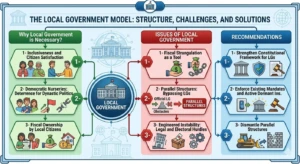 The first method of control involves fiscal strangulation. Provincial Finance Commissions should determine how to distribute resources between provincial and local governments. However, provinces transfer funds inconsistently, forcing local bodies to depend on grants controlled by provincial governments. Research by the Pakistan Institute of Development Economics describes fiscal devolution to local governments as an unfinished part of Pakistan’s decentralisation process.
Most local governments also lack the authority to raise their own revenue. Provincial authorities often heavily influence or administer important sources such as property taxation. This limitation prevents local governments from planning independently and forces them to repeatedly seek provincial approval or financial assistance.
Parallel Structures and Political Instability
The second problem revolves around the creation of parallel development structures. MNAs and MPAs serve as legislators. Their primary responsibility involves making laws, representing constituents, and overseeing the executive; they should not function as municipal project managers.
However, provincial governments frequently give legislators influence over local development funds and schemes. In Khyber Pakhtunkhwa, amendments to the District Development Advisory Committee framework expanded the role of legislator-led committees in local development planning and supervision.
This overlap creates a conflict of roles. Legislators claim political credit for roads, drains, and other projects, leaving elected local representatives without the authority or resources to perform their own duties.
Provincial bureaucracies also exercise significant control. The Deputy Commissioner often acts as the central figure in district administration and development, treating elected mayors and councillors as secondary actors. Provincial departments and district bureaucracy execute large district development programmes, bypassing the elected councils entirely.
The third problem lies in engineered instability. Provincial authorities repeatedly delay local government elections through changes in laws, delimitations, and administrative procedures. Punjab, for example, experienced prolonged delays following the end of its previous local government system. The Election Commission itself expressed concern over these delays, arguing that repeated changes in provincial laws obstruct its ability to hold elections.
This instability proves politically convenient. Without elected councils, provincial governments, legislators, and administrators gain greater control over local funds and appointments.
While Pakistan’s major political parties disagree on many issues, they usually become reluctant to transfer power to the local level once they form provincial governments.
What Needs to Change
Pakistan must first strengthen the constitutional protection of local government. Article 140-A should clearly guarantee the political, administrative, and financial autonomy of elected local bodies. It should protect their tenure, define their core responsibilities, and establish a minimum provincial financial transfer.
The Election Commission requires clear authority to announce and conduct local government elections within a fixed period after a council completes its term or faces dissolution. Elections must not depend on the willingness of a provincial government. The ECP itself has sought stronger legal provisions to prevent delays caused by changes in local government laws.
Second, Provincial Finance Commissions must function properly, and the government must make their awards legally binding. The state should transfer a clear, formula-based portion of provincial resources, potentially around 30 to 40 per cent of the relevant divisible pool to local governments according to population, poverty, area, revenue effort, and service-delivery needs.
Third, the state must abolish discretionary development funds controlled by MNAs and MPAs. It should place development funds in the provincial divisible pool and distribute them through Provincial Finance Commissions. Legislators need to oversee government spending rather than personally controlling development schemes.
Finally, officials must respect the authority of elected local representatives. Deputy Commissioners and provincial officials should support local governments by providing coordination, technical expertise, and lawful oversight. They must not replace elected mayors or exercise routine control over devolved functions.
The Real Test of Democracy
Pakistan cannot build an effective democracy merely by holding national and provincial elections. Democracy must thrive in neighbourhoods, villages, towns, and districts.
A citizen who elects a local representative, attends a council meeting, questions a municipal budget, and observes how the government spends local taxes feels more connected to the state. That connection builds trust, responsibility, and political awareness.
The weakness of local government represents a calculated outcome driven by political and bureaucratic interests that benefit from keeping power centralised, rather than a mere administrative accident.
Pakistan requires elected local institutions with secure terms, reliable funding, and genuine authority, not local governments that exist only on paper or operate at the pleasure of provincial chief ministers.
Until power reaches the grassroots, governance will remain distant, democracy will stay incomplete, and citizens will continue to feel that the government does not belong to them.