
 Truth Social
The security landscape in United States politics has been shaken once again following what is being described as the third assassination attempt on US President Donald Trump. In a detailed analytical breakdown, Dr. Moeed Pirzada explored the circumstances surrounding a major security breach at the Washington Hilton, where a suspect managed to bypass established protocols.
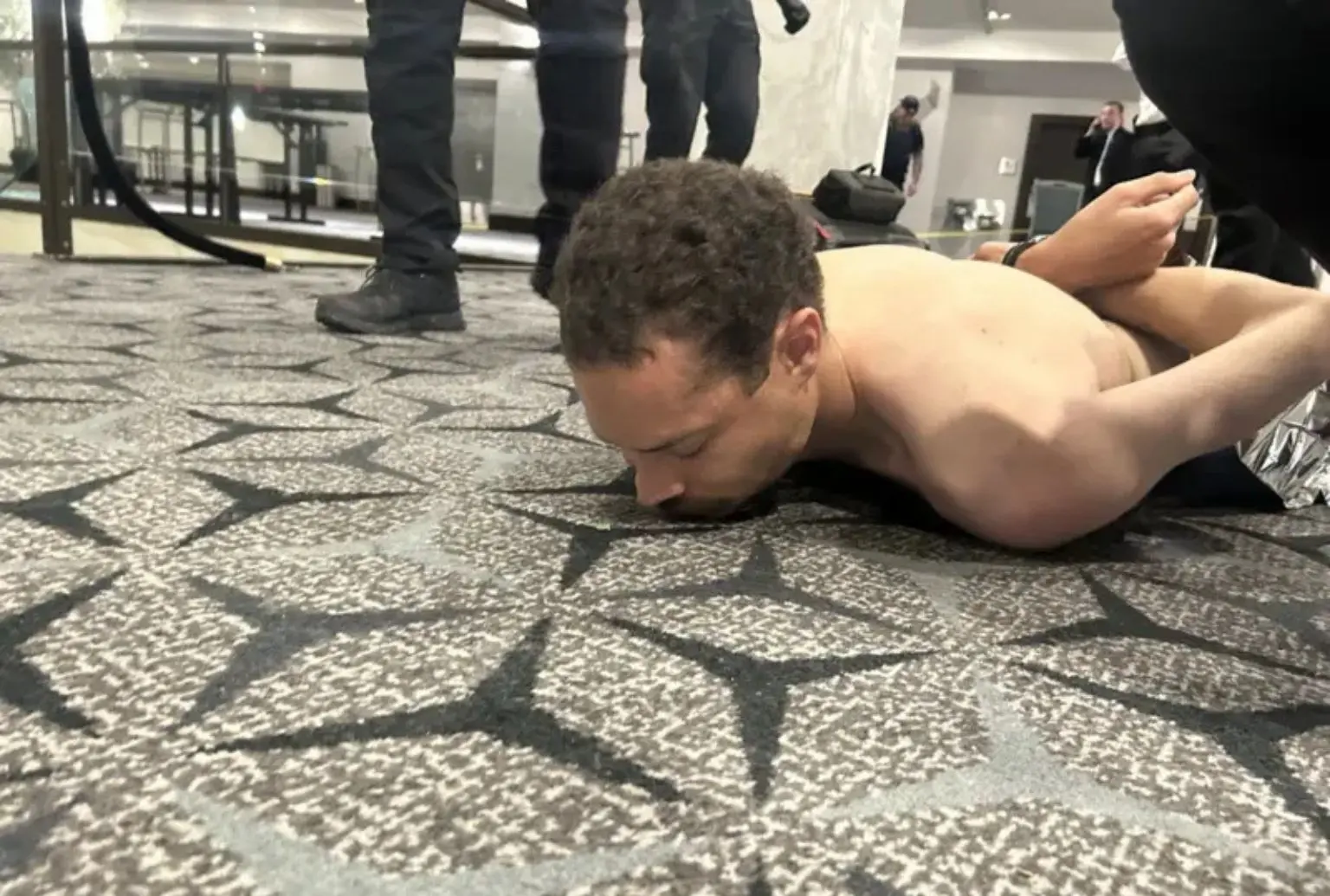
The suspect, identified as 31-year-old Cole Thomas Allen, reportedly breached a security checkpoint at the high-profile venue, sparking immediate alarm. Pirzada noted that Allen is expected to face serious federal charges, including the use of a firearm during a crime of violence and assaulting a federal officer, though formal assassination charges are still pending investigation.
According to Pirzada’s report, investigators discovered a manifesto-style note of approximately 1,000 words that detailed the suspect’s deep-seated animosity toward the current Washington administration. Perhaps the most shocking revelation from the writings was the suspect’s own disbelief at the lack of security, as he expressed surprise that he successfully checked into the hotel while carrying both a handgun and a knife.
This incident has placed the Secret Service under intense scrutiny once again, as the suspect apparently moved through the premises without being intercepted. Pirzada highlighted that the ease with which the perimeter was breached suggests a systemic failure in protecting high-ranking political figures during public appearances.
Social Media and the Information Void
In the absence of immediate and comprehensive official statements, social media has become a breeding ground for speculation and alternative narratives. Dr. Moeed Pirzada cited an analysis by The New York Times, which observed how influencers and general users have filled the information gap with various conspiracy theories.
On the platform X, formerly known as Twitter, the term “staged” saw a massive surge in usage, appearing in hundreds of thousands of posts shortly after the news broke. Many users alleged that the event was a fabrication designed to boost polling numbers or divert attention from external geopolitical conflicts involving Iran.
Referencing insights from a University of Michigan professor, Pirzada explained that this phenomenon is driven by confirmation bias. He reported that individuals are increasingly reshaping reality to fit their pre-existing political beliefs rather than waiting for verified factual reporting from official agencies.
This digital fragmentation of truth has made it difficult for authorities to manage the public narrative, as skepticism toward official institutional accounts continues to grow. Pirzada argued that the speed of social media often outpaces the bureaucratic process of forensic investigation, leading to a permanent state of public distrust.
The Wisdom of Crowds vs. Official Narratives
To explain the public’s reluctance to accept official versions of events, Pirzada referenced the conceptual framework of James Surowiecki in his book, The Wisdom of Crowds. The core argument of this theory is that a large, diverse, and independent group of people can often reach a more accurate conclusion than a single expert or entity.
By applying this to the current security crisis, Pirzada suggested that the collective skepticism of the public serves as a natural counter-balance to tightly controlled government stories. This framework helps explain why independent online analysis often rivals the reach and influence of traditional media outlets during moments of national crisis.
The analytical report suggests that when people feel they are being denied the full truth, they turn to collective intelligence to piece together the fragments of the event. Pirzada emphasized that this decentralized way of processing news is becoming the new standard for how global audiences interpret high-stakes political events.
Political Reactions and Infrastructure Demands
In the aftermath of the incident, Donald Trump has used the security breach to advocate for significant changes to White House infrastructure. Pirzada detailed how the former president is now pushing for the construction of a highly secure, state-of-the-art “ballroom” on the executive grounds to host future events safely.
This specific project has been a point of contention for years, with various courts and administrative bodies previously blocking the expensive construction. Trump argues that the recent attempt on his life serves as undeniable proof that current security measures and venues are no longer adequate for modern threats.
Critics, however, view this as a political maneuver to secure funding for a project that has long been on his personal agenda. Pirzada’s analysis suggests that the security failure provides Trump with the necessary leverage to bypass previous legal and budgetary hurdles regarding the White House expansion.
US-Iran Tensions and Pakistan’s Mediation
Beyond domestic security, the incident has unfolded against a backdrop of escalating tensions between the United States and Iran. Dr. Moeed Pirzada recounted Trump’s recent interview with Fox News, where the former president outlined his rigid stance on future nuclear negotiations.
Trump stated that any future talks regarding Iran’s nuclear capabilities would be conducted strictly “by phone” and would not proceed to physical meetings until Iran completely abandons its nuclear ambitions. Pirzada highlighted Trump’s acknowledgement of Pakistan’s significant role in mediating between the two nations, marking a rare moment of diplomatic recognition.
Despite this mediation, Iran has issued stern warnings to Washington, cautioning the U.S. not to interpret their current restraint as a sign of weakness. Iranian officials, through various analytical channels, have signaled that they possess significant strategic levers that have yet to be deployed.
Strategic Threats in the Persian Gulf
The geopolitical stakes are further heightened by Iran’s potential control over vital global shipping lanes. Pirzada analyzed claims that Tehran could disrupt international energy markets by exerting influence over the Strait of Hormuz and the Bab-el-Mandeb strait.
Iranian officials have hinted at their ability to target vital oil pipelines in the Persian Gulf, which would have catastrophic consequences for the global economy. This “asymmetric warfare” capability allows Iran to project power even when facing the conventional military superiority of the United States.
The analytical report suggests that Trump’s demand for total nuclear capitulation may be met with further regional destabilization if Iran feels pushed into a corner. Pirzada noted that the strategic patience currently being shown by Tehran is contingent on the U.S. refraining from further escalatory actions.
Intellectual Perspectives on Global Sensitivity
Concluding his analysis, Dr. Moeed Pirzada pointed toward the broader intellectual discourse surrounding these conflicts. He referenced a highly sensitive interview he conducted with Laith Marouf, a prominent Palestinian-Syrian intellectual, which delved into the deeper roots of Middle Eastern instability.
Pirzada expressed concern that critical discussions of this nature often struggle to gain traction on major social media platforms due to algorithmic restrictions. He urged his audience to seek out these in-depth conversations on his alternate channels to better understand the complexities of the Syrian and Palestinian perspectives.
The final takeaway from the report is a call for greater awareness of how global power dynamics are shifting. From a hotel security breach in Washington to the shipping lanes of the Middle East, the interconnected nature of these events highlights a world on the edge of significant political transformation.